


SpaceX IPO with Dual-Class Shares: Will Musk Secure the 25% Voting Control Denied by Tesla?



AI Podcast


SpaceX is preparing for an IPO with a dual-class share structure to ensure Elon Musk maintains control, mirroring strategies used by Meta and Alphabet. This move follows Tesla's experience and aims to secure at least 25% voting control. A syndicate led by Morgan Stanley is arranging financing for xAI's $18 billion debt, incurred partly from the X acquisition. Despite SpaceX's strong financial performance, xAI's significant cash burn presents integration risks, potentially altering investor perception of the combined entity. The IPO timeline in mid-2026 faces challenges from SEC filings, roadshows, and macroeconomic uncertainties.
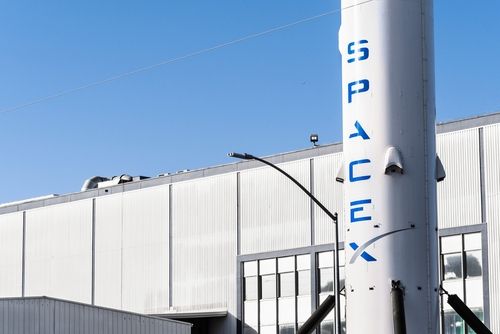
TradingKey - SpaceX is preparing for an IPO this year. According to foreign media reports, SpaceX is considering a dual-class share structure for the IPO to grant specific shareholders extra voting rights. In other words, Elon Musk could maintain absolute control over the company even if he only holds a minority stake.
Furthermore, a bank syndicate collaborating with Musk is providing financing solutions to address the debt burden following the merger of SpaceX and xAI. xAI has accumulated $18 billion in debt over the past few years, part of which stems from the acquisition of the social media platform X (formerly Twitter) and the creation of the AI development company xAI.
Will Musk Lock in Control After the Tesla Precedent?
According to reports, this dual-class structure would grant Musk's shares more voting power, thereby dominating the company's decision-making process.
Dual-class share structures are common among U.S. technology companies, with the most well-known examples being Meta (META) and Google's parent company, Alphabet. Meta is divided into Class A shares with one vote per share and Class B shares with 10 votes per share, held by the public and insiders like Zuckerberg, respectively. Google's equity structure is more complex and divided into three classes: Class A shares held by ordinary investors (GOOGL) enjoy one vote per share, Class C shares used for employee incentives and acquisitions (GOOG) have no voting rights, and Class B shares are held by founders Page and Brin, are not publicly traded, and enjoy 10 votes per share.
In fact, Musk publicly proposed establishing a dual-class share structure at Tesla in early 2024. (TSLA) At the time, he owned only about 13% of Tesla's shares because he had sold a portion to fund the Twitter acquisition in 2022, having previously held about 22%. He hoped to ensure he had at least 25% voting control to guarantee his decisions were neither easily overturned nor excessively autocratic. Musk currently holds about 11% of Tesla, but given the $1 trillion compensation plan, his stake is expected to expand to 25% or more over the next decade.
Therefore, as SpaceX prepares for its IPO, he has learned from Tesla's experience and plans to adopt a dual-class structure to ensure voting rights of no less than 25%, guaranteeing absolute control over future space-related decisions without being swayed by the board and shareholders, while also protecting the company from hostile takeovers or voting interference.
Who Will Shoulder xAI's $18 Billion Debt?
According to foreign media reports, Morgan Stanley (MS) is expected to play a leading role in the financing plan. In addition to Morgan Stanley, Goldman Sachs (GS) , Bank of America (BAC) , and JPMorgan Chase (JPM) are all set to be potential underwriting banks for SpaceX's potential IPO.
According to Bloomberg, after Musk acquired X with a $12.5 billion financing package a few years ago, X has had to pay tens of millions of dollars in interest every month. Initially, banks could not even sell the debt because Musk's chaotic handling of content moderation fueled investor concerns about damage to X's ad revenue. It was not until last April that banks sold the final $1.23 billion of debt at a fixed rate of 9.5%, priced at 98 cents on the dollar.
Last March, Musk merged X with xAI, bringing X's valuation to $45 billion but saddling it with $5 billion in debt. Bloomberg reported that creditors, worried about xAI's profitability and cash needs, requested that xAI not take on further debt.
On February 2, SpaceX posted a statement on its website signed by Musk regarding the acquisition of xAI. This merger brings SpaceX's valuation to approximately $1.25 trillion, with xAI contributing $250 billion. Analysts believe the advantage of the merger is to integrate xAI's advanced AI capabilities with SpaceX's rocket technology and Starlink satellite network, enabling the combined company to fund broader goals.
The Risks of xAI’s Massive Burn Rate
The merger will create a super entity valued at $1.25 trillion, which may achieve technical integration and funding objectives, but its financial risks have also sparked market skepticism.
SpaceX's profitability is at its peak; the company's 2025 revenue is projected at $15 billion to $16 billion with an EBITDA of about $8 billion and a margin of approximately 50%, largely because Starlink's subscriber base has reached a staggering 9 million and SpaceX is handling more than half of global launch missions in 2025.
In contrast, xAI is not only unprofitable but also more capital-intensive. Bloomberg columnist Thomas Black noted that in the first nine months of 2025, xAI generated a total of only about $210 million in revenue but burned between $8 billion and $9.5 billion, currently consuming about $1 billion per month.
Currently, SpaceX has agreed to inject $2 billion into xAI, but since xAI is competing with Microsoft (MSFT) , Google, and OpenAI in chips and data centers, spending is not expected to slow down in the near term. But how long can this money sustain xAI? Will xAI's financial condition drag down SpaceX after the merger, thereby defeating the original purpose of the consolidation?
On the other hand, a Bloomberg column argues that the merger of these two companies will not inherently achieve synergies: SpaceX is a pure-play space company that does not need xAI to develop the space data center market; conversely, all other AI companies would be eager to purchase SpaceX's specialized data center satellites and low-cost launch services—it is currently a seller's market for SpaceX.
UBS (UBS) analysts noted that following the merger, investors will no longer see a space company with strong cash flow, but a super entity that must rebalance operating cash flow against massive, ongoing AI investments. This could dampen the enthusiasm of investors who were exclusively bullish on SpaceX.
According to reports last month, SpaceX has targeted a listing date in mid-June 2026, but some analysts believe the timeline is too tight as the company still needs to file Form S-1 with the SEC and conduct a roadshow. Furthermore, Trump's tariff policies and the Federal Reserve's interest rate policies remain unpredictable, which will bring new uncertainty to SpaceX's listing timeline.
This content was translated using AI and reviewed for clarity. It is for informational purposes only.
Recommended Articles







Comments (0)
Click the $ button, enter the symbol, and select to link a stock, ETF, or other ticker.