


SMCI Stock vs. Nebius: Which AI Infrastructure Play has the Better Risk-Reward in 2026?



AI Podcast


The AI infrastructure boom offers distinct investment plays: Super Micro Computer (SMCI) provides hardware, while Nebius (NBIS) offers cloud-based AI infrastructure. Nebius, a European AI cloud provider, is rapidly expanding capacity and securing major deals, projecting substantial revenue growth and targeting a high Annualized Revenue Run-rate (ARR) by 2026. SMCI, a hardware manufacturer, benefits from AI server demand and Nvidia partnerships, showing scaled growth on a larger, profitable base. Nebius faces execution and financing risks, while SMCI's challenges are cyclical and competitive. SMCI offers a more conservative valuation with strong growth, while Nebius presents higher-beta, high-upside potential.
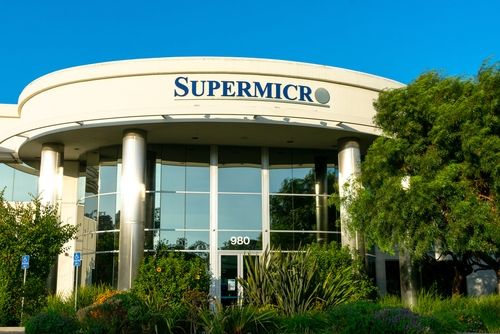
TradingKey - The artificial intelligence spending cycle isn’t just about chips anymore. As enterprises race to build and deploy large-scale models, capital is pouring into the physical and digital infrastructure that underpins AI workloads. Two companies stand out as primary plays on different sides of this buildout: Super Micro Computer (SMCI) and Nebius (NBIS).
Both are high-growth, volatile names closely linked to the AI capex cycle, but they offer distinct investment propositions. Supermicro sells the high-performance hardware that runs AI models, while Nebius provides specialized cloud-based AI infrastructure for companies that prefer to lease compute power rather than build their own data centers. For investors watching the SMCI stock price and weighing it against emerging players, this dichotomy is increasingly instructive.
Background: Two Ways to Play the AI Infrastructure Boom
Nebius is a relatively new name for public market investors, having re-established itself as a pure-play AI cloud provider based in Europe following its corporate split from Yandex. Based in Amsterdam, the company operates a flagship data center in Finland and is aggressively expanding capacity in the U.S., France, Iceland, and the UK. Recently, Nebius garnered significant attention by securing a landmark infrastructure deal with Microsoft and planning a major new facility in New Jersey. The company positions itself as a “full-stack” AI player, blending GPU capacity with managed software for training, edtech, and robotics.
Super Micro Computer, or Supermicro, occupies the hardware layer. It designs and builds AI-optimized servers, including industry-leading liquid-cooled systems. Leveraging its long-standing "first-to-market" partnership with Nvidia, Supermicro captures approximately 9% of the dedicated AI server market. It remains a nimble, high-growth competitor to legacy giants like Hewlett Packard Enterprise (HPE) and Dell.
Contrasting Business Models: Services vs. Hardware at Scale
Nebius is essentially delivering Compute-as-a-Service (CaaS). By leasing AI infrastructure, customers reduce upfront capital costs and accelerate deployment. This places Nebius among specialized AI cloud providers that compete on performance and availability rather than the generalized scale of traditional hyperscalers.
In contrast, Supermicro is a "picks-and-shovels" vendor. It profits when enterprises and cloud specialists choose to build their own capacity. Supermicro’s edge lies in its engineering speed—often ready with liquid-cooled, AI-tailored systems well ahead of larger competitors. However, as a hardware manufacturer, it faces thinner margins and more direct competition from other server OEMs.
The trade-off is clear: Nebius is building a service-heavy, recurring-revenue base but requires massive near-term capital outlays. Supermicro follows a high-volume manufacturing approach with superior cash flow but is more exposed to the cyclicality of hardware pricing.
Growth Profiles: Hyper-Expansion vs. Profitable Scale
Growth metrics highlight how night and day these two companies are.
Nebius is growing like crazy. In 2024, its revenue grew 462 percent to $118 million, although adjusted EBITDA was negative $266 million. For 2025, they estimate revenue will increase another 373 percent to $556 million, with losses decreasing to about $75 million. Management says its existing capacity was already sold out as of the end of Q3, and that it is scrambling to build more.
Looking to the longer term, Nebius is targeting a non-annualized revenue run rate of $7 billion to $9 billion by the end of 2026 and the Street is projecting revenues of around $7.8 billion in 2027. If so, that would be for a compound annual growth rate exceeding 300% from 2024 levels with EBITDA turning once positive in 2026 and potentially surpassing $5 billion in 2027.
Supermicro is already big time. Net revenue increased 47% to $22.0 billion and adjusted EBITDA increased 6% to $1.6 billion for the fiscal year 2025 (ended June). For fiscal 2026, analysts are expecting revenue to increase another 65% to $36.3 billion, with EBITDA amounting to about 1.8 billion. Between FY2025 and FY2028, consensus estimates are for revenue and EBITDA CAGRs of roughly 33% and 26%, respectively -- significantly slower than Nebius, but on a very large and already profitable base.
Valuation: The "Trust Deficit" vs. The "Growth Premium"
This mismatch in timing is apparent in valuations.
Nebius has a market value of about $24.2 billion and is trading at approximately 7 times forward sales at the time of writing. That multiple captures its exceptional growth qualities and the fact its still extremely unprofitable and capital-intensive.
Supermicro, on the other hand, has an enterprise value of approximately $16.6 billion and is trading at less than 1x forward sales and ~6x adjusted EBITDA. Essentially, SMCI is one of the best plays to capture AI server spending, yet its stock price still doesn’t have the same multiple as prominent AI infrastructure plays.
Some of that discount is having to do with history. Last year, Supermicro faced a late 10-K filing, the unexpected resignation of its auditor, regulatory scrutiny, and even delisting worries. Those problems are largely behind us, but the valuation multiple isn’t all the way back yet. At the same time, aggressive sales and marketing by HPE and Dell of AI-enabled servers makes for an even more crowded field.
Risks and Divergence Points
Nebius faces significant execution and financing risk. Its valuation is predicated on hitting aggressive capacity targets and maintaining high utilization rates. Any slowdown in AI cloud demand or hiccups in its global data center rollout could lead to a sharp contraction in its multiple.
Supermicro’s challenges are cyclical and competitive. Hardware margins are structurally lower, and as Dell and HPE aggressively chase AI server market share, margin pressure could mount. Supermicro is also highly sensitive to the capital expenditure cycles of a few major cloud and enterprise customers.
How Investors Should Think About SMCI Stock vs. Nebius
For those seeking pure growth optionality, Nebius is the high-beta wager. The upside could be massive if management delivers on its $7B+ run-rate target, but the operational risks are equally high.
Supermicro appears more attractive to those focused on risk-adjusted value. It is a profitable, cash-generating leader in AI infrastructure, currently trading at a valuation that doesn't yet fully capture its 65% revenue growth profile. At these levels, SMCI is priced more like a legacy server maker than a core beneficiary of the AI revolution.
Bottom Line: Nebius is a courageous, early-stage infrastructure story with immense upside. SMCI stock is a scaled, profitable way to participate in the same secular trend at a much more conservative valuation. For many investors heading into 2026, the favorable risk-reward balance remains tipped in Supermicro’s favor.
Recommended Articles









Comments (0)
Click the $ button, enter the symbol, and select to link a stock, ETF, or other ticker.