


Korea’s Kospi Closes Down 0.86%, Samsung Shares Rise Against Trend After Strike Announcement, Government Considers Emergency Arbitration Options



AI Podcast


South Korea's KOSPI index fell 0.86% and Japan's Nikkei 225 dropped 1.23% due to foreign selling and high U.S. Treasury yields. Samsung Electronics shares initially plunged over 4% following collapsed labor negotiations and an announced 18-day strike by 48,000 workers starting May 21st. Management cited union demands on bonuses for loss-making divisions as problematic. The government is monitoring the situation and may use emergency arbitration powers, previously invoked only four times. A prolonged strike by the world's largest memory chip manufacturer poses a risk to the global semiconductor supply chain.
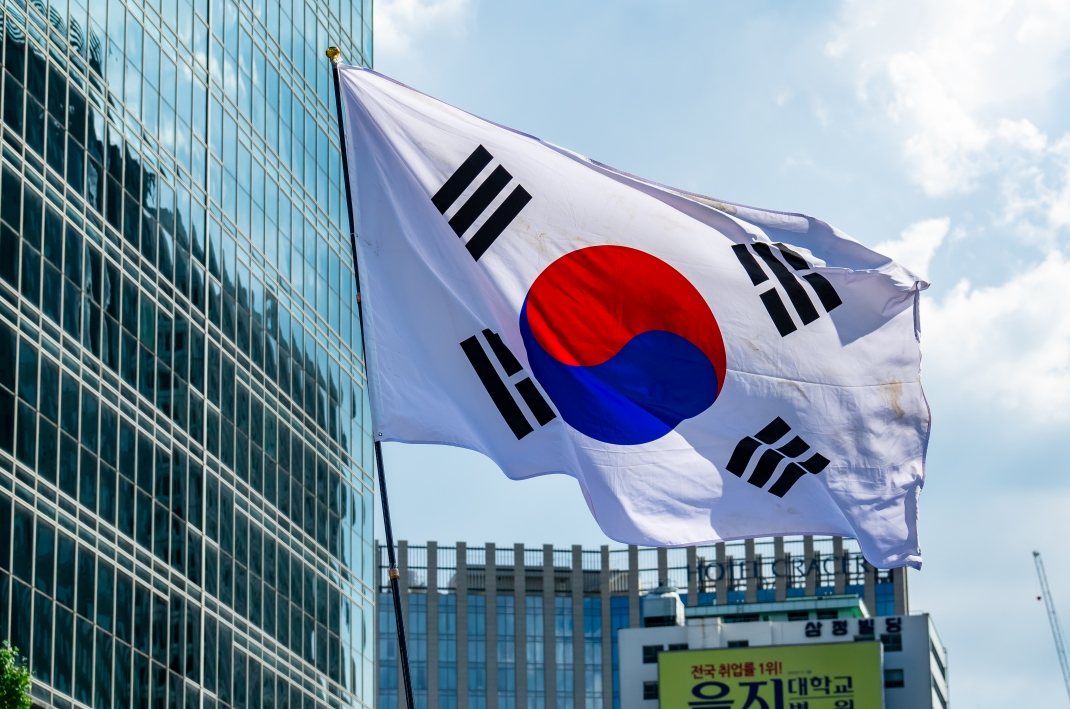
TradingKey - South Korea's benchmark KOSPI index closed down 0.86% at 7,208.95 on Wednesday, marking its second consecutive session of declines, primarily dragged down by foreign investors' selling for the 10th straight day and high U.S. Treasury yields. On the same day, the Nikkei 225 fell below the 60,000-point threshold, closing at 59,804.41, down 1.23%.
Samsung Electronics shares fell more than 4% in early trading to a low of 263,500 won after labor negotiations collapsed, before rebounding in the afternoon to close at 276,000 won, up 0.18%.
The Samsung union announced it will launch an 18-day general strike starting Thursday. The South Korean government stated it is closely monitoring the situation and does not rule out the possibility of exercising its emergency arbitration power.
SK Hynix closed flat at 1,745,000 won. Hyundai Motor fell 1.99%, LG Energy Solution dropped 3.88%, and LG Electronics declined 5.58%.
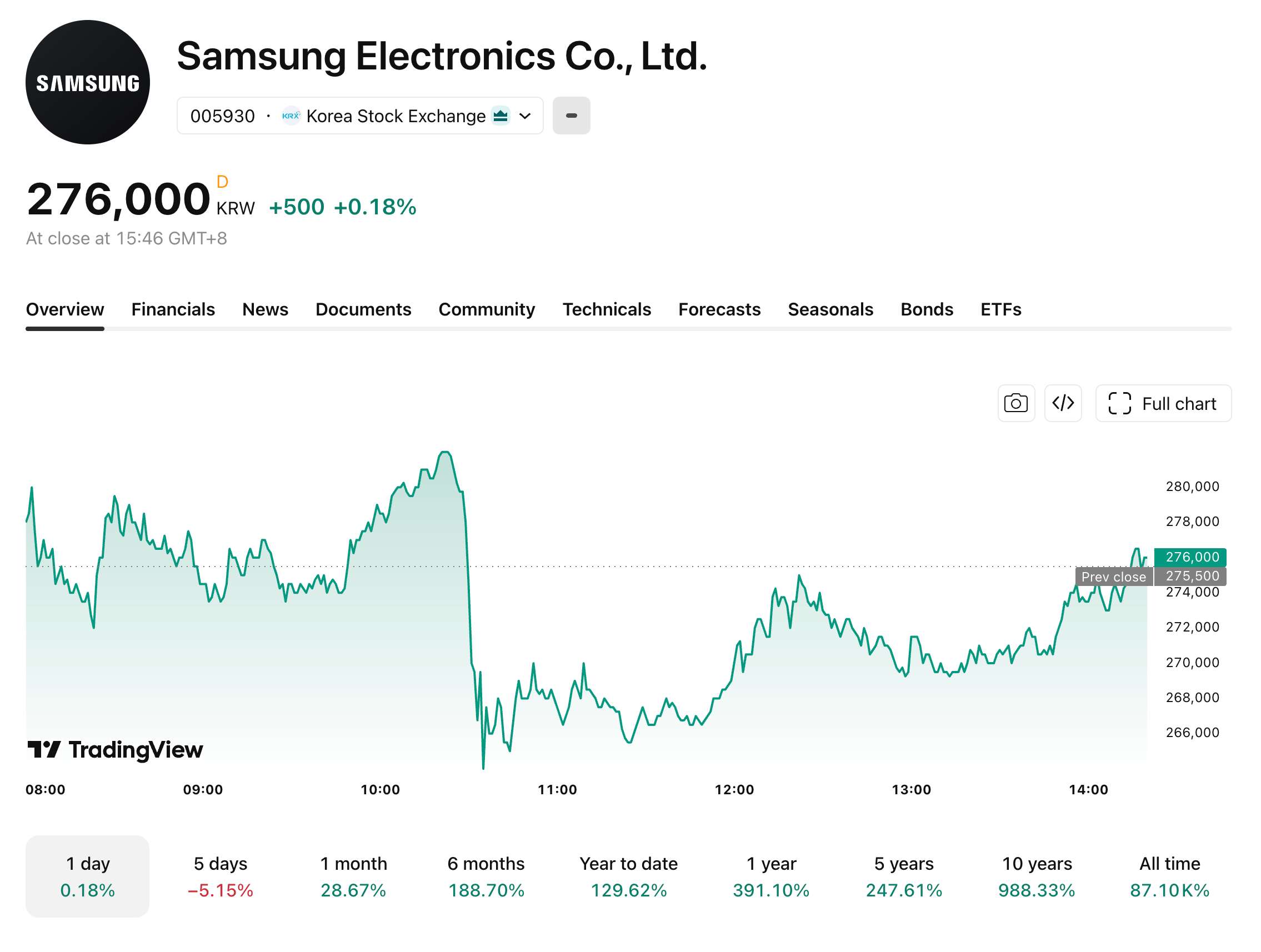
[Source: TradingView]
Negotiations collapse, strike imminent.
Labor and management conducted final mediation on the morning of the same day under government auspices. The union accepted the Central Labor Relations Commission's proposal on the night of the 19th, but management failed to state its position before the 11:00 a.m. deadline on the 20th, and mediation was declared a failure. The union will launch a general strike as planned on the 21st in accordance with the law, with approximately 48,000 workers expected to participate, lasting until June 7.
Samsung Electronics expressed "deep regret" over the conclusion of mediation in a statement, noting that it will "persist in dialogue until the last moment." The company stated that it has largely accepted labor's demands regarding performance bonuses, but the union's insistence on paying bonuses to loss-making divisions would undermine the company's management principles.
Government weighs emergency arbitration powers.
Article 76 of South Korea’s Trade Union and Labor Relations Adjustment Act grants the government emergency arbitration authority. If a strike is deemed to cause "serious harm" to the national economy, the Minister of Employment and Labor can order a 30-day suspension of the strike, with the Central Labor Relations Commission intervening for mediation. This system has been invoked only four times since its establishment in 1963, most recently during the 2005 Korean Air pilots’ strike.
A senior official from the Ministry of Employment and Labor stated on the 20th that it is "premature" to discuss emergency arbitration, emphasizing that dialogue is the fundamental principle. However, President Lee Jae-myung stressed at a cabinet meeting: "When unions cross the line, the government has a responsibility to ensure they act in a socially responsible manner."
The Suwon District Court approved a partial injunction request from Samsung Electronics on May 18, ordering the union to maintain minimum staffing for safe operations even during strikes to prevent damage to production materials.
Samsung strike could disrupt global semiconductor supply chain
Samsung Electronics accounts for approximately one-fourth of South Korea's total exports and is the world's largest memory chip manufacturer. Market analysts warn that a complete production shutdown would deal a direct blow to the global semiconductor supply chain.
Some investors are concerned that if yield issues arise in HBM production during the strike, Nvidia ( NVDA) might, in extreme scenarios, refuse to accept the relevant products, though this concern has not been confirmed by either party. Analysts believe that if the Samsung strike affects factory operations and leads to supply delays, SK Hynix and Micron may be able to fill the potential supply gap.
Furthermore, Nvidia will release its earnings report after the market close on May 20, Eastern Time; its guidance will have a significant impact on the short-term performance of the global semiconductor sector.
This content was translated using AI and reviewed for clarity. It is for informational purposes only.
Recommended Articles







Comments (0)
Click the $ button, enter the symbol, and select to link a stock, ETF, or other ticker.