


SpaceX IPO Date Set for June 12 at a $1.75 Trillion Valuation - Everything You Need to Know About SPCX



AI Podcast


SpaceX targets a June 12, 2026, Nasdaq IPO (SPCX), aiming to raise $75 billion at a $1.75 trillion valuation. The dual-class share structure will grant Elon Musk voting control. Starlink, with over 9 million users, is projected to generate $15-16 billion in 2025 revenue, driving the valuation. Key risks include governance concentration, Starship execution, reliance on government contracts, and competition in satellite broadband. The high revenue multiple necessitates sustained exceptional performance in both launch and satellite businesses. An S-1 filing is expected mid-May, with the roadshow beginning June 4.
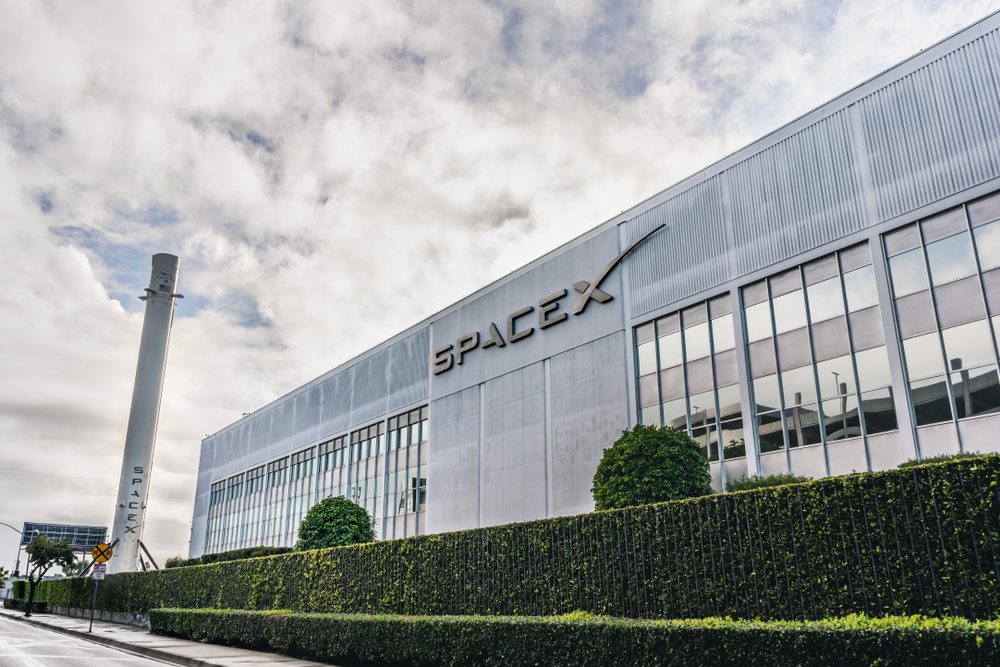
TradingKey - SpaceX IPO targets June 12, 2026 on Nasdaq (SPCX). Raising up to $75B at $1.75T valuation — largest IPO in history. Starlink 9M+ users, $15–16B 2025 revenue. Dual-class shares. Musk keeps control.
Elon Musk's SpaceX could price its IPO in less than a week, potentially becoming the largest initial public offering ever as early as June 12, 2026, on Nasdaq under ticker SPCX, with an offering of up to $75 billion at $1.75 trillion or more. A public S-1 is expected as soon as this week, followed by a roadshow kicking off around June 4 and priced June 11. Musk won't sell a single share. The company's dual-class share structure would give Musk, as both CEO and chairman, full voting control. Retail investors would see the most important IPO of 2026, and probably the 10-year, in June.
SpaceX IPO date, timing and details:
As reported by Reuters and other financial news outlets, SpaceX is planning to file its S-1 in mid-May, kick off its roadshow around June 4, price on June 11 and list June 12, 2026. The company is expected to offer up to $75 billion of shares, which at a $1.75-trillion valuation will mean a smaller portion of shares outstanding than in most IPOs because SpaceX will still want to retain a majority of its own stake.
Its dual-class share structure will be of great interest to investors: The public would receive Class A shares with voting rights, but Musk and insiders will have Class B shares that have more voting power per share. This is typical for founder-led tech companies, such as Alphabet, Meta and Snap. Musk will not be selling a single share from his personal account, according to the report, which suggests he still believes the company's current valuation is too low.
IPO key dates:
● S-1 public filing: Mid-May, 2026 (targeted)
● Roadshow begins: Around June 4, 2026 (targeted)
● Pricing date: June 11, 2026 (targeted)
● First trading day: June 12, 2026 on Nasdaq, ticker: SPCX
● Target raise: Up to $75 billion
● Target valuation: $1.75 trillion or more.
What SpaceX actually is — the two businesses driving the $1.75 trillion valuation
SpaceX runs two businesses with a shared infrastructure and balance sheet. It is first a launch services provider; Falcon 9 is the most widely used orbital rocket in history, and its reusability business model has structurally driven down the cost-per-kilogram to orbit against the entire industry. It is also developing Starship, a heavy-lift, fully reusable launch vehicle, designed for missions out of reach for Falcon 9, including cargo to the moon, cargo to Mars, and launch of large satellite constellations. SpaceX’s customers are primarily NASA, the US DoD, and private satellite companies, and, soon, the satellites in Amazon’s Project Kuiper constellation.
SpaceX’s second business is Starlink, a broadband connectivity service that offers internet access through a low-Earth orbit satellite constellation, to which over 9 million customers subscribe on an ongoing, recurring basis. SpaceX is reportedly generating between about $15 billion to $16 billion in total revenue in 2025, the bulk of which is coming from Starlink, which is rapidly ramping up. The potential that is on offer, orbital data centers, connectivity directly to smart devices and satellite phones, Starshield, the government satellite constellation for defence and intelligence, is what justifies the premium above any near-term revenue model. Ron Baron, one of the biggest private investors in SpaceX, has predicted it could eventually become the world’s largest company.
The risks every investor needs to understand before buying SPCX
The governance is the major risk. A $1.75 trillion company controlled by a single individual who also runs Tesla, xAI, and multiple other entities has no precedent at this scale. Any change in the Musk relationship with the US government, which will provide SpaceX with much of the revenue in the coming years from NASA and defence launch contracts, would materially affect SpaceX’s valuation. The dual-class structure means public shareholders have limited ability to respond through the ballot.
The other major risk to SpaceX’s valuation will be the execution on Starship. This fully reusable rocket is progressing but has yet to achieve a reusability capability on the level that underpins its business case. Falcon 9 revenue would not be negatively affected immediately by this outcome, but it would erode the optionality of the business, and the valuation would accordingly decline.
There will also be significant competition from Amazon’s Project Kuiper constellation, from OneWeb’s constellation, as well as any future national satellite connectivity projects, which will limit SpaceX’s pricing power in the future. At $1.75 trillion, SpaceX will trade at between 109 and 116 times 2025 revenues, which is a multiple that requires exceptional performance in both its launch services and satellite businesses over a sustained period of time into the future.
When is SpaceX IPO and what is the ticker?
SpaceX aims to list on the Nasdaq on June 12, 2026, using the ticker SPCX. The company is preparing an S-1 public filing mid-May. The company plans to commence the roadshow June 4 and prices the deal June 11. The company is looking to raise as much as $75 billion and be valued at $1.75 trillion or more, in what could become the biggest IPO on record if it occurs. Saudi Aramco’s 2019 debut stands as the record at $35.4 billion raised at a $320 billion valuation.
What is the value of SpaceX and valuation of the IPO?
SpaceX is aiming for an IPO valuation of $1.75 trillion or more, raising as much as $75 billion. The company generated $15 billion to $16 billion of revenues in 2025, implying a value of 109x to 116x trailing revenues. Starlink is the fastest growing and key revenue driver to support the premium valuation. Starlink has 9 million paying subscribers and runs on recurring subscription revenue. Elon Musk will not sell personal shares of the company in the IPO.
Can individuals invest in SpaceX IPO?
IPO shares at the offering price will be largely assigned to institutional investors through the lead underwriters. Individual investors with brokerage accounts with participating companies may receive small amounts of shares through their brokerage’s IPO program.
Most investor participation will be through open market purchase on June 12 once shares of SPCX begin trading on the Nasdaq. Check nasdaq.com/market-activity/ipos and your brokerage firm’s IPO portal for information as details are released. First-day trading in popular IPOs can be extremely volatile.
What are the main risks of investing in SpaceX?
Main risks include concentration of governance control, as SpaceX shares are sold in a dual-class structure that will allow Musk to maintain control no matter how the public votes for the board. There is also execution risk of Starship that SpaceX relies on for the economics of its launch business, as it does not yet have commercial reusable capacity. SpaceX has significant US government customers, including NASA and the Department of Defence, but the 109x to 116x 2025 revenues of the SpaceX IPO imply exceptional sustained performance of both its satellite and launch businesses. Competition from Project Kuiper, Amazon’s orbital constellation and others, will also potentially limit Starlink’s long-term pricing power.
Bottom line
SpaceX’s June 12 IPO at a $1.75 trillion valuation may be the most significant market event of 2026. SpaceX is an exceptional business, a leading launch provider and a 9 million subscriber satellite broadband service that is still growing rapidly. Plus there is real optionality in Starship, orbital infrastructure, and direct-to-device services in the future.
Risks are real too. There are governance concentration, Starship execution risk, government contract concentration, and a revenue multiple that requires many years of flawless results. The S-1 filing mid-May is the first document to do a proper fundamental assessment for investors. Read it before the IPO roadshow starts June 4. That is where the investment thesis is made or broken.
Recommended Articles







Comments (0)
Click the $ button, enter the symbol, and select to link a stock, ETF, or other ticker.