


KOSPI Top or Buy the Dip? Record Outflow from South Korean ETF Sparks Crisis Fears as Wall Street Targets 10,000



AI Podcast


South Korean stocks have surged nearly 80% year-to-date, yet foreign capital is experiencing record outflows. This divergence is attributed to passive rebalancing and active profit-taking by portfolio managers due to strong asset appreciation. While net outflows are a concern, some analysts see them as creating room for future buying, noting a cooling investor sentiment and increased short interest potentially for hedging. Despite warnings of overheating and crowded long positions, analysts remain bullish, with JPMorgan and Goldman Sachs raising KOSPI targets, forecasting significant earnings growth driven by AI infrastructure.
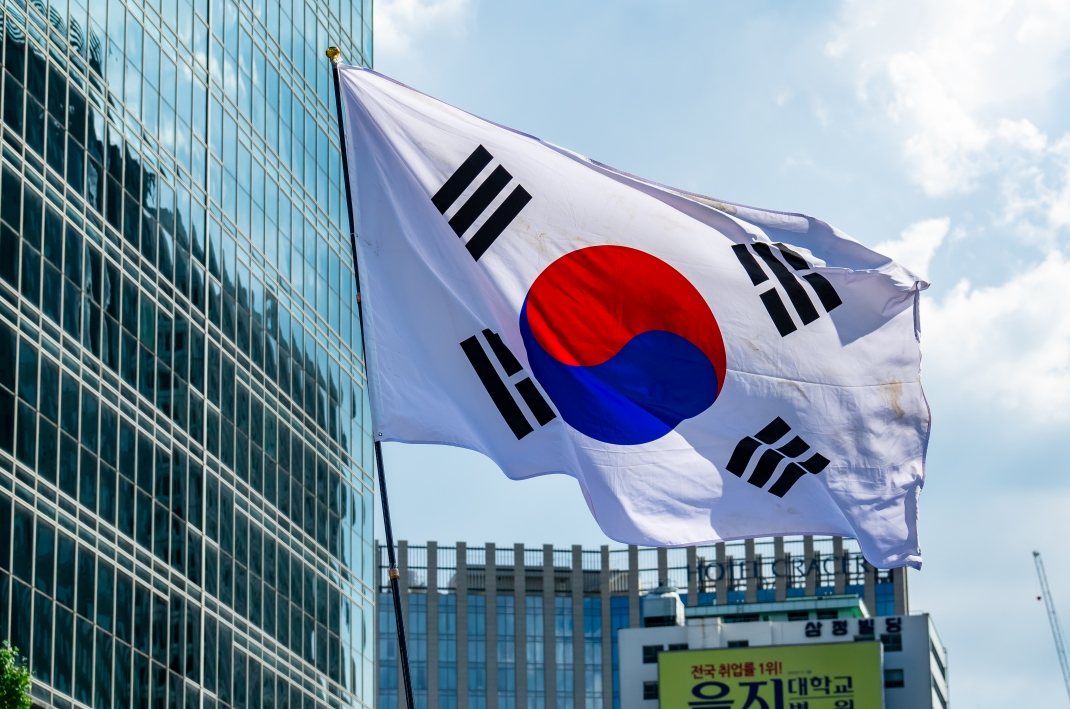
TradingKey — South Korean stocks have led global markets this year, surging nearly 80% year-to-date. Meanwhile, according to Bloomberg, foreign capital is fleeing the market at an accelerating pace, and BlackRock's (BLK) nearly $23 billion iShares MSCI South Korea ETF (EWY) , saw a record single-week net outflow of $970 million last week.
Does this mean the rally in South Korean stocks has peaked? Is the market headed for a sharp correction?
Why Investors are Trimming South Korea ETFs
According to Bloomberg, not only did the iShares MSCI South Korea ETF see weekly outflows of $970 million, but BlackRock's triple-leveraged product, the Direxion Daily MSCI South Korea Bull 3X ETF, (KORU) also saw $240 million in outflows during the same period, ending the continuous capital inflow trend into South Korea seen so far this year.
While South Korean equity ETFs recorded their largest outflows in history, South Korean stocks have recently hit multiple record highs. Most recently, on May 11, the KOSPI Composite Index closed up 4.32% at 7,822.24 points.
Todd Sohn, head of ETF strategy at Strategas Securities, stated that no one knows when the upward momentum of South Korean stocks will stop, and in such extreme circumstances, it is prudent to reduce holdings appropriately.
Some analysts also believe that the outflows do not mean foreign investors have turned bearish on South Korean stocks, but are merely a "mechanical operation." Malcolm Dorson, senior portfolio manager at Global X Management Co., said that given the sharp appreciation of Samsung and South Korean assets, portfolio concentration naturally rose, forcing some managers to sell in a passive rebalancing.
Malcolm Dorson pointed out that another source of outflows comes from active institutional profit-taking, as some managers choose to lock in gains.
KOSPI Hits All-Time Highs Amid Foreign Sell-Off: Profit-Taking or a Market Peak?
While net capital outflows are a negative signal for South Korean stocks, some analysts point out that the market still retains room for further upside. Currently, the KOSPI 200 call option skew has dropped significantly, meaning calls have become cheaper relative to puts; this indicates the market has relatively cooled and investors are no longer frantically chasing the rally. If the AI trade remains hot, the South Korean stock market could see a resurgence of FOMO, leading to another wave of frantic long positions.
Analysts at Nomura Securities shared a similar view in their latest report, suggesting that the current situation for South Korean stocks is complex. It remains difficult to determine whether net foreign selling is a bearish signal or if it has created room for subsequent buying; a key reversal signal to watch is when FOMO sentiment might heat up again.
Ihor Dusaniwsky, head of predictive analytics at S3 Partners, noted in a report this month that short sellers have increased their short positions on South Korean equities. S3 Partners data shows that short interest in the iShares MSCI South Korea ETF rose to 14.81%, the highest level since February 19.
Analysts hold differing views on this. Tom Graff, Chief Investment Officer at Facet, pointed out that the jump in short interest might not reflect a bearish outlook on Asian markets, but rather a strategy to hedge individual stock positions through the ETF market. However, Graff noted that it is essential to monitor whether the underlying logic supporting the South Korean stock market rally remains sufficient, such as factors like capital expenditures surrounding AI infrastructure.
Wall Street Bullish on South Korean Equities Reaching 10,000 Points, but Warns of Overheating Risks
According to Bloomberg data, analysts remain bullish on South Korean stocks, forecasting that earnings growth for components of the Korea Composite Stock Price Index (KOSPI) will exceed 200% over the next 12 months.
On May 10, JPMorgan Chase (JPM) raised its targets for the South Korean stock market for the second time in less than a month, lifting the KOSPI base-case target to 9,000 points and the bull-case target to 10,000 points; the investment bank had previously raised KOSPI targets in late April, setting a base-case of 7,000 and a bull-case of 8,500. Last week, Goldman Sachs (GS) also raised its KOSPI target to 9,000 points.
Steve Brice, Global Chief Investment Officer at Standard Chartered, warned that the risk of a correction in South Korean stocks is rising over the coming weeks, as long positions in the market have become highly crowded.
This content was translated using AI and reviewed for clarity. It is for informational purposes only.
Recommended Articles








Comments (0)
Click the $ button, enter the symbol, and select to link a stock, ETF, or other ticker.