


Yen Exchange Rate’s Shock Jump. Dropping 200 Pips Near 160 Level, BOJ’s Inaction Hides a Mystery, Buy the Dip or Seek Safety?



AI Podcast


The Bank of Japan maintained its policy rate at 0.75%, a move interpreted as a strategic pause rather than a dovish pivot. Governor Ueda issued hawkish signals, suggesting future rate hikes if economic data supports it, while also signaling intervention to stabilize surging JGB yields. The Yen experienced significant volatility, with traders awaiting clearer guidance on future policy. Rising JGB yields, driven by fiscal concerns and imported inflation, exacerbate Yen depreciation. Investors are advised to avoid speculative bets on intervention, execute currency exchanges in batches, and diversify assets to hedge against Yen volatility, favoring export-oriented companies.
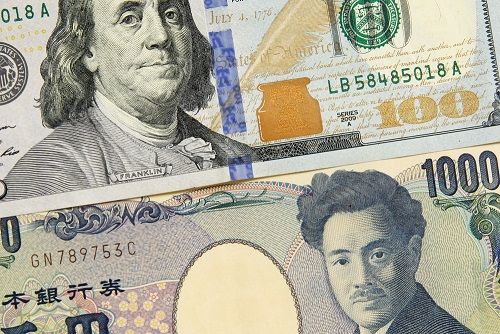
TradingKey - The 'rollercoaster' Yen has once again become the focus of the foreign exchange market! On January 23, USD/JPY experienced a series of 'rollercoaster' short-term movements, plunging nearly 200 pips from a high of 159.22 to 157.33 before quickly rebounding 80 pips to 158.50. Speculation of suspected intervention by Japanese authorities immediately flooded trading circles. While the Bank of Japan kept interest rates unchanged that morning, Governor Kazuo Ueda subsequently issued hawkish hints. With Japanese government bond (JGB) yields recently surging to a 27-year high, how should we interpret the current state of the Yen?
The Bank of Japan holds rates steady, but is it setting the stage for future hikes?
On Friday, the Bank of Japan announced it would maintain its policy rate at 0.75% as expected, causing the Yen to weaken in response. Many investors might wonder: 'Doesn't holding rates mean continued monetary easing? Why wouldn't the Yen fall?' In fact, this 'standstill' is more like a 'strategic wait-and-see' approach.
The BoJ had just completed a rate hike last December, making the probability of another hike within a month extremely low. More importantly, 'maintaining rates' does not mean 'abandoning future hikes'; this decision represents the central bank's prudent consideration of economic data and, more significantly, reserves room for future policy shifts.
Market reactions showed that the Yen's decline following the rate decision was limited, and it quickly rebounded due to suspected intervention. This indicates that traders did not interpret it as a 'dovish pivot' but are instead awaiting confirmation of the next hike signal. After all, the Yen has depreciated by over 7% against the Dollar since Sanae Takaichi took office as Prime Minister last October, nearing the critical 160 level. Every move by the central bank involves hidden trade-offs.
Kazuo Ueda releases 'hawkish' signals: Will the Yen's weakness end?
Since the market had already priced in the BoJ's decision to keep rates unchanged, investors focused more on Governor Kazuo Ueda's remarks, which directly impacted the Yen's trajectory.
Kazuo Ueda explicitly stated: 'If the economy develops as expected, we will continue to raise interest rates.' This marks another hawkish signal for 'monetary policy normalization' following the December hike. Combined with the central bank's upward revision of medium-to-long-term inflation forecasts, it shows a more optimistic assessment of price pressures and sets the stage for further hikes in 2026.
However, he also left himself an 'exit strategy,' noting: 'It is highly likely that overall inflation will fall below the 2% target; do not expect inflation to significantly exceed forecasts.' This suggests that rate hikes will not be 'reckless' and that the pace of cooling inflation must be monitored to avoid over-tightening and dragging down the economy.
Regarding the recent abnormal volatility in JGB yields, Kazuo Ueda also signaled intervention. Volatility in the Japanese government bond market has been far more dramatic than in the foreign exchange market. On January 20, the 10-year JGB yield briefly surged to 2.33%, its highest level since February 1999. In response, Ueda directly signaled intervention: 'Long-term rates are rising too quickly; the central bank will flexibly conduct bond operations under special circumstances to encourage the formation of stable yields.'
The Bank of Japan will not sit idly by as JGB yields spiral out of control. It will either support prices and push down rates through bond purchases or adjust its Yield Curve Control (YCC) policy to prevent a worsening 'double sell-off' in bonds and the currency.
Ueda emphasized that even after the December hike, Japan's financial environment remains accommodative. This statement may seem contradictory, but it reflects the central bank's 'balancing act': it must use rate hikes to curb inflation and alleviate Yen depreciation pressure while avoiding over-tightening that could derail economic recovery. Particularly amid growing fiscal concerns, stabilizing growth and the exchange rate are equally prioritized.
Surging government bond yields increase depreciation pressure on the Yen
Market movements in the bond market are a core reason for the Yen's continued pressure. The 10-year yield breaking 2.3% has directly hit the Yen's valuation. Expansionary fiscal policies under Sanae Takaichi's cabinet have caused the market to lose confidence in Japan's debt sustainability. Bond investors are voting with their feet; selling off JGBs has led to falling prices and surging yields, intensifying capital outflow pressure and naturally weighing on the Yen.
Yen depreciation has exacerbated Japan's imported inflation, with rising prices for energy, food, and other imported goods leading investors to worry about long-term inflation. To compensate for inflation-driven losses, investors are demanding higher 'duration premiums,' which has become a major driver of surging JGB yields, further suppressing the Yen in return.
How should ordinary people respond to Yen volatility?
With the Yen approaching the 160 level, many investors are torn over whether to 'buy the dip,' while others worry about the impact of exchange rate volatility on overseas consumption and investment. Here are a few suggestions for reference.
1. Speculative Trading: Don't bet on intervention; watch for signals
The Yen is highly volatile in the short term, and intervention at the 160 level is indeed possible, though its strength and sustainability remain unknown. Experts at Daiwa Capital Markets also noted that 'volatility was greater during past interventions, making it difficult to confirm current actions as intervention.' Ordinary investors are advised not to blindly bet on intervention plays. USD/JPY faces significant resistance at 160; avoid getting caught in 'rollercoaster' market traps.
2. Essential Currency Exchange: Execute in batches to avoid peaks
If you have an essential need for Yen (e.g., studying abroad, tourism, shopping), it is not recommended to exchange the full amount at once. With the current exchange rate in a historical low range, you can exchange in 2-3 batches—for example, 30%-50% first. If the rate nears 160, you can add to your position; if it pulls back below 156, you can also increase your holdings opportunistically to avoid entering the market entirely at a peak of volatility.
3. Asset Allocation: Diversify moderately to reduce exposure
For investors holding Yen-denominated assets, moderate diversification is recommended. This could involve increasing assets in strong currencies like the USD or EUR, or allocating to safe-haven assets like gold to hedge against Yen depreciation risks. Meanwhile, avoid long-term JGBs and interest-rate-sensitive Japanese real estate stocks. Focus instead on export-oriented companies (such as automotive and electronics) that benefit from a weaker Yen, though one should remain cautious of uncertainties arising from changes in fiscal policy.
This content was translated using AI and reviewed for clarity. It is for informational purposes only.
Recommended Articles









Comments (0)
Click the $ button, enter the symbol, and select to link a stock, ETF, or other ticker.