


Bessent Teams With Fed on Rate Pause as Goldman Doubles Down on Rate-Cut Wager



AI Podcast


U.S. Treasury Secretary Bessent endorsed the Fed's pause on rate cuts, aligning with Goldman Sachs' view on a mild stagflationary shock from U.S.-Iran conflict, yet maintaining a forecast of two rate cuts this year. Goldman Sachs analyst Jessica Rindels noted that while inflation will rise and growth slow, the economic impact will be less severe than the Russia-Ukraine war, insufficient to trigger a crisis or halt rate cuts. Despite potential headwinds and consumer spending dampening, core inflation is expected to decline, supporting anticipated September and December rate reductions by the Federal Reserve.
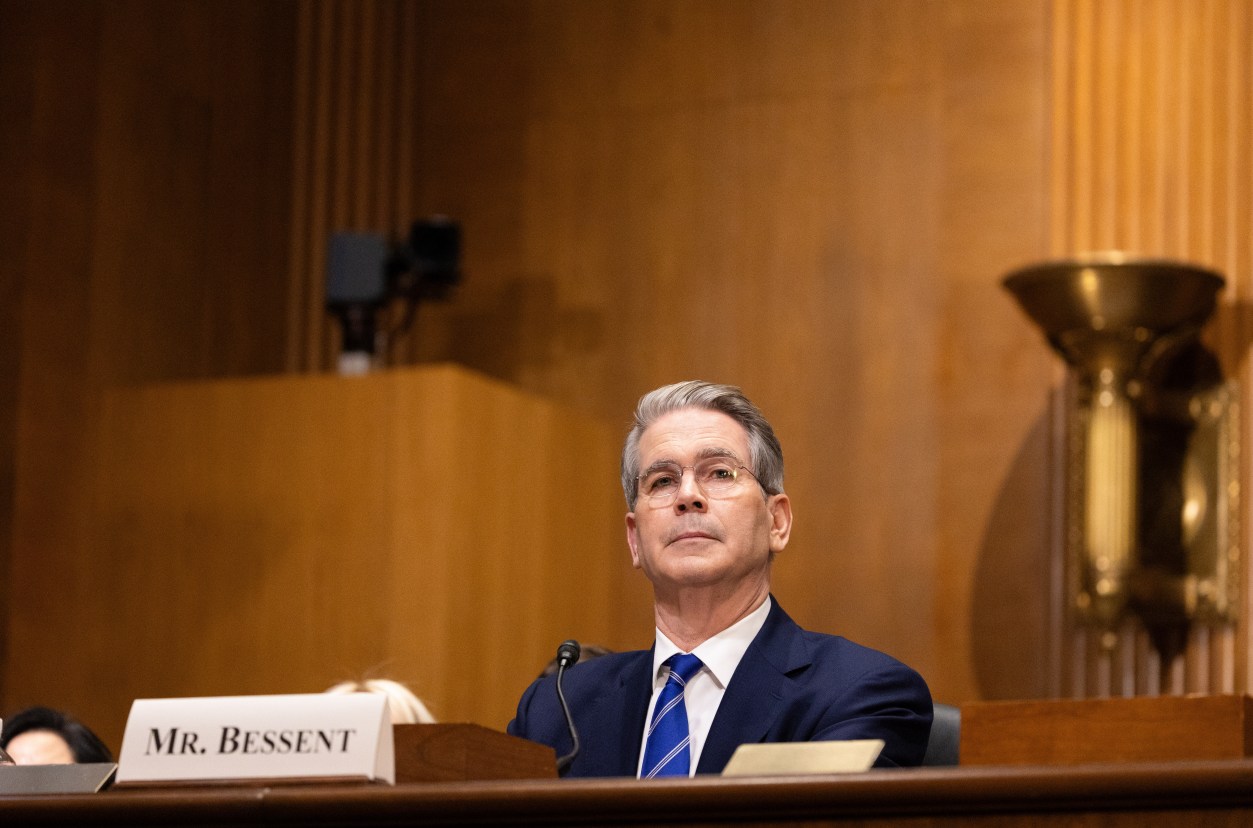
TradingKey - On Tuesday, U.S. Treasury Secretary Bessent offered a rare endorsement of the Federal Reserve's decision to pause interest rate cuts, stating that it "is the right move" for the Fed to remain on the sidelines until the war situation becomes clearer.
Recently, Goldman Sachs (GS) also released its latest stance on the Federal Reserve's monetary policy path: the current conflict between the U.S. and Iran is expected to bring a mild stagflationary shock, and the bank maintains its forecast of two rate cuts this year.
On Tuesday Eastern Time, Trump hinted in an interview that the U.S.-Iran hostilities are nearing an end and that the two sides might return to the negotiating table in Pakistan. Iranian media reported that delegations from both countries could resume talks later this week. However, while sending signals of reconciliation, Trump is further tightening controls on crude oil shipments. The Trump administration has decided to terminate the waiver policy as scheduled after the sanctions waivers on Iranian oil exports expire on April 19.
Why does Goldman Sachs firmly maintain its forecast of two rate cuts this year while the war situation remains unclear?
'Stagflation Lite' vs. The 2022 Shock
Goldman Sachs analyst Jessica Rindels recently provided clients with an economic analysis framework to navigate the current uncertain state of war and potential sustained energy volatility. The framework's core assessment is that while a U.S.-Iran conflict would bring a mild stagflationary shock, its intensity would be far lower than that of the 2022 Russia-Ukraine war.
Rindels' forecast also includes other details regarding the potential market impacts of the conflict: an uptick in inflation, a slowdown in economic growth, and a slight increase in the unemployment rate. However, she believes these effects are insufficient to trigger a full-scale supply chain crisis or force the Federal Reserve into panic rate hikes. Based on this analysis, Goldman Sachs has lowered its GDP forecast and slightly raised its unemployment rate projections.
The Missing Capex Buffer
Rindels contends that rising oil prices will drive up headline inflation by eroding household purchasing power while squeezing consumer spending, which is why Goldman Sachs has raised its inflation forecasts and lowered its GDP growth projections. Crucially, unlike traditional cycles, this price spike will not trigger a significant expansion in capital expenditure within the U.S. shale industry.
Consider that in a high-price environment, if the shale industry were to substantially increase capital expenditure on large-scale equipment procurement and infrastructure construction, it would not only boost crude oil production in the short term—causing oil prices to retreat and inflationary pressures to ease—but also offset rising unemployment through job creation and translate the increased revenue from high oil prices into oil-sector GDP, partially counteracting the impact of weak consumption.
In Rindels' analytical framework, however, none of this will materialize. Consequently, she believes the impact of this shock on the economy will be primarily reflected in intensified downside pressure on the consumer side, with the industrial sector unlikely to receive any upside support, leaving the broader economy with fewer buffers.
Betting on a Core Inflation Retreat
While Rindels anticipates mild stagflation from this shock, she expects core inflation to recede further, noting these two views are not mutually exclusive. Core inflation measures price trends excluding volatile food and energy costs. This suggests that while headline inflation rises, high oil prices may dampen consumer demand, which in turn could weaken prices and drive core inflation lower.
Additionally, Rindels noted that as the impact of tariffs fades from year-over-year comparisons, inflation will see a natural statistical decline that is expected to offset the upward pressure from rising energy prices.
Driven by this cooling inflation logic and rising unemployment, the Federal Reserve will gain stronger momentum for rate cuts, underpinning Goldman Sachs' forecast for 25-basis-point reductions in both September and December.
However, Rindels acknowledged the uncertainty, stating it would not be surprising if the Fed holds rates steady should FOMC members view inflation as still too high, especially given potential headwinds like leadership transitions and Chair Jerome Powell's possible departure.
This content was translated using AI and reviewed for clarity. It is for informational purposes only.
Recommended Articles







Comments (0)
Click the $ button, enter the symbol, and select to link a stock, ETF, or other ticker.