


Powell Explicitly Vows to Stay for the First Time, Can Trump Still Control the Fed as He Wishes?



AI Podcast


Jerome Powell stated he will not resign as Federal Reserve Governor until the DOJ investigation concludes, impacting President Trump’s ability to appoint a successor. Powell's term as Chair ends soon, but his Governor term extends to 2028. He indicated he would serve as interim Chair if Kevin Warsh's nomination is not confirmed, a process facing delays due to the ongoing investigation. The DOJ investigation focuses on Powell's testimony regarding building renovations. Legal rulings have challenged the subpoenas, with an appeal expected. Trump has consistently pressured the Fed for rate cuts, creating a confrontation over the central bank’s independence.
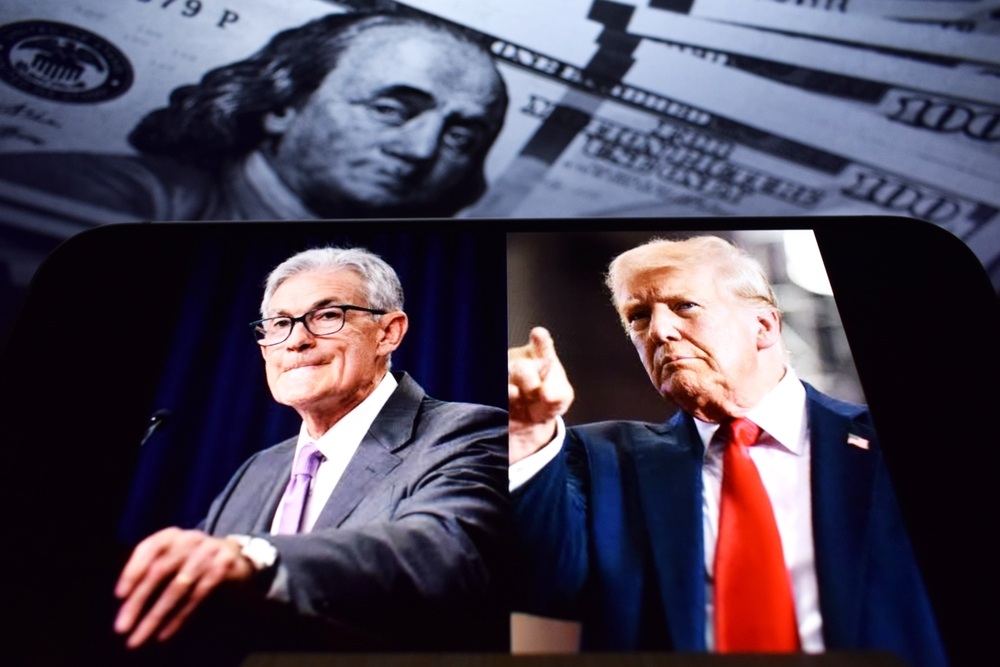
TradingKey - Federal Reserve Chair Jerome Powell made it clear for the first time during the press conference following Wednesday's policy meeting that he will not resign as a member of the Federal Reserve Board of Governors until the U.S. Department of Justice's criminal investigation into him is fully concluded, marking the first time he has publicly discussed his departure plans.
Powell's statement deals a direct blow to President Trump's plans to reshape the Federal Reserve. Should he remain on the Board of Governors, Trump will lose a seat that he could have otherwise filled with his own appointee. Currently, three of the seven Fed governors were appointed via Trump's nominations.
Although Powell's term as chair expires in mid-May, his term as a member of the Federal Reserve Board does not end until January 31, 2028.
He also stated that even after his term as chair ends, he may continue to serve as interim chair until his nominated successor, Kevin Warsh, is confirmed by the Senate. However, Warsh's confirmation process has stalled because a senior Republican senator publicly declared they would block the nomination as long as federal prosecutor Jeanine Pirro's investigation into Powell is ongoing, with less than two months remaining until Powell's term as chair expires.
Historically, it is extremely rare for a Fed chair to remain on the board after their term as chair ends; the last to do so was former Fed Chair Marriner Eccles, who stayed on in 1948 at the request of then-President Truman.
Powell's Continuation as Interim Chair
Powell stated that if the Senate fails to confirm Trump’s nominee, Kevin Warsh, before his term as chair expires, he will serve as interim chair as "required by law" until Warsh is confirmed.
He noted that in 2022, he himself served as interim chair for more than three months while awaiting confirmation for reappointment, stating, "We have followed this practice several times before, and we will do so this time as well."
Currently, Warsh's confirmation process is at a standstill. Last week, a federal judge formally quashed two investigative subpoenas issued by the U.S. Department of Justice to the Federal Reserve. This ruling dealt a significant blow to the investigation into Powell led by U.S. Attorney for the District of Columbia Jeanine Pirro, who has stated she will appeal the decision.
The core of the DOJ's investigation into Powell focuses on a few minutes of testimony he gave before Congress last summer regarding the renovation of the Federal Reserve building. Last week's court ruling stated that the subpoenas issued by the DOJ constituted improper law enforcement actions, suggesting their true purpose was to force Powell to lower the federal funds rate or resign through "harassment and pressure."
North Carolina Republican Senator Thom Tillis said that once the appeals process begins, the Senate confirmation process for Trump's Fed successor nominee, Kevin Warsh, is bound to be further delayed.
Even if the investigation is eventually settled, and even after Warsh is successfully confirmed by the Senate to officially take over as Fed chair, Powell can still choose to remain on the Federal Reserve Board of Governors to serve out his 14-year term, which does not expire until January 2028.
He emphasized that this choice is "not based on personal considerations" but will focus on doing "what is best for the Federal Reserve institution and the people it serves."
Since 1978, there have been three instances where a sitting Fed chair's term expired before the Senate had confirmed a new chair; in each case, the incumbent transitioned into the role of interim chair.
In 1996 and 2022, the sitting chairs were themselves awaiting Senate confirmation for reappointment, while in 1978, the White House requested that the outgoing chair stay on until the new chair was officially in place. Powell specifically emphasized that such transition arrangements are procedures clearly defined by law, rather than ad hoc solutions.
The Federal Reserve Amidst Power Struggles
For months, President Trump has publicly expressed an urgent desire for Fed Chair Jerome Powell to leave office. As Powell takes a firm stance on staying, his relationship with Trump is in a state of rare confrontation—since returning to the White House over a year ago, Trump has repeatedly criticized the Fed for failing to cut interest rates sharply as he requested, and has even threatened to fire Powell on several occasions.
The Federal Reserve's personnel mechanism is inherently complex, as the chair also serves as a governor, with the two positions having different terms. Furthermore, while the chair of the Federal Open Market Committee (FOMC) has traditionally been held by the Fed chair, the position is actually elected by FOMC members, which adds further uncertainty to the transition of power.
Currently, the Trump administration's legal offensive against the Fed is widely seen as direct pressure on the central bank's independence. The U.S. Congress granted the Federal Reserve the power to independently set interest rate policy. Fed officials and many private-sector economists generally believe that monetary policy free from political interference leads to more stable economic outcomes, whereas central banks subservient to the government often perform poorly in controlling inflation.
In fact, Trump and his allies have long been paving the way for Powell's departure. In 2024, shortly before being nominated as Treasury Secretary, Bessent proposed the idea of a "shadow chair"—appointing a successor to Powell in advance and having them publicly comment on monetary policy to undermine Powell's authority.
Although Bessent quickly denied the plan afterward, Trump had told allies last summer that he liked the idea of locking in a successor early, though he did not formally nominate Kevin Warsh until this January.
Just before the Fed's policy decision on Wednesday, Trump had pressured for a rate cut. However, the Fed's decision to hold rates steady received broad support, with even two of the three governors appointed by Trump voting in favor.
The Federal Reserve at a Crossroads
It is noteworthy that the threshold for rate cuts at the Federal Reserve is now significantly higher than it was last year. Last year, the Fed cut rates three times, which officials characterized as a "policy recalibration" aimed at adjusting interest rates to a less restrictive range. At that time, rate cuts did not require substantial positive inflation data, only confidence that inflation would eventually trend downward.
Now, the Federal Reserve may be entering a new phase where the focus of policy debate is no longer limited to the magnitude of rate cuts, but has shifted to a directional choice between raising or lowering rates next.
The "recalibration" process of the past two years, during which Fed officials gradually lowered rates to move toward a "neutral rate," now appears to be facing a potential end.
This policy shift coincides with the impending leadership transition at the Federal Reserve, a timeline that has become increasingly uncertain due to investigation and nomination deadlocks. This leaves a central question increasingly fraught with variables: When the Fed is forced to make its next difficult policy choice, who exactly will hold the gavel?
Recommended Articles












Comments (0)
Click the $ button, enter the symbol, and select to link a stock, ETF, or other ticker.