


Iran Attacks Israel Again. Oil Prices Once Surge, Three Major US Index Futures Turn



AI Podcast


Iran directly attacked Israel with ballistic missiles following Israeli airstrikes, shattering the recent ceasefire. While Israel reported intercepting all missiles, significant geopolitical risk repricing occurred. WTI crude futures jumped over 3% to $93.45, and Brent surged 3.6% to $96.47. U.S. stock futures narrowed gains as safe-haven sentiment intensified. Escalation risks and the fragility of the Strait of Hormuz shipping passage are elevated. Further military actions could drive oil prices above $100.

TradingKey - Tensions in the Middle East have escalated sharply once again. On the evening of June 7 local time, in response to Israeli airstrikes on the southern suburbs of Beirut, Lebanon, Iran launched at least three rounds of ballistic missiles at the Israeli mainland, marking its first direct attack on Israeli territory since the ceasefire between the two countries on April 8.
Air raid sirens were triggered across multiple locations in northern Israel. The Israeli military stated it intercepted all incoming missiles, though two people were injured while heading to shelters. However, Israeli officials have clearly stated they "will provide a forceful response," suggesting potential further military retaliatory actions.
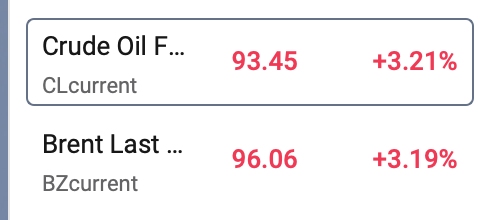
Geopolitical risks were repriced instantaneously. WTI crude oil futures jumped over 3% in early Asia-Pacific trading to $93.45 per barrel, while Brent crude oil futures once surged 3.6% to touch $96.47 per barrel.

U.S. stock index futures saw their collective gains narrow, with Dow Jones futures down 0.27%, S&P 500 futures briefly turning negative by over 0.2%, and Nasdaq 100 futures also touching flat levels. Market safe-haven sentiment has intensified significantly.
U.S. President Trump spoke out immediately following the incident, urging Iran to return to the negotiating table while stating he would call Israeli Prime Minister Netanyahu to explicitly request that Israel "not retaliate."
This round of conflict has completely exposed the fragility of the previous ceasefire agreement, casting a shadow once again over the prospects for shipping through the Strait of Hormuz. The market is closely watching whether the U.S. and Israel will take further counteractions, and short-term oil price trends will continue to fluctuate violently in line with the evolving situation in the Middle East.
For investors, the geopolitical premium is currently the dominant pricing logic in the oil market, and any new signals of military escalation could drive oil prices to push above the $100 mark.
This content was translated using AI and reviewed for clarity. It is for informational purposes only.
Recommended Articles







Comments (0)
Click the $ button, enter the symbol, and select to link a stock, ETF, or other ticker.