


Nikkei Index Drops Nearly 4% at Open, Year-to-Date Gains Narrow, Kioxia and SoftBank Both Slump



AI Podcast


Japanese and South Korean markets opened lower, influenced by a sharp overnight decline in U.S. tech stocks and the Philadelphia Semiconductor Index. Factors contributing to the slump include Broadcom's missed AI chip sales guidance, stronger-than-expected U.S. non-farm payrolls increasing rate hike expectations, and persistent yen weakness impacting foreign investor appetite. This led to significant foreign selling of Japanese equities. The Nikkei 225 experienced a three-day losing streak, narrowing its year-to-date gains. Key levels to monitor are 64,000 and 62,500 for the Nikkei, alongside Japanese GDP data and Bank of Japan policy signals.

TradingKey - Japanese and South Korean stock markets opened significantly lower on Monday (June 8), extending the panic from last week's overnight plunge in U.S. tech stocks. The Nikkei 225 Index opened 0.9% lower and saw its decline widen rapidly, falling nearly 4% intraday to hit a low of 63,987, before recovering after dipping below the 64,000 psychological level.
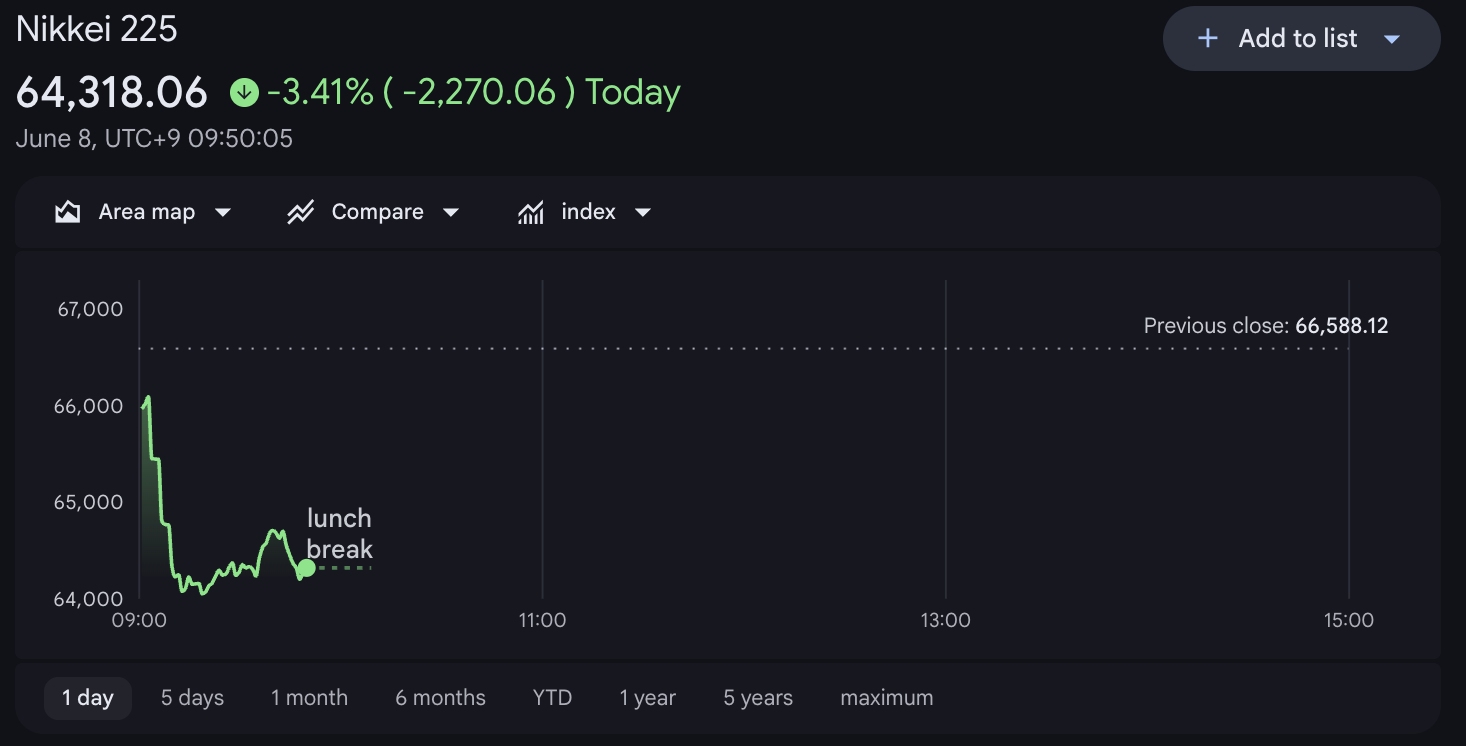
Shares of semiconductor manufacturer Kioxia tumbled as much as 8.5% at one point, while SoftBank Group shares dropped 9%. Toyota Motor, which had not previously benefited significantly from the AI wave, remained relatively resilient.
Reasons for the plunge in Japanese stocks?
The plunge in Japanese stocks was primarily driven by a confluence of multiple factors.
Previously, the Philadelphia Semiconductor Index (SOX) in the U.S. plunged 10.26% last Friday, June 5 (ET), marking its largest single-day drop since March 2020, as Broadcom tumbled over 15% after its AI chip sales guidance missed expectations.
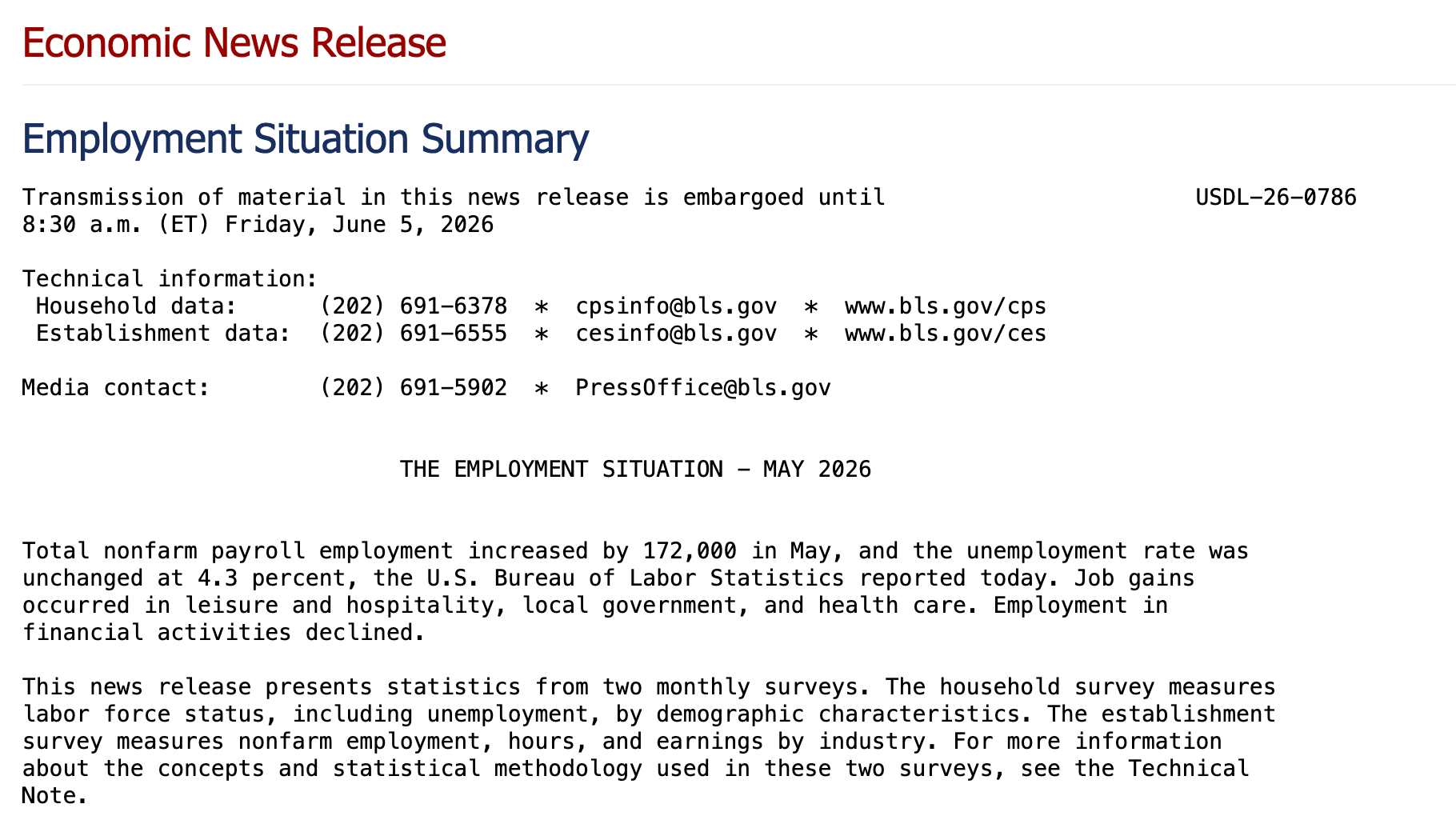
Meanwhile, U.S. non-farm payrolls for May far exceeded expectations, causing market expectations for the Federal Reserve to resume interest rate hikes to surge, with the 10-year U.S. Treasury yield returning above 4.5%.
Equally significant but overlooked by many investors is that the persistent weakness of the yen has weighed on foreign risk appetite for Japanese equities, leading to a second consecutive week of net selling as USD/JPY once again touched the Bank of Japan's intervention window at 160.
Today's plunge in Japanese stocks coupled with circuit breakers in South Korean markets, together forming the strongest systemic correction in Asia-Pacific equity markets this year.
The Nikkei 225 has experienced a three-day losing streak, with year-to-date gains narrowing after a long period of strength driven by economic recovery and the AI supply chain boom. Data from Japan's Ministry of Finance shows that net foreign selling of Japanese stocks hit a new high for the year last week, as institutional capital accelerates its exit.
Investors should monitor the upcoming revised Q1 GDP data for Japan, the Bank of Japan's guidance on rate hikes in its June policy decision, and the movement of the 10-year U.S. Treasury yield. If the Nikkei falls below the 64,000 psychological level, the next key support level moves down to near 62,500.
This content was translated using AI and reviewed for clarity. It is for informational purposes only.
Recommended Articles








Comments (0)
Click the $ button, enter the symbol, and select to link a stock, ETF, or other ticker.