


Don’t Buy Gold in Turbulent Times? Why Are Gold and Silver Falling Collectively?



AI Podcast


Precious metals gold and silver have experienced a sharp decline, driven by shifting interest rate expectations and diminishing safe-haven demand. The conflict in the Middle East has fueled inflation concerns, prompting central banks to signal fewer rate cuts and even tighten policy, increasing the opportunity cost of holding non-yielding assets. This has led to significant outflows from gold and silver ETFs, with both retail and professional investors reducing holdings. Technically, gold faces further downside risk, potentially testing support near $4,000. Investors are cautioned against a blind "buy the dip" strategy due to extreme market volatility.
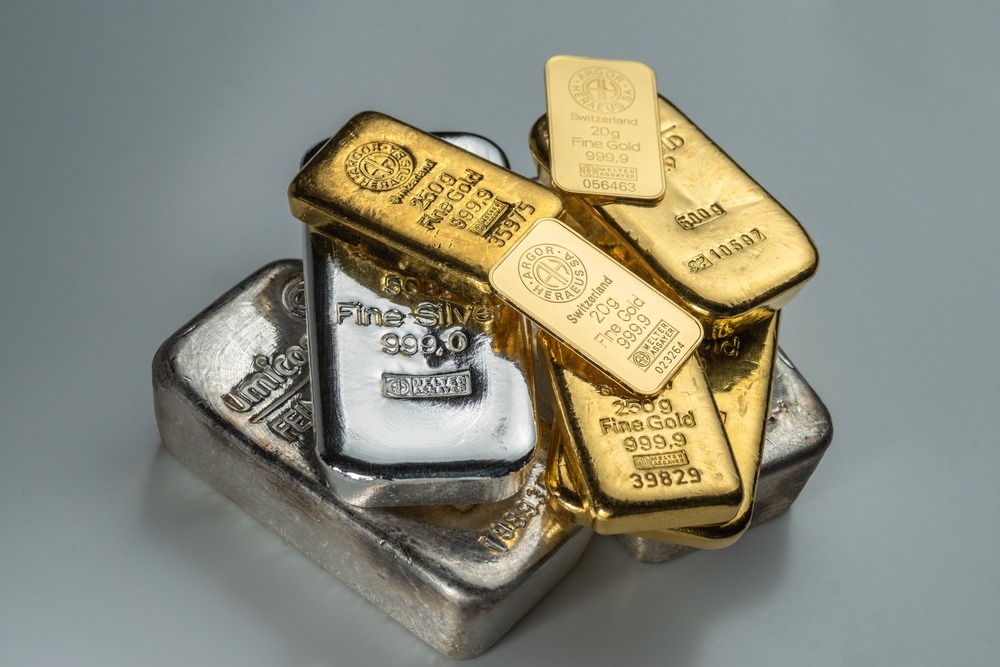
TradingKey - Against the backdrop of the escalating conflict between the U.S. and Iran, gold and silver, once considered "hard currency in times of chaos," have now become victims of rising inflation expectations.
On Thursday, March 19, spot gold ( XAUUSD) slumped 3.5% in a single day, briefly breaking below the $4,500 mark and hitting a six-week low; silver ( XAGUSD) experienced a "roller coaster" ride during the session, with its decline narrowing significantly after a 12% crash, though it still closed down 3.3% late in New York trading.
As traditional safe-haven assets, gold and silver are expected to serve as stores of value during periods of war, inflation, or market volatility. At the end of January, both reached new all-time highs, but are now undergoing a sustained correction.
Reversal of Interest Rate Expectations
The core logic behind this plunge in precious metal prices lies in the fundamental restructuring of the global interest rate environment. The surge in energy prices triggered by the Middle East conflict has completely reversed market expectations for the inflation outlook, thereby breaking the previous consensus on central bank interest rate cuts.
As non-yielding assets, gold's attractiveness is highly negatively correlated with interest rate levels. In a low-rate environment, the opportunity cost of holding gold is low, often attracting safe-haven inflows. Conversely, when rates rise or rate-cut expectations fail to materialize, the value proposition of fixed-income assets like bonds improves significantly, leading to a sell-off in gold.
The energy shock caused by the war in the Middle East has left global central banks caught in a dilemma between "fighting inflation" and "stabilizing growth." This week, several central banks issued a flurry of hawkish signals, completely shattering the market's illusions of rate cuts.
The Federal Reserve maintained its interest rate range at 3.5%-3.75% for the second consecutive time. Chairman Jerome Powell explicitly stated that the Middle East situation is disrupting the pace of disinflation, with the Fed leaning toward fewer rate cuts. While keeping its policy unchanged, the Bank of Japan acknowledged that the situation in the Middle East has complicated the outlook for monetary policy.
The European Central Bank not only held rates steady but also lowered growth forecasts and raised inflation projections, hinting at rising stagflation risks. The Bank of England unexpectedly issued a tough signal, explicitly stating it is "ready to take action at any time" to combat inflation.
"This repricing is critical for gold because gold doesn't trade solely on fear," said Tracy Schuchart, Senior Economist at NinjaTrader. "It also trades on the opportunity cost of holding a zero-yield asset, and that cost has just spiked."
"Silver is equally sensitive to interest rates, and with industrial demand taking a hit during stagflation, it has been impacted even more," she added. "Safe-haven demand from Iran lasted about 48 hours. As long as crude oil prices remain high, this repricing will continue."
Meanwhile, the latest U.S. economic data has further reinforced this trend. Weekly initial jobless claims unexpectedly fell to a year-to-date low of 205,000, indicating that the labor market remains strong. Consequently, traders have completely abandoned bets on a Federal Reserve rate cut in 2026.
Aakash Doshi, Head of Global Gold and Metals Strategy at State Street Global Advisors, noted that before the war, the market expected the Fed to cut rates twice this year, but current market pricing fully reflects the expectation of "no easing at all this year."
Adrian Ash, a researcher at online trading platform BullionVault, also believes that the significant delay in the Fed's rate-cut plans constitutes a substantial mechanical headwind for precious metals.
This mirrors the market performance following the Russia-Ukraine conflict in 2022, when surging energy prices pushed up global inflation, causing gold to fall for seven consecutive months from April to October of that year. History is repeating itself as gold undergoes a new round of revaluation amid the reversal of global interest rate expectations.
The Ebbing Fever for Precious Metal Investment
As gold prices continue to slide, market sentiment is shifting from last year's frenzy to sobriety, with retail and professional investors simultaneously entering a mode of reducing their holdings.
Over the past year, retail investors were a major driving force in the gold ETF market, but this enthusiasm is rapidly fading. According to VandaTrack data, SPDR Gold Shares, the world's largest gold ETF, has seen net retail selling for six consecutive trading days, with cumulative net sales reaching approximately $10.5 million as of mid-day Thursday.
Although this scale remains modest compared to last year's single-day peak of $36.8 million in buying, the shift in market direction has sent a clear signal that retail appetite for gold allocation is weakening significantly.
While retail investors are trimming holdings, professional investors are also adjusting their precious metal positions. Commodity Trading Advisors (CTAs), which rely on algorithms to identify price trends and have been steadfast supporters of the gold bull trend for the past six to twelve months, are now sharply cutting position sizes through risk management amid heightened market volatility.
Tom Wrobel, Director of Capital Consulting at Société Générale, pointed out that although CTAs overall still hold gold longs, their positions have contracted significantly from previous levels, reflecting institutional investors' concerns over short-term market risks.
Suki Cooper, Head of Global Precious Metals Research at Standard Chartered, analyzed that multiple drivers lie behind the current investor sell-off.
On the one hand, the substantial rise in gold and silver prices over the past two years has led some investors to take profits to cover losses in other assets like stocks or even to meet margin calls.
On the other hand, a strengthening dollar and the emergence of new investment opportunities, such as energy stocks, are diverting capital that would have otherwise flowed into the precious metals market. Liquidity needs in other areas have outweighed the importance of gold's geopolitical risk premium.
Short-term Bearish Outlook for Gold
Since the U.S.-Israeli strikes on Iran last month, gold has fallen for three consecutive weeks, a trend directly linked to the strengthening dollar and rising U.S. Treasury yields.
Rising Treasury yields increase the opportunity cost of holding non-yielding gold, leading to outflows from the gold market, which in turn pushes up the U.S. dollar, creating a double whammy for gold. This phenomenon mirrors the market behavior following the outbreak of the Russia-Ukraine conflict in 2022, when gold experienced a seven-month losing streak for similar reasons—the longest on record.
From a technical perspective, the short-term outlook for gold is also not optimistic. Yardeni Research noted that gold prices have broken below the short-term uptrend line and, having risen too quickly and too far this year, have now fallen out of the long-term trend channel. It could potentially test support near $4,000, representing nearly 14% downside from current levels.
The firm stated that while it initially expected gold prices to rise amid geopolitical turmoil, rising inflation, and expanding debt, it would consider lowering its year-end gold target from $6,000 to $5,000 if the current downtrend persists.
Facing the current market situation, former JPMorgan ( JPM) precious metals trader Robert Gottlieb warned against blindly buying the dip in gold, as current market volatility is extreme and further selling could occur before it narrows and prices stabilize.
This content was translated using AI and reviewed for clarity. It is for informational purposes only.
Recommended Articles







Comments (0)
Click the $ button, enter the symbol, and select to link a stock, ETF, or other ticker.