


Today’s Market Recap: Wall Street Rattled by Greenland Tariff Tensions Amid Major Tech and Trade Shifts



Tracking the Market Trend
On January 20, 2026, geopolitical tensions overshadowed corporate earnings as President Trump’s Greenland-related tariff threats triggered a broad retreat across Wall Street.
The S&P 500 fell 2.06% to close at 6,796.76, while the Nasdaq Composite dropped 2.39% to 22,954.32. The Dow Jones Industrial Average also slid 1.76%, finishing at 48,488.58, as a "Sell America" sentiment and fears of a trade conflict sparked a global "risk-off" environment.
Megacap technology stocks bore the brunt of the sell-off. Nvidia (NVDA) and Tesla (TSLA) were among the worst performers, falling 4.32% and 4.17%, respectively, as investors moved away from high-valuation names in the artificial intelligence and electric vehicle sectors. This market recoil was a direct response to President Trump’s weekend announcement linking potential new tariffs to European nations that oppose his bid to purchase Greenland.
The sharp downturn served as a stark reminder of how rapidly geopolitical shifts can impact the market, particularly for high-multiple sectors with elevated valuations. While the sell-off was global in scope, the "Magnificent Seven" and large-cap U.S. tech stocks led the decline, dragging the Nasdaq to a two-week low. In contrast, defensive stocks and precious metals outperformed, reflecting a pivot toward safety by cautious traders.
Despite the current volatility, analysts suggest maintaining perspective. Major U.S. indices are coming off their third consecutive year of double-digit gains in 2025, and 2026 has also started on a strong note. Historically, similar tariff-related shocks — such as the one seen last April — have eventually provided attractive buying opportunities. With earnings season underway, long-term investors may want to monitor the market for compelling entry points in high-conviction stocks.
Market Headline
Canadian Prime Minister Mark Carney has announced a major shift in trade policy, lowering tariffs on Chinese electric vehicles from 100% to just 6.1%. Speaking on January 16, Carney confirmed that Canada will permit the import of up to 49,000 Chinese EVs under this preferential Most-Favored-Nation (MFN) rate. The Prime Minister noted that this move effectively restores trade conditions to levels seen before recent bilateral frictions.
The race for the Federal Reserve Chairmanship has been upended by President Trump’s request for Kevin Hassett to remain in the White House. Trump expressed a strong desire for Hassett to continue as Director of the National Economic Council, calling him one of the administration's most vital economic spokespeople. Following the news, market analysts now identify Kevin Warsh as the leading candidate for the Fed's top spot. This shift caused the U.S. Dollar to erase its daily losses, while the S&P 500 and Nasdaq indices trended downward.
Kevin Hassett has publicly pledged to uphold the Federal Reserve's independence while revealing plans for a major 401(k) policy overhaul. Amid speculation regarding the Fed chairmanship, Hassett emphasized that central bank autonomy is essential for economic stability. He also announced he will accompany President Trump to the Davos World Economic Forum next week to introduce a policy allowing Americans to use 401(k) savings for home down payments. Furthermore, Hassett confirmed progress on the "Trump Card" financial initiative and signaled approval for other potential Fed candidates.
President Trump has triggered a trade dispute with Europe by announcing tariffs aimed at securing the purchase of Greenland. Citing opposition from eight European nations regarding his bid to acquire the territory, Trump declared a 10% tariff effective February 1, 2026, which will escalate to 25% on June 1. The tariffs are intended to remain until a deal for the "complete purchase" of Greenland is finalized. European leaders, including French President Emmanuel Macron, have labeled the threat "unacceptable" and vowed a coordinated European response.
OpenAI is diversifying its revenue streams by introducing advertisements and a new $8 monthly subscription tier. The upcoming "ChatGPT Go" plan will join the free version in featuring advertisements, while high-tier Plus and Pro accounts will remain ad-free. This shift is widely viewed as a move to offset massive computational costs and prepare the company for an eventual IPO. OpenAI has assured users that ads will be clearly distinguished from AI-generated content and that dialogue data will not be shared with advertisers.
Elon Musk’s xAI has reached a technological milestone with the launch of "Colossus 2," the world’s first gigawatt-scale AI compute cluster. Constructed in less than a year, the facility is slated for an upgrade to 1.5GW by April 2026. The scale of this operation is unprecedented; a 1GW power load surpasses the peak electricity usage of San Francisco and matches the output of a major industrial power plant.
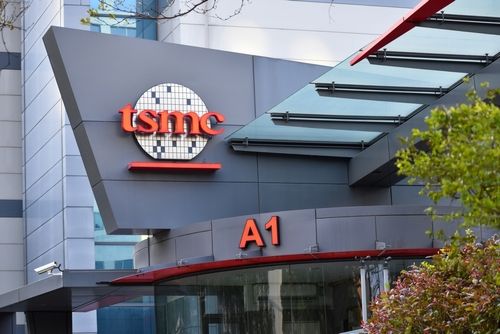
TSMC (TSM) is significantly expanding its Arizona footprint, purchasing 900 additional acres to house a "Mega-Fab" cluster. The semiconductor giant originally planned to build six wafer fabs and advanced packaging facilities on an 1,100-acre site. However, as the scope of its U.S. expansion has grown, the company determined the original land was insufficient, leading to this latest massive land acquisition to support its long-term manufacturing goals.
Recommended Articles





Comments (0)
Click the $ button, enter the symbol, and select to link a stock, ETF, or other ticker.