CORRECTED-COLUMN-This conservative activist is no fan of Trump's SEC: Ross Kerber

By Ross Kerber
March 4 (Reuters) - Pay attention when rivals join the same side of an argument. That happened recently when the leader of the National Legal and Policy Center, a conservative-leaning shareholder group, co-wrote an op-ed piece with an author from Ceres, the liberal-leaning climate organization. The article, published by the Wall Street Journal, argued Securities and Exchange Commission Chairman Paul Atkins is out to "silence shareholders."
To hear more I dialed up Paul Chesser, a director at the NLPC, which submits about two dozen shareholder resolutions a year putting companies on the spot on topics like diversity programs or ties to China. We spoke about the leverage the resolutions give activists and the impact of the SEC's changes so far.
A transcript of our remarks follows, edited for length and clarity.
Question: Paul, I'm glad you're here because it's an interesting proxy season, the first under new appointees of President (Donald) Trump overseeing the whole process from sort of the fall period where proponents are first getting their resolutions together into the springtime shareholder meeting season when companies are talking to people like you.
Answer: Those big asset managers and investment firms, it's not in their interest to do shareholder proposals. They're so enormous and they represent so many different pensions and retirement IRAs, ESOP funds. They've got so much under their umbrella that, if they did a shareholder proposal, they'd tick off a good amount of their (customers).
Q: Tell us how your year is going. You've had a number of pretty high-profile settlements so far with stock issuers?
A: We've particularly focused on our proposals that address DEI. So last year we had a heavy dose of DEI proposals that just asked some companies to eliminate bonuses or incentives for executive officers. Tied to DEI criteria. And it was just always a very small amount. And so we had very limited success with those. A couple of companies withdrew or acted and took action on that. So this year, most of the companies had eliminated that, even though the proposals that we had gotten through got very low vote support. So this year we were looking at board of director criteria ... race, gender, sexual orientation, all those things you think of when you think of DEI criteria.
Q: Just to explain the mechanics of this, the proposals you file effectively give you leverage or at least are a frame of conversation that a company can then have with you, right? And they will say, if we can make a deal here, you agree to withdraw the proposal if they make a certain change.
A: Yeah. And just for context, companies hate shareholder proposals. They're a nuisance to them. Usually somebody's bringing it because they have a criticism of the company and they just, they want to do everything they can that's possible to get the proponent to withdraw. So if they can work out some kind of minimally painful step to give us to withdraw, they do it.
Q: In a lot of cases, when your resolutions go to a vote or those of your allies, they get very low percentages. Like we were talking before about the one at Apple that you had supported. It was by another conservative-leaning shareholder group, about Apple's entanglements with China, I think was the title of it. And the (SEC disclosure form) 8-K shows it got 1.4% support. This is nothing. Why do these companies listen to you at all?
A: We're sort of one leverage point in a whole conversation and public policy approach. And this goes into how the SEC manages things and everything. But that's why the Left has been so successful in influence. They've used it as one point of leverage with the corporations, because corporations are highly influential in where the culture, where the public policy goes, climate, what have you, whatever issue, DEI, ESG, net zero, any of those kinds of things.
Q: Whether it's your side or the more liberal shareholder-leaning groups, it's still like a very small amount of money (that sponsors resolutions). Why is it that companies are responsive to any of this?
A: Those proposals can be used as platforms or vehicles for press releases, for media coverage. Then if you get into what we call an exempt solicitation report, which expounds on the proposal, and you can articulate there your points of view. So they're just one little, that's sort of the beginning wedge or the beginning discussion point.
Q: The big change for this proxy season that the SEC has put forward is their new way of treating the no-action process. Has that affected you in some way?
A: It's not affected us, but we're not the best measuring stick for it. A lot of what our proposals were this year, like 12 or 13 of them, are independent chair proposals because we just, we have a lot of holdings where we're concerned about leadership and Chairman CEOs who have the same, they have the combined role and they just, we just believe that's too much power. Those kinds of proposals are governance. The companies aren't going to try to exclude them.
Q: Let's talk about Paul Atkins, Chairman of the SEC, appointed by President Trump. You have been very critical of his overall approach and the agency's approach to the balance of shareholder power.
A: He's basically just shifted fully in support of corporations being able to exclude proponents regardless.
Q: Atkins and before him, Commissioner (Mark) Uyeda, when he was acting chair, have done a couple of other things that have swung the pendulum toward companies and away from investors. One action was the change in how notices of exempt solicitation work (a process that allowed small shareholders to use the SEC's EDGAR system to distribute notices soliciting support for shareholder votes). Now you feel like you've been cut off from that?
A: I have been cut off from that. So the rule for exempt solicitations is that anyone who holds more than $5 million worth of stock in an individual company, and they go out and try to solicit support for votes on their position on a proxy, whether it's a shareholder proposal or for or against a director or a slate, you have to disclose that through the (SEC's) EDGAR system. What the EDGAR system does is it disseminates to anybody who's subscribed for a company. A number of us who had less than $5 million in stock in an individual company would file voluntary notices of exempt solicitation. We would use those as a vehicle to articulate our positions on other items. Those became, I guess, too much for the corporate lawyers to stomach and for the companies to stomach.
We're still doing our thing. We haven't been inhibited. It's a different dynamic. We're going about disseminating our reports a little differently. We're going direct. I mean, we've always circulated them to other investors. Now we're compiling more ambitious lists to the asset management firms. We are hosting our reports on our website. So it will be an interesting experiment.
Related Articles
Here Are US Stock Winners Following the Iran Attacks
Tradingkey - On Tuesday, U.S. equities extended their slide as rising oil prices and the specter of war in Iran rippled through global markets. The Dow Jones Industrial Average at one point plunged more than 1,000 points.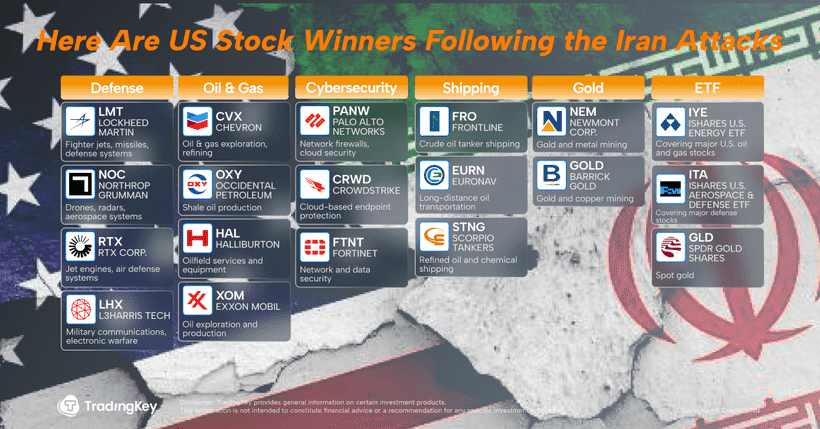
Oil Prices Below $100 Amid US-Iran Conflict: A Market Anomaly? Analysts Warn Catch-Up Rally Is Imminent
TradingKey - As the US-Iran conflict escalates, crude oil prices have surged recently. Brent crude rose by approximately 30% within four days of the conflict's outbreak, reaching the $85 per barrel level. Analysts noted that oil prices have failed to break through the symbolic $100 mark and are even
Middle East Conflict Escalates, Global Stocks and Bonds Fall, Was It Really Caused by One Sentence From Trump?
TradingKey - On Tuesday local time, the escalation of conflict in the Middle East triggered intense global market volatility. Gold (XAUUSD), bonds, and stocks fell in tandem, an unconventional movement that shattered the conventional logic of "buying safe havens during turmoil and trading stocks during stability."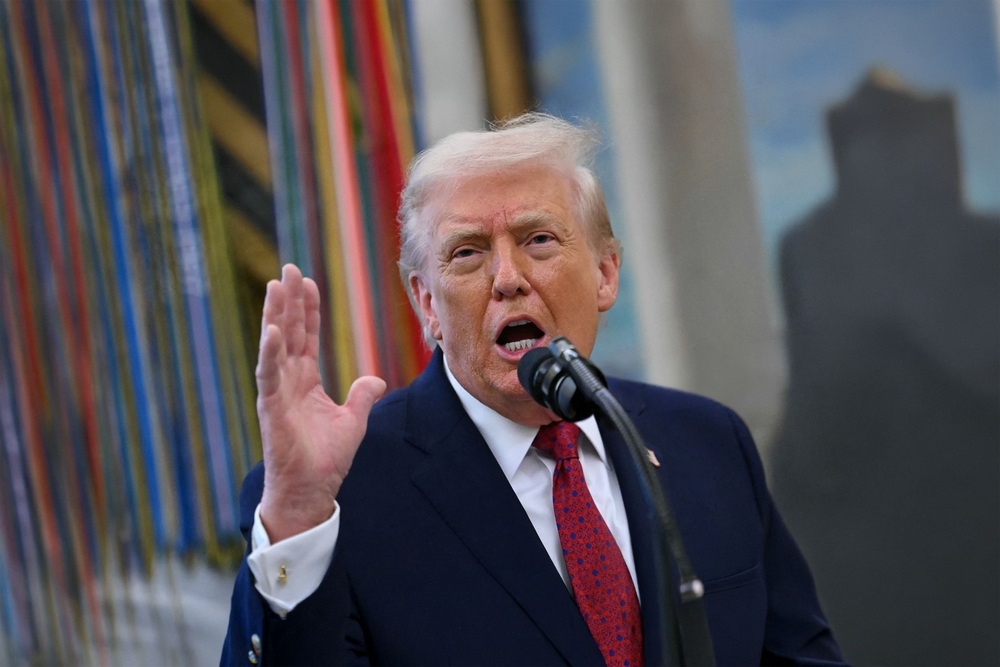
Gold’s $5,000 Breaking Point: Why the Middle East Crisis Isn't Saving the Bulls
As US-Iran tensions continue to escalate, gold prices saw a sudden plunge. Has the metal already peaked?
AGI Approaches: 2026 May Be Artificial Intelligence Turning Point, Musk Warns White-Collar Class Will Bear the Brunt
TradingKey — Have you noticed that the pace of artificial intelligence evolution is exceeding the limits of human intuitive perception? From the debut of ChatGPT to the rapid rise of multimodal AI systems, the development of AI technology has demonstrated a non-linear, exponential acceleration in ju