


Brent (UKOIL) Volatility Intensified on Jun 22: What to Watch



Brent (UKOIL) is down 2.32% at Jun 22 08:25(ET), now at $77.85, with a 7-day down of 5.58%.
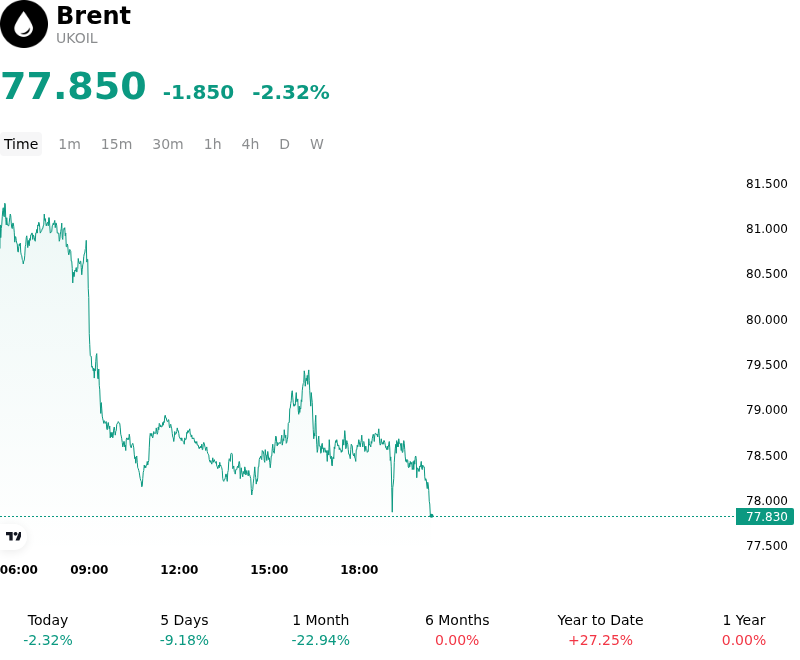
What is driving Brent (UKOIL)’s stock price down today?
The primary catalyst driving the sharp decline in Brent crude (UKOIL) is the substantial unwinding of the geopolitical risk premium following positive diplomatic developments in Switzerland. The conclusion of bilateral talks between the United States and Iran has led to reports that Tehran secured sanctions waivers for its oil and petrochemical exports, dramatically easing fears of prolonged supply tightness. Simultaneously, regional tensions cooled further as Iran's military joint command signaled a halt to offensive operations against Israel, reducing the immediate threat of a wider conflict that could endanger critical energy infrastructure. These developments have cleared the way for a swift normalization of shipping routes through the Strait of Hormuz, which typically facilitates approximately one-fifth of global oil transit.
With diplomatic avenues progressing, physical oil markets are bracing for a rapid influx of previously restricted supplies. State-level statements indicate that millions of barrels of Iranian crude have already begun clearing naval blockades, raising expectations that up to 1.5 million barrels per day could soon return to international markets. Furthermore, neighboring Middle Eastern producers are actively moving to capture market share. The United Arab Emirates, Kuwait, and Iraq have expanded their offers to global buyers, with Iraq announcing plans to gradually restore its crude production to more than 4 million barrels per day. The prospect of these collective volumes entering the market has shifted the near-term supply-demand outlook from a deficit to a looming global surplus.
Compounding the supply-side pressure are deteriorating global demand expectations. Major energy organizations, including the International Energy Agency and OPEC, recently downgraded their demand growth projections for the year, citing persistent macroeconomic headwinds and high fuel prices that have already triggered demand contractions across major consuming sectors. This downshift in consumption is reinforced by hawkish signals from major central banks. The Federal Reserve's indicated bias toward maintaining elevated interest rates to combat inflation has stoked institutional concerns over slowing industrial activity and global economic growth. This combination of an accelerating supply recovery and cooling demand has prompted systemic long liquidation and a fundamental repricing of Brent futures.
Technical Analysis of Brent (UKOIL)
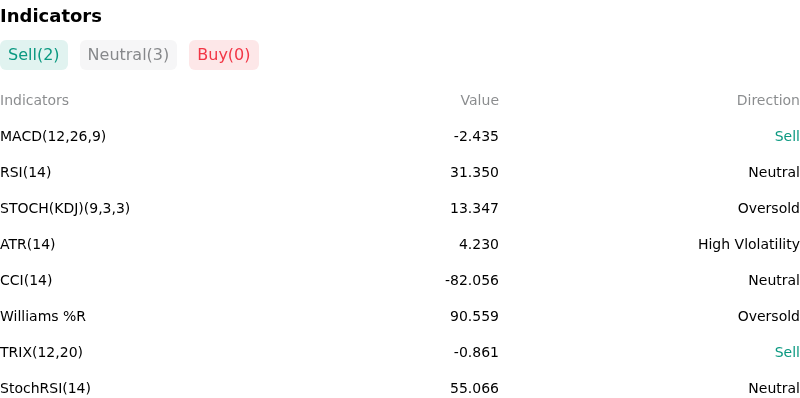
Technically, Brent (UKOIL) shows a MACD (12,26,9) value of -2.435, indicating a sell signal. The RSI at 31.350 suggests neutral condition and the Williams %R at 90.559 suggests oversold condition. Please monitor closely.
More details about Brent (UKOIL)
Recent Events and Risks:
- U.S.-Iran Diplomatic Progress and Export Waivers: High-level negotiations in Switzerland concluded with Tehran securing waivers for its oil and petrochemical exports. This progress on a 60-day roadmap toward a final agreement has significantly defused the geopolitical risk premium, pushing Brent crude futures below the psychological $80 per barrel support level.
- Reopening of the Strait of Hormuz Chokepoint: The easing of Middle East tensions and the formal halt of military operations between regional powers have allowed the Strait of Hormuz to safely reopen. The return of commercial transit has facilitated the release of previously stranded cargoes, with over 25 million barrels of Iranian oil already clearing the blockade line, adding immediate physical supply to the market.
- Increased Regional Producer Supply: Key OPEC producers—including the United Arab Emirates, Kuwait, and Iraq—have increased physical export offers to customers. Notably, Iraq’s Ministry of Oil announced plans to gradually restore its crude production to a range of 4.2 million to 4.3 million barrels per day, amplifying downside pressure via expected near-term output gains.
- Severe Downgrades to Global Demand Forecasts: In its latest June Oil Market Report, the International Energy Agency (IEA) slashed its 2026 global demand growth forecast by 700,000 barrels per day, expecting an overall year-over-year contraction of 1.1 million barrels per day. This is compounded by Goldman Sachs warning of accelerating demand destruction across Western Europe and China, threatening a swift transition into market surplus.
This article may include AI-generated content that is human-reviewed, which is for reference and general information purposes only and does not constitute investment advice.
Recommended Articles









Comments (0)
Click the $ button, enter the symbol, and select to link a stock, ETF, or other ticker.