


Brent (UKOIL) Is down 2.24% on Jun 18: Why It Happened



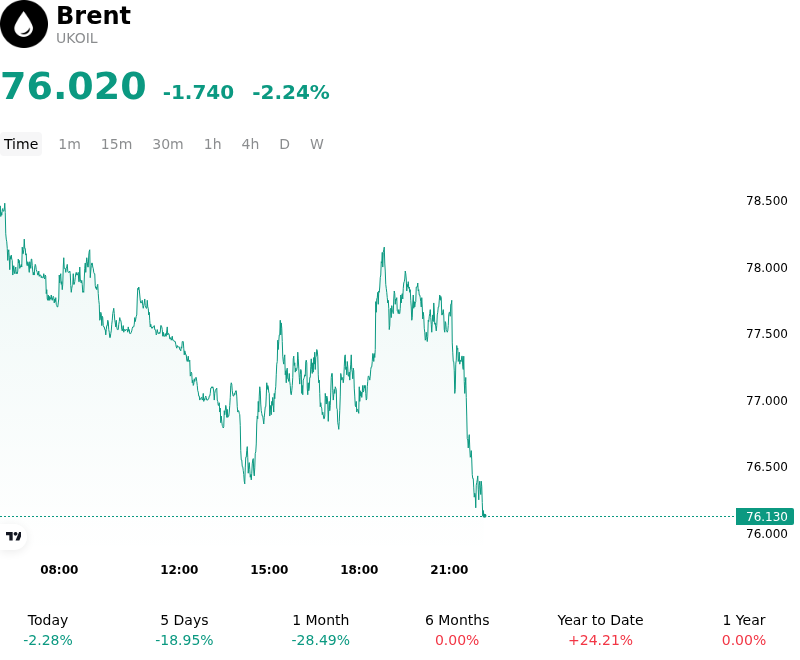
Brent (UKOIL) is down 2.24% at Jun 18 10:10(ET), now at $76.02, with a 7-day down of 13.70%.
What is driving Brent (UKOIL)’s stock price down today?
The primary catalyst for the decline in Brent crude is the immediate easing of geopolitical tensions in the Middle East, specifically the signing and implementation of an interim peace agreement between the United States and Iran. This landmark accord has triggered a swift de-escalation of the regional conflict, leading to the lifting of the U.S. naval blockade on Iranian ports and the reopening of the Strait of Hormuz. Because this vital maritime chokepoint is resuming normal transit operations, the substantial risk premium that had supported oil prices since early March is being rapidly dismantled.
The agreement also includes a crucial waiver of U.S. sanctions on Iranian crude exports, paving the way for a major increase in global supply. Market participants are anticipating the release of significant volumes of crude and refined products currently sitting on loaded tankers in the Persian Gulf. This sudden return of barrels is fundamentally shifting the market balance from a prolonged state of deficit back toward oversupply, prompting institutional investors to aggressively reprice the near-term supply-demand outlook.
Further compounding the downward pressure on crude is a highly bearish medium-term outlook from the International Energy Agency. In its latest market assessment, the agency slashed its global oil demand growth expectations for the year and cautioned that the rapid return of Middle East oil, combined with rising non-OPEC production, could trigger a massive global supply glut. The contrast between this newly projected surplus and previous expectations of a tight market is severely weighing on investor sentiment.
On the macroeconomic front, demand expectations are also being curtailed by central bank policy and interest rate worries. The U.S. Federal Reserve, during its first policy meeting under its new leadership, signaled a growing inclination among policymakers to raise interest rates later in the year to combat persistent inflation. The prospect of tighter monetary policy in the world's largest economy has fueled concerns over slowing economic growth, which would inevitably suppress industrial energy consumption and overall crude demand.
While the sixty-day negotiating window of the interim agreement leaves some room for volatility should diplomatic efforts falter, the combination of returning Iranian supply, the reopening of the Strait of Hormuz, and hawkish monetary policy signals has established a strong bearish trend in the global energy complex.
Technical Analysis of Brent (UKOIL)
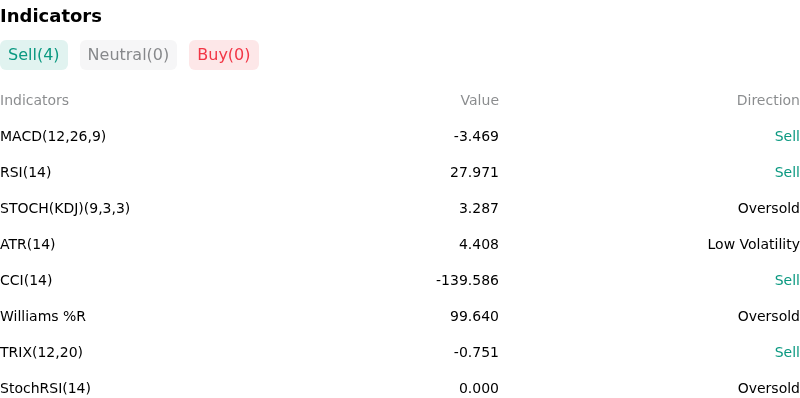
Technically, Brent (UKOIL) shows a MACD (12,26,9) value of -3.469, indicating a sell signal. The RSI at 27.971 suggests sell condition and the Williams %R at 99.640 suggests oversold condition. Please monitor closely.
More details about Brent (UKOIL)
Recent Events and Risks:
- U.S.-Iran Peace Agreement and Reopening of the Strait of Hormuz: Following the signing of an interim peace agreement on June 17, 2026, the lifting of the U.S. naval blockade on Iranian ports and the immediate reopening of the Strait of Hormuz have rapidly unwound the market's geopolitical risk premium. Brent crude futures plummeted below $79 per barrel, erasing the majority of the risk-driven gains accumulated since early March.
- Concerns of a Post-War Supply Glut and Eased Sanctions: With the critical maritime chokepoint reopening and reports indicating Washington could officially ease sanctions on Iranian crude as part of the broader peace negotiations, the market is bracing for a surge in physical exports. This expectation of a looming supply glut is exacerbated by the IEA's projection of a massive 8 million barrels per day supply surplus once shipping flows fully normalize.
- Slowing Industrial Consumption and Downstream Refiner Cutbacks: Weakness in physical demand has intensified as petrochemical refineries across Asia cut back operational activity to cope with previous high costs. Highlighting this trend, major consuming nations—specifically China—have significantly reduced crude imports by drawing down their own record-high domestic inventories rather than purchasing spot cargoes.
- OPEC's Consecutive Downward Demand Revisions: OPEC has downgraded its 2026 global oil demand growth projection for the second consecutive month to 970,000 barrels per day, down from its earlier estimate of 1.17 million barrels per day. This downgrade reflects persistent macroeconomic headwinds and shifting energy-transition narratives, cementing bearish sentiment among institutional energy strategists.
This article may include AI-generated content that is human-reviewed, which is for reference and general information purposes only and does not constitute investment advice.
Recommended Articles









Comments (0)
Click the $ button, enter the symbol, and select to link a stock, ETF, or other ticker.