


Platinum (XPTUSD) Drops on Jun 17: What Lie behind the Move?



Platinum (XPTUSD) is down 2.18% at Jun 17 14:10(ET), now at $1768.02, with a 7-day up of 6.29%.
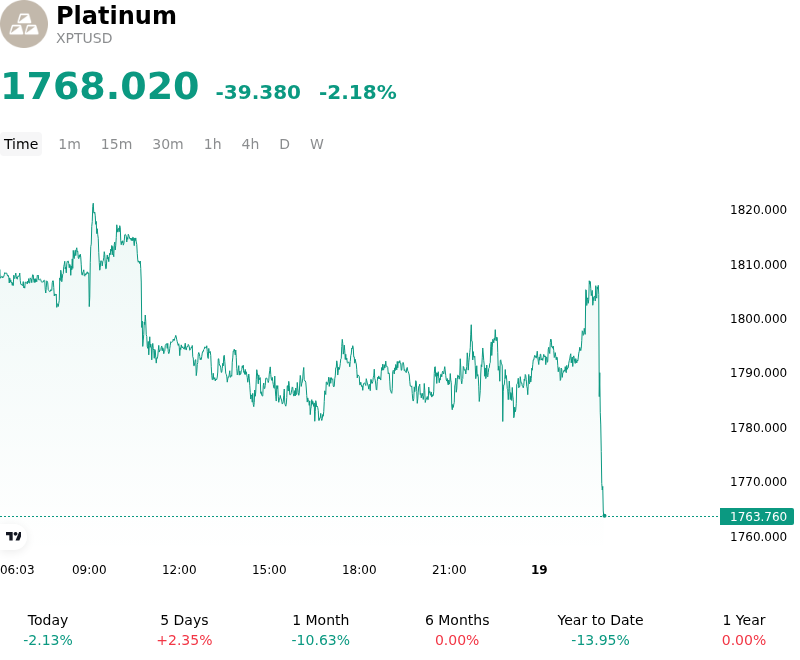
What is driving Platinum (XPTUSD)’s stock price down today?
The recent decline in platinum is primarily attributed to a sharp unwinding of geopolitical risk premiums and mounting caution ahead of a critical monetary policy decision. These factors have combined to trigger profit-taking across the precious metals complex, overriding long-term structural supply deficits.
The dominant catalyst driving the market is the rapid progress toward a diplomatic breakthrough between the United States and Iran. With an interim peace agreement scheduled to be formally signed, expectations of an immediate reopening of the Strait of Hormuz have sent crude oil prices to multi-month lows. The prospective normalization of global energy flows has substantially cooled inflation expectations. Consequently, the safe-haven demand that had bolstered precious metals since their historic peaks in early 2026 has rapidly dissipated, leading institutional investors to liquidate defensive positions.
Simultaneously, the market is exhibiting extreme caution ahead of the Federal Open Market Committee's monetary policy announcement. This session marks the first policy meeting led by the newly appointed Federal Reserve Chair, Kevin Warsh. Although the central bank is widely expected to maintain interest rates at their current levels, persistent domestic inflation has raised concerns that the Fed's updated Summary of Economic Projections will lean hawkish. Investors fear that the updated dot plot will shift the consensus toward a higher-for-longer rate stance, potentially erasing expectations for rate cuts in 2026 or even introducing a bias toward further tightening. This threat of elevated real yields has increased the opportunity cost of holding non-yielding physical assets, accelerating the sell-off in platinum.
From a supply-demand perspective, this downward move represents a short-term, sentiment-driven correction rather than a shift in physical market fundamentals. The underlying platinum market remains structurally tight, characterized by a projected fourth consecutive annual supply deficit. Major mine supply from South Africa and Russia remains constrained by escalating production costs, aging infrastructure, and ongoing sanctions. However, the immediate impact of falling energy-driven inflation expectations and hawkish central-bank positioning has temporarily overshadowed these structural supply constraints.
Looking forward, institutional investors will continue to monitor the stability of the geopolitical ceasefire and the subsequent direction of the U.S. dollar, which has been consolidating near key support levels. Any signs that the Federal Reserve will maintain an aggressive stance against sticky core inflation will likely cap near-term recovery attempts, leaving platinum vulnerable to further technical consolidation within its current multi-month trading range.
Technical Analysis of Platinum (XPTUSD)
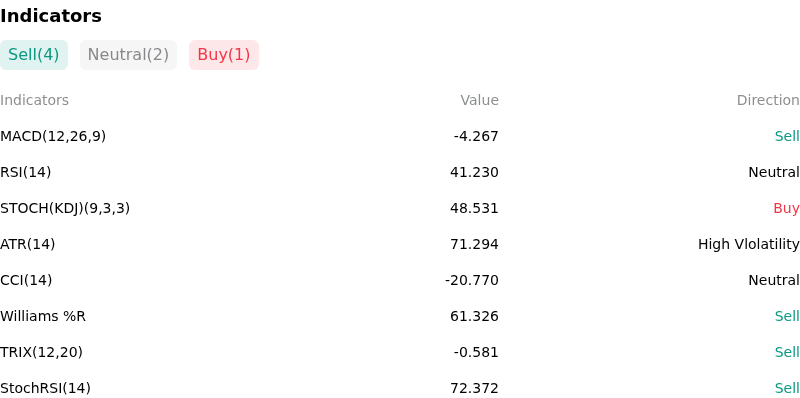
Technically, Platinum (XPTUSD) shows a MACD (12,26,9) value of -4.267, indicating a sell signal. The RSI at 41.230 suggests neutral condition and the Williams %R at 61.326 suggests sell condition. Please monitor closely.
More details about Platinum (XPTUSD)
Recent Events and Risks:
- Deficit Contraction and Softening Demand: According to updated 2026 market projections, global platinum demand is forecast to contract by 9% year-on-year, driven by a 54% plunge in investment demand (due to heavy ETF and exchange stock outflows), a 2% decline in automotive demand, and a 12% drop in jewelry. This demand weakness is narrowing the global supply deficit to just 297,000 ounces—the lowest in four years—undermining the aggressive supply-squeeze narrative that previously supported prices.
- Massive Warehouse Outflows and Futures Liquidation: The resolution of previous global tariff threats has triggered a rapid unwinding of physical holdings, with more than 200,000 ounces of platinum flowing out of NYMEX warehouses. This sudden injection of physical liquidity into the market has prompted algorithmic and speculative funds to aggressively liquidate long futures positions, severely pressuring spot prices.
- Sluggish Downstream Spot Market Activity: Physical spot trading remains highly sluggish, with downstream industrial consumers maintaining comfortable stockpiles and adopting a strict "wait-and-see" stance. This lack of active buying has created wide price spreads in the spot market and forced sellers to offer deep discounts against futures contracts, making spot transactions difficult to execute.
- Geopolitical De-escalation and Safe-Haven Premium Erosion: The finalization of the U.S.-Iran memorandum of understanding to reopen the Strait of Hormuz has significantly deflated geopolitical risk premiums across the commodities complex. The resulting plunge in crude oil and energy prices has eased near-term inflation anxieties, sparking capital outflows from non-yielding precious metals like platinum.
This article may include AI-generated content that is human-reviewed, which is for reference and general information purposes only and does not constitute investment advice.
Recommended Articles









Comments (0)
Click the $ button, enter the symbol, and select to link a stock, ETF, or other ticker.