POLL-US dollar surge since start of war on Iran unlikely to last, say FX strategists

By Sarupya Ganguly
BENGALURU, March 4 (Reuters) - The U.S. dollar's bounceback since the start of the U.S.-Israel war with Iran may be short-lived due to lingering doubts about the safe-haven appeal of U.S. assets, according to FX strategists polled by Reuters who broadly still expect two Federal Reserve rate cuts later this year.
Traders have been positioned short the dollar - meaning they expect it to fall - since December NETUSDALL=, with the currency down against a basket of currencies around 12% since the start of 2025.
The greenback is up about 1.5% since Monday, in large part as short positions were covered, with surging oil prices triggering the move. .DXY
DOLLAR RALLY NOT TYPICAL FLIGHT TO SAFETY
Interest rate futures are no longer pricing a June Fed rate cut, lending some near-term support to the dollar, though contracts are still priced for roughly two cuts by year-end. FEDWATCH
Most FX strategists in the monthly Reuters poll, which was almost entirely conducted this week after the first missiles dropped, broadly stuck to calls for the dollar to weaken.
Poll medians from 60 analysts showed the euro up about 2% to $1.18 at end-March. It was then predicted to rise to $1.19 in three months and $1.20 in six - medians broadly unchanged from last month. EUR=
"We haven't changed our stance. We're still continuing to expect euro-dollar and various dollar crosses to trade choppily this year," said Jane Foley, head of FX strategy at Rabobank.
"But is the dollar as safe as it used to be? Probably not, because if it was, we wouldn't be having this debate over the last year or so in the first place," she said.
The dollar rally this week has not been a typical "flight to safety" one, given short dollar positioning ahead of the war, which began early on Saturday.
"We had highlighted two weeks ago that some deleveraging signals were appearing in our flows data, perhaps partially linked to U.S.-Iran risk. It was therefore not surprising to see more such deleveraging Monday," JP Morgan FX strategists wrote in a note this week.
"Were dollar shorts to be more broadly covered back to flat ... this would imply support worth +1.5-2% to the dollar from current levels, though much of that depends on the trajectory of the new conflict."
WIDE FORECAST RANGE AMID UNCERTAINTY
Asked how positioning would shift by end-March, about half the currency strategists in the survey, 21 of 45, said there would not be much change, or shorts would increase. While 19 said net shorts would decrease, only five predicted a reversal to net longs.
While stocks have sold off across the globe this week, traditional safe-havens such as U.S. Treasuries US10YT=RR have underperformed and gold, though still up about 20% this year, has slipped. XAU=
Brent crude has jumped nearly 15% since Friday on concerns about supply disruptions and is now up around 37% in 2026. LCOc1
Most emerging market currencies have broadly declined, particularly in Asia, hit by higher oil prices and rising bond yields. Survey medians suggest that weakness is likely to persist in coming months.
"EM and Latam currencies are suffering from risk-off exacerbation with the double whammy of higher oil and the new jump in real yields ... For now, more defensiveness is likely before any attempt of dip-buying," said Alejandro Cuadrado, global head of FX and Latam Strategy at BBVA.
Markets also remain cautious given widespread uncertainty over which U.S. tariffs will eventually apply and when. Concerns about central bank independence have been only partly eased since Kevin Warsh’s nomination as the next Fed Chair.
Forecasts a year out are reflecting heightened uncertainty. While the year-ahead median showed the euro strengthening to $1.21, the range of forecasts was about 18 cents, the joint-widest in Reuters polls since October.
"I'll constantly have these client calls where one person on the team is dollar-bullish, one is dollar-bearish and the other person just decides, 'I'm not even going to look at the dollar'," said Dan Tobon, head of G10 FX at Citi, among the few contrarians who expect the greenback to strengthen.
"This uncertainty on how the U.S. economy and labour market in particular will evolve from here - the range of outcomes - is tremendous. And that uncertainty for now is actually keeping the euro-dollar effectively pegged in a range."
(Other stories from the March foreign exchange poll)
Reuters poll: Euro-dollar forecasts 
Reuters poll: Year-ahead major currency forecasts 
Related Articles
Here Are US Stock Winners Following the Iran Attacks
Tradingkey - On Tuesday, U.S. equities extended their slide as rising oil prices and the specter of war in Iran rippled through global markets. The Dow Jones Industrial Average at one point plunged more than 1,000 points.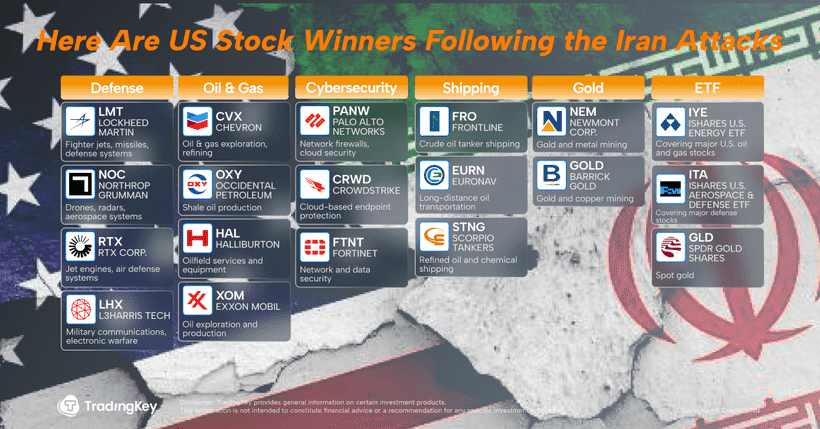
Oil Prices Below $100 Amid US-Iran Conflict: A Market Anomaly? Analysts Warn Catch-Up Rally Is Imminent
TradingKey - As the US-Iran conflict escalates, crude oil prices have surged recently. Brent crude rose by approximately 30% within four days of the conflict's outbreak, reaching the $85 per barrel level. Analysts noted that oil prices have failed to break through the symbolic $100 mark and are even
Middle East Conflict Escalates, Global Stocks and Bonds Fall, Was It Really Caused by One Sentence From Trump?
TradingKey - On Tuesday local time, the escalation of conflict in the Middle East triggered intense global market volatility. Gold (XAUUSD), bonds, and stocks fell in tandem, an unconventional movement that shattered the conventional logic of "buying safe havens during turmoil and trading stocks during stability."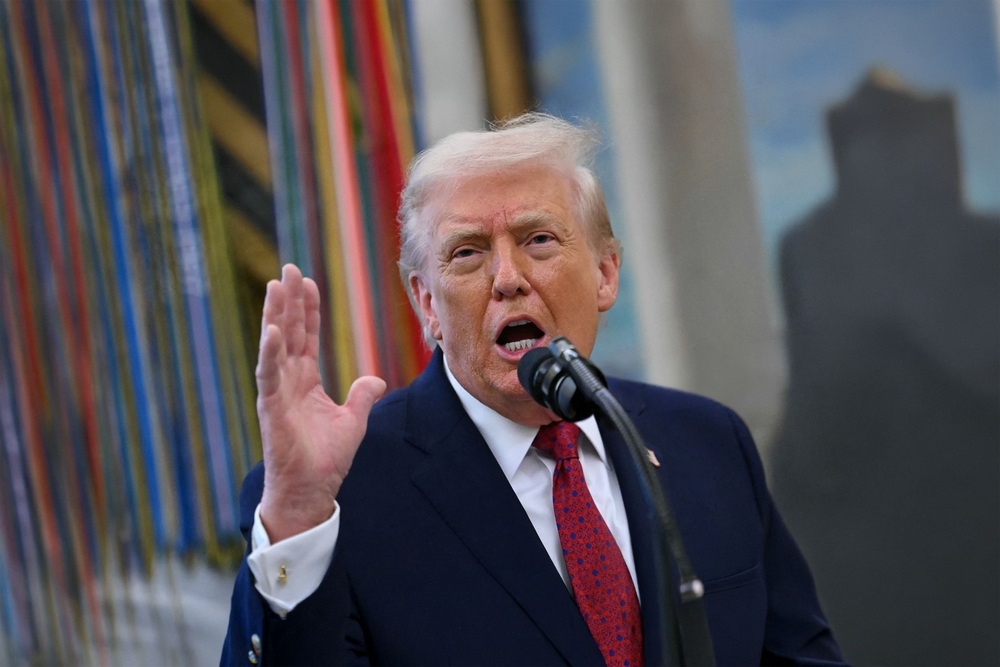
Gold’s $5,000 Breaking Point: Why the Middle East Crisis Isn't Saving the Bulls
As US-Iran tensions continue to escalate, gold prices saw a sudden plunge. Has the metal already peaked?
AGI Approaches: 2026 May Be Artificial Intelligence Turning Point, Musk Warns White-Collar Class Will Bear the Brunt
TradingKey — Have you noticed that the pace of artificial intelligence evolution is exceeding the limits of human intuitive perception? From the debut of ChatGPT to the rapid rise of multimodal AI systems, the development of AI technology has demonstrated a non-linear, exponential acceleration in ju