GULF CURRENTS-Gulf’s ‘worst-case scenario’?

By Andrew Mills
April 8 (Reuters) - When the history books of the Iran war are written, Tuesday night into Wednesday morning may well rank among the most anxious hours for the modern Gulf.
After U.S. President Donald Trump warned Iranians that “a whole civilization will die tonight”, residents from Kuwait to Abu Dhabi, whether lying sleepless or jolted awake, heard alerts screech as air defenses again responded to incoming missiles.
Governments, markets and millions of people braced for the possibility of a conflict threatening not just oil flows, but the water and power that make Gulf life possible.
For a few hours, the question was no longer how much more damage the region could absorb, but whether the Gulf’s carefully constructed sense of stability would survive.
And then, at dawn, relief in the form of a two-week ceasefire that leaves everyone guessing: has war ended, or merely paused?
This week we examine signs of vulnerability: damage to Saudi Arabia’s East-West oil pipeline, a Bahrain-sponsored U.N. push to protect shipping stalled by Chinese and Russian vetoes and doubts over whether the Strait of Hormuz is truly open.
And our analysis asks the bigger question: has this war been the “worst-case scenario” for Gulf Arab states?
NEWS BRIEFING
- Saudi Arabia’s East-West oil pipeline – its only major export route bypassing the Strait of Hormuz – was damaged in an Iranian attack, an industry source said on Wednesday, potentially disrupting flows of up to 7 million barrels per day. The strike underscores how even infrastructure designed to reduce reliance on Hormuz is now vulnerable, amplifying fears that the Gulf’s energy system has few secure outlets left.
- A U.N. Security Council resolution sponsored by Bahrain, which had strong U.S. and Gulf support and urged coordination to protect commercial shipping in the Strait of Hormuz, was vetoed by China and Russia on Tuesday. The veto underlines the limits of international consensus on securing Hormuz, leaving the region’s shipping lanes exposed even as the strait underpins around a fifth of global oil and LNG trade.
ANALYSIS How bad a ‘worst-case scenario’ has war been for Gulf states?
With a two-week ceasefire barely in place, Iran and the U.S. are both claiming victory.
What is clearer, however, is that the Gulf Arab states have gone through what one Gulf official described as a worst-case scenario.
For decades, the region’s greatest strategic risks were discussed largely in terms of hypotheticals. The Iran war has turned many into realities.
The vulnerability of the Strait of Hormuz – long acknowledged but rarely tested – has been starkly exposed. Iran’s demonstrated ability to virtually halt traffic through the world’s most critical energy chokepoint has transformed the strait from a theoretical deterrent into an active geopolitical fault line.
The concern is no longer short-term volatility, but whether Iran will be able – and willing – to exert leverage over the waterway long into the future.
The same applies to energy and civilian infrastructure. The 2019 attack on Saudi Aramco’s Abqaiq oil processing facility was once seen as exceptional – a shock strike that exposed gaps in Gulf air defenses and cast doubt over whether the United States would step in to protect regional energy assets.
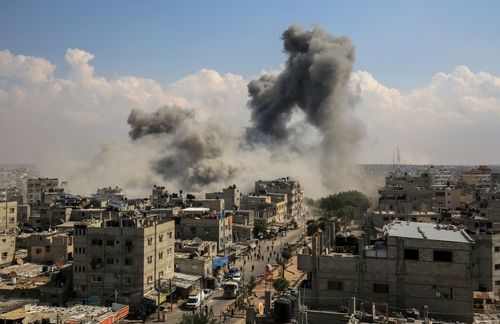
Yet over the past six weeks, the region has endured what amount to dozens of Abqaiqs: petrochemical plants, oil refineries, gas processing facilities, airports and ports have been hit from Kuwait City to Salalah.
The economic fallout is already visible. Tourism – a lifeline for Dubai and a central pillar of Saudi Arabia and Qatar’s diversification plans – has been thrown into doubt. Beach holidays become harder to sell after weeks of missile alerts.
The war has also unsettled the Gulf’s push to position itself as a global hub for artificial intelligence and data infrastructure. Data centers and tech companies have been targeted, and chipmakers and cloud firms weighing cheap energy against geopolitical risk may decide that slightly higher costs in Scandinavia, Ireland or parts of central Europe are preferable to even a low probability of disruption.
Most worrying, perhaps, is the human impact. The Gulf’s economic model depends on persuading professionals to put down roots – shop locally, educate their children privately and buy into real estate – hence the proliferation of golden visa schemes.
But people are now leaving. Expat WhatsApp groups and online marketplaces are crowded with exit sales. Whether departures amount to an exodus is unclear, but confidence has been shaken.
Finally, the war exposed the limits of the Gulf’s longstanding security bargain with the U.S.: hosting bases, radars and troops in exchange for protection. U.S. systems proved vital for defense, yet ties with Washington also made the Gulf a primary Iranian target.
It is little surprise Gulf states are now seeking to diversify security partnerships, from European radar systems to anti-drone cooperation with Ukraine. Whether that ultimately extends to China, Russia or even Israel remains an open question.
What is clearer is that even if the ceasefire holds, the assumptions that underpinned Gulf security, prosperity and strategic certainty may not.
And if broken, they are likely to prove difficult to rebuild.
CHART OF THE WEEK
A ceasefire in the Iran war will deliver badly needed relief to economies but hopes it will quickly restore normal oil and gas flows from the Middle East are almost certainly misplaced. Read more from Ron Bousso.
THE LAST WAVE - So, is Hormuz actually open – or just openish?
According to the ceasefire, yes. In practice, not quite.
Hours after Washington and Tehran announced a two-week truce, shippers were still asking basic questions: who moves first, under whose coordination, and with what security guarantees? Nearly 200 laden tankers remain stranded around the Strait of Hormuz, with more than 1,000 vessels backed up inside the Gulf. Clearing that backlog, even under normal conditions, could take longer than the ceasefire itself.
Iran’s Fars news agency said late on Wednesday that Iran stopped tankers transiting the Strait of Hormuz after what it described as Israel’s “ceasefire breach”, a report likely to raise fresh concerns among insurers and shipowners over the safety of passage through the vital shipping route.
Outstanding issues around insurance, coordination and crew readiness have kept most operators firmly in wait-and-see mode.
Oil prices may have dropped, but confidence in safely transiting the strait has yet to recover.
Crude oil and refined fuels stored on tankers in the Middle East Gulf