


Iran Discloses All 10 Ceasefire Terms, Who Is the Winner Between US and Iran? What Are the Impacts on Global Assets?



AI Podcast


Iran submitted 10 armistice terms, including non-aggression guarantees, recognition of uranium enrichment, and sanctions lift. Details varied by media outlet, with some mentioning Strait of Hormuz passage and reparations. These terms, deemed by observers as demands of a victor, are likely difficult for the U.S. to accept. The U.S. gained Strait reopening and an Iranian pledge against nuclear weapons, with Trump claiming victory. Israel's explicit exclusion of Lebanon from the ceasefire creates a significant potential loophole. The fragile ceasefire impacts global assets, with risk assets recovering, especially tech stocks. Investors should monitor potential conflict resurgence.
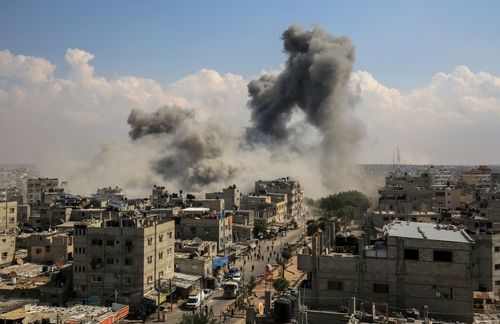
TradingKey — Iran's Supreme National Security Council issued a statement on the 8th outlining the primary contents of 10 armistice terms submitted to the U.S. via Pakistan. Iranian media later disclosed all 10 terms, though details across reports were not entirely consistent.
According to the Islamic Republic of Iran Broadcasting (IRIB), the 10 terms are: 1. The U.S. should, in principle, guarantee non-aggression against Iran; 2. Establish a safe passage agreement for the Strait of Hormuz to ensure Iran's dominant position; 3. Accept Iran's uranium enrichment activities; 4. Lift all primary sanctions against Iran; 5. Lift all secondary sanctions against Iran; 6. Rescind relevant UN Security Council resolutions; 7. Rescind relevant IAEA resolutions; 8. Pay reparations to Iran; 9. Withdraw U.S. combat forces from the Middle East; 10. End wars on all fronts, including Lebanon.
In addition to the above, Fars News Agency, citing sources, reported that the terms proposed by Iran also include: allowing a limited number of vessels to transit the Strait of Hormuz daily under Iranian supervision for a two-week period based on a safe passage agreement; a commitment by Iran not to manufacture nuclear weapons; Iran's agreement to negotiate bilateral and multilateral peace treaties with regional countries provided they align with its national interests; and guarantees from all parties not to commit aggression against Iran's allies.
The Associated Press also reported that, under the armistice terms proposed by Iran, Iran and Oman would collect fees from vessels passing through the Strait of Hormuz.
Previously, Trump stated: "Why not let us collect the tolls? I’d rather we collect them than let them. Why can’t we? We’re the winners. We won."
Who ultimately emerged as the winner under the terms of the ceasefire?
What did Iran gain?
"Dominance" over the Strait of Hormuz, formal recognition of uranium enrichment rights, a commitment to the goal of fully lifting sanctions, and a roadmap for the withdrawal of U.S. forces from the Middle East. According to the Iranian Supreme National Security Council, these terms will be approved by UN Security Council resolutions and become binding international law.
Based on the text, this is indeed a list of conditions that only a victor could propose. International observers have stated bluntly that these terms resemble demands made by a victorious nation to a defeated one, making it nearly impossible for the United States to accept them in full.
What did the United States gain?
The reopening of the Strait of Hormuz, an Iranian pledge not to develop nuclear weapons, a two-week ceasefire window—and what Trump hailed as a "complete and total victory."
In terms of actual outcomes, U.S. military action destroyed most of Iran's air defense and missile capabilities, and Trump successfully pulled the situation back from the brink of "large-scale airstrikes" to the negotiating table just 90 minutes before the deadline. Among the ten points submitted by Iran, there is far less for the U.S. to truly "accept" than meets the eye, as the implementation of most terms during the two-week negotiation period is far from being within Iran's sole discretion.
Is there a possibility of a renewed US-Iran conflict?
Beyond the 10 provisions, Israeli Prime Minister Netanyahu's office issued a statement on the 8th, noting that while Israel supports Trump's decision for a ceasefire with Iran, it explicitly stated that "this ceasefire does not include Lebanon," indicating a substantive disagreement between the U.S. and Israel regarding the scope of the truce.
Iran's ten-point plan explicitly calls for an "end to the war on all fronts, including Lebanon," and Israel's stance effectively serves as a public rejection of this clause. Additionally, White House officials disclosed that Trump spoke with Netanyahu before announcing the ceasefire, securing a pledge to "respect the ceasefire and pause attacks," though the Lebanese front appears to have been excluded.
Iran's demand for a simultaneous ceasefire from Israel, which Israel has explicitly declined to guarantee, is a clear "loophole" in the ten-point plan and remains a critical variable that could allow Israel's position to derail the deal during negotiations over the next two weeks.
What are the implications of a US-Iran ceasefire agreement for global assets?
Since the outbreak of the US-Iran conflict, global risk assets have generally been under pressure. This is partly due to liquidity and safe-haven demand; furthermore, the surge in oil prices has led to signs of rising global inflation, forcing global policies toward tightening. Tighter interest rate policies are unfavorable for the continued expansion of global high-growth tech stocks, causing sectors led by technology to bear the brunt of the pressure and driving a retreat in global equity markets.
Meanwhile, precious metals—gold in particular—which have long been characterized by their safe-haven status, delivered underwhelming performances following the outbreak of localized regional conflicts. Previously, in《US-Iran Truce, Gold Prices Return to $4,800, Is Now Still the Time to Buy?》, we illustrated the impact of geopolitical conflicts on gold.
After the US-Iran truce statement was released, global assets generally recovered, with Asia-Pacific stock markets rising collectively. Tech stocks, which had previously faced significant pressure, saw the most substantial rebound. In addition, assets such as gold and cryptocurrencies recovered to varying degrees, primarily driven by the easing of safe-haven sentiment and a decrease in liquidity demand.
The possibility of a resurgence in the US-Iran conflict will further influence the direction of global assets. Currently, the suspension of the conflict appears only superficial, as both sides have failed to communicate effectively regarding ambiguities in certain provisions. Analysts believe this is merely a fragile ceasefire, and investors should remain alert to the further impact that sporadic conflicts arising from various situations may have on global assets.
Recommended Articles







Comments (0)
Click the $ button, enter the symbol, and select to link a stock, ETF, or other ticker.