EXCLUSIVE-Rusal plans to reroute aluminium from China to Japan as Iran conflict reshapes trade, sources say

By Tom Daly, Polina Devitt, Amy Lv and Pratima Desai
LONDON/BEIJING, April 8 (Reuters) - Russia's Rusal 0486.HKRUAL.MM plans to reroute some of its aluminium away from China to Japan and other Asian markets, two sources with direct knowledge of the matter said, as the Iran war reshapes global trade flows and sends premiums soaring.
The Middle East produced nearly 7 million metric tons of primary aluminium last year, or 9% of global supply, according to Trade Data Monitor. Japan relied on the region for 27% of its 2.1 million tons of imports with the biggest share - 400,000 tons - coming from the UAE. It also imported 143,000 tons from China but only 68,000 tons from Russia.
Japanese buyers recently agreed to pay premiums of $350 to $353 per ton for aluminium between April and June, the highest in 11 years, with spot premiums PJMc1 also surging in a potentially lucrative development for producers.
Those premiums are typically paid above the London Metal Exchange price CMAL3 and serve as a regional benchmark.
More Russian metal will become available, however, as imports of Russian aluminium in Rusal's key market of China, which averaged 170,000 to 180,000 tons a month from October to February, are set to fall over the coming months, the sources said.
That is because Rusal's Chinese customers are unwilling to keep paying prices based on Japanese premiums when domestic aluminium can be bought more cheaply, explained the two sources with direct knowledge of Rusal's plans and two others familiar with the trade.
"This is unavoidable if the arbitrage remains at the current level," one of the sources with direct knowledge said. The situation in the Gulf has also prompted Rusal to increase sales to consumers in South Korea, the source added.
Rusal declined to comment on whether it was rerouting metal.
The sources, who all declined to be identified as they were not authorised to speak to media, did not disclose the amount Rusal planned to sell to China or Japan this year.
REGIONAL WAR, GLOBAL RAMIFICATIONS
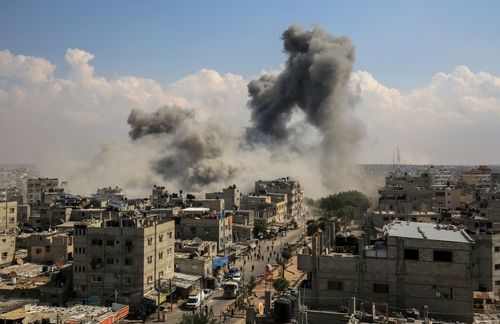
Rusal's move is the latest sign of how the Iran war has affected the physical aluminium market as the effective closure of the Strait of Hormuz and Iranian attacks on the Gulf's two biggest smelters prompt consumers to seek supplies elsewhere.
Rusal produced 3.9 million tons of aluminium in 2025 with sales of primary aluminium and alloys higher - at 4.5 million tons - due to the release of stocks from previous years.
China, South Korea and Turkey were Rusal's top export markets in 2025, accounting for $5.2 billion, $1.2 billion and $802 million, respectively, of the company's total revenues of $14.8 billion.
Western consumers have largely shunned Rusal since Russia's 2022 invasion of Ukraine.
Japan is not the only market to have seen physical aluminium premiums surge. Consumers face paying almost $600 a ton on top of the LME price for supplies in Europe EPDc1, the most since June 2022, and a record high of more than $2,500 a ton in the United States AUPc1.
The rise in Chinese domestic aluminium prices has been comparatively more moderate. Shanghai Futures Exchange SAFcv1 aluminium is up less than 4% since the start of the Iran war versus a 10% jump in LME aluminium CMAL3 in March.
China's aluminium production accounts for 60% of the global total, though it has seen years of bumper aluminium inflows from Russia and more recently Indonesia, and stocks in ShFE AL-STX-SGH warehouses are at a six-year high due to soft demand.