


Strait of Hormuz Blockade Risk Persists, Asia Oil Prices Surge Then Retreat and Fluctuate



TradingKey - During the Asian trading session on March 16, international oil prices surged before retreating, with the core driver remaining the escalating military conflict between the U.S. and Iran.
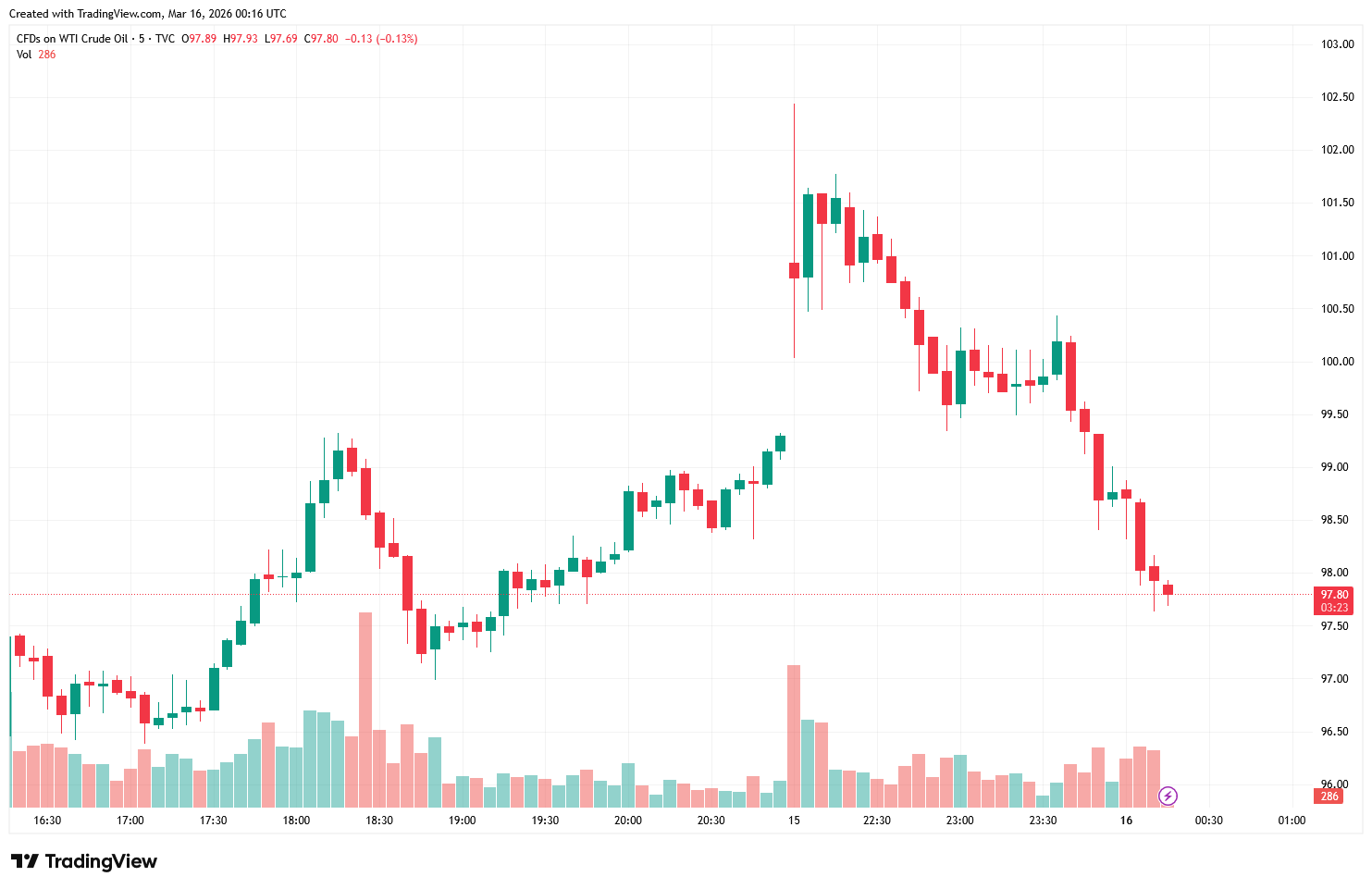
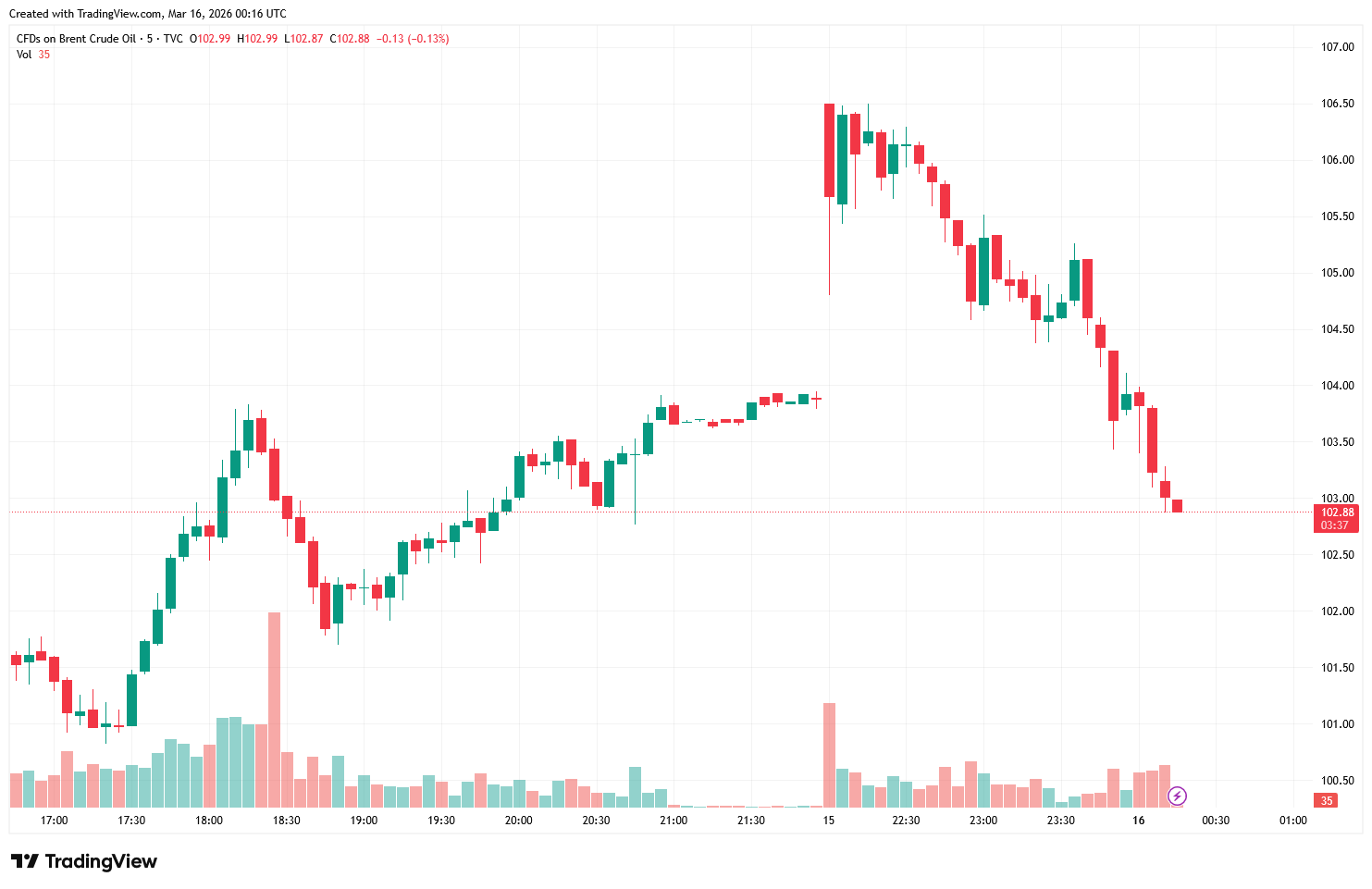
Early in the Asian session, affected by news of U.S. military strikes on Iran's key oil export hub, Kharg Island, over the weekend, international oil prices surged sharply. Brent crude futures briefly broke above $106 per barrel, with an intraday peak gain of 3.3%; WTI crude ( USOIL) futures also climbed to $102.44 per barrel.
However, gains narrowed quickly thereafter. As of 8:15 a.m. Beijing time, both major crude oil futures contracts turned from gains to losses—WTI crude futures were trading at $98.31 per barrel, down $0.4 on the day, while Brent crude futures stood at $102.91 per barrel, erasing all early gains.
The U.S. military launched a large-scale strike on Iran's Kharg Island on the night of March 13. The island handles 90% of Iran's oil exports.
U.S. President Trump stated on the 14th that the attack "completely destroyed" most military targets on the island, including naval mine storage facilities and missile bunkers, but deliberately spared oil infrastructure. He also issued a tough threat, stating he "might strike a few more times" and did not rule out direct strikes on Iranian oil facilities in the future. U.S. Central Command confirmed that the operation successfully destroyed more than 90 military targets on the island.
Facing the U.S. military strikes, Iran maintained a defiant stance. Iranian Foreign Minister Araghchi stated clearly on the 15th that Iran has never sought a ceasefire or negotiations and will continue to defend itself until the U.S. realizes this war is "both illegal and unwinnable."
Iran launched retaliatory missile and drone attacks on Sunday, targeting U.S. military facilities and major population centers in the Persian Gulf region. Meanwhile, Iran maintains an effective blockade of the Strait of Hormuz, a waterway that carries at least 20% of global oil shipments. Iran has attacked passing vessels inside and outside the strait several times since the beginning of this month.
The spillover effects of the U.S.-Iran conflict are becoming apparent. Trump has called on several countries, including China, to assist in reopening the Strait of Hormuz, even threatening to delay an upcoming summit with China's top leader. Simultaneously, he pressured NATO, warning that if the alliance does not cooperate in addressing the Iran issue, its "future will be very bad."
According to reports, the Trump administration plans to announce a proposal this week to form an international coalition to escort ships through the Strait of Hormuz.
This content was translated using AI and reviewed for clarity. It is for informational purposes only.
Recommended Articles








Comments (0)
Click the $ button, enter the symbol, and select to link a stock, ETF, or other ticker.