Walmart Inc Stock (WMT) Moved Down by 3.13% on Apr 7: Key Drivers Unveiled

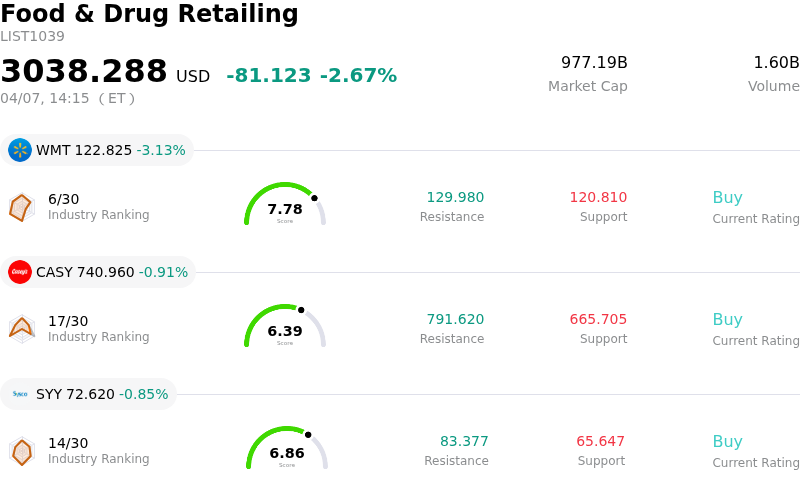
Walmart Inc (WMT) moved down by 3.13%. The Food & Drug Retailing sector is down by 2.67%. The company underperformed the industry. Top 3 stocks by turnover in the sector: Walmart Inc (WMT) down 3.13%; Caseys General Stores Inc (CASY) down 0.91%; Sysco Corp (SYY) down 0.85%.
What is driving Walmart Inc (WMT)’s stock price down today?
Walmart's share price saw a decline, reflecting broader market weakness and significant concerns within the retail sector. The Dow Jones Industrial Average experienced a downturn, with contributions from major components including Walmart. This suggests a prevailing negative sentiment across the market.
A key factor weighing on the retail industry and, by extension, Walmart, is the increasing burden of tariffs. As of April 2026, the United States government is collecting substantial monthly tariff revenues, which are translating into higher costs for retailers and consumers. This has led to a perceived crisis in consumer discretionary earnings, with companies struggling to absorb or pass on these mounting import duties, thereby creating significant headwinds for the sector.
Compounding these industry-specific challenges are broader macroeconomic concerns impacting consumer spending habits. Reports indicate that consumer spending decelerated at the beginning of 2026, and the resilience of the consumer could be tested in the near term. Rising gasoline prices, attributed to renewed tensions in the Middle East, are notably "spooking consumers" and are expected to lead to reduced spending on non-essential items. While February saw some increase in shopper spending, the escalating fuel costs are projected to dampen consumer sentiment and discretionary purchases in the subsequent months. Additionally, data from early April 2026 shows that improved financial sentiment did not translate into higher spending intent in March, with discretionary categories seeing a pullback and even essential purchases softening.
Earlier in the fiscal year, Walmart's guidance for fiscal year 2027 operating income growth was considered insufficient to justify its elevated valuation multiples by some analysts, leading to a "Hold" rating in some instances despite generally positive analyst consensus. Risks such as a potential slowdown in demand hidden by sales pull-forward tactics, pressure on profit margins from continued price competition, and deteriorating consumer health in the U.S. market were also identified as concerns that could extend into 2026. These existing fundamental concerns, combined with current macroeconomic pressures and broader market movements, likely contributed to the stock's negative performance.
Technical Analysis of Walmart Inc (WMT)
Technically, Walmart Inc (WMT) shows a MACD (12,26,9) value of [-0.27], indicating a neutral signal. The RSI at 58.49 suggests neutral condition and the Williams %R at -4.36 suggests oversold condition. Please monitor closely.
Fundamental Analysis of Walmart Inc (WMT)
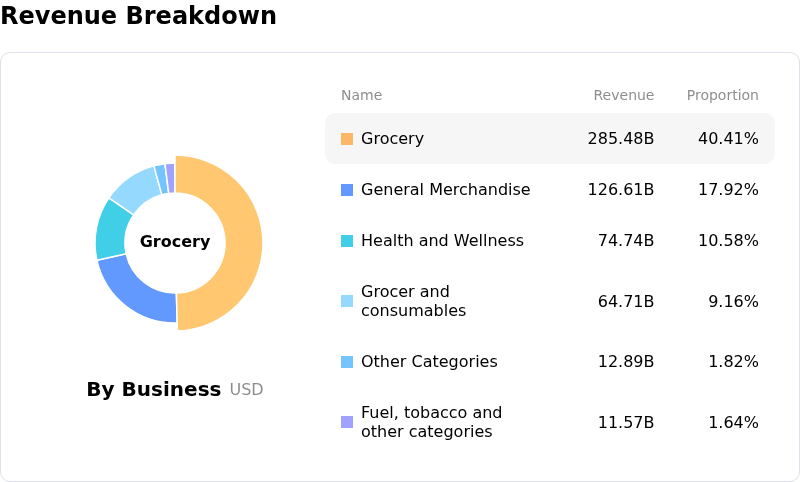
Walmart Inc (WMT) is in the Food & Drug Retailing industry. Its latest annual revenue is $713.16B, ranking 1 in the industry. The net profit is $21.89B, ranking 1 in the industry. Company Profile
Over the past month, multiple analysts have rated the company as Buy, with an average price target of $134.90, a high of $150.00, and a low of $70.11.
More details about Walmart Inc (WMT)
Company Specific Risks:
- Walmart is facing an urgent product recall of Great Value brand apple juice across 25 states due to inorganic arsenic levels exceeding industry standards, posing significant health and safety risks and potential reputational damage.
- The company reported a decline in key financial metrics, including a 1.79% decrease in Net Operating Profit After Tax (NOPAT) and a 10.60% reduction in Economic Profit over the last twelve months, with Economic Operating Cash Flow (EBITDAR) falling 5.15% year-over-year due to increased capital expenditures on AI and automation that have not yet yielded immediate growth benefits.
- Walmart is closing two e-commerce fulfillment centers in Illinois and Massachusetts, impacting over 200 employees, as it shifts towards more automated facilities, which carries operational execution risks and potential for short-term logistical disruptions.
- Analyst sentiment from Seeking Alpha indicates pessimism, with a "Sell" rating citing competitive threats from Amazon, coupled with broader inflationary pressures and rising oil prices that could constrain Walmart's pricing flexibility and overall profitability.