Unilever PLC Stock (UL) Moved Down by 6.37% on Mar 31: A Full Analysis

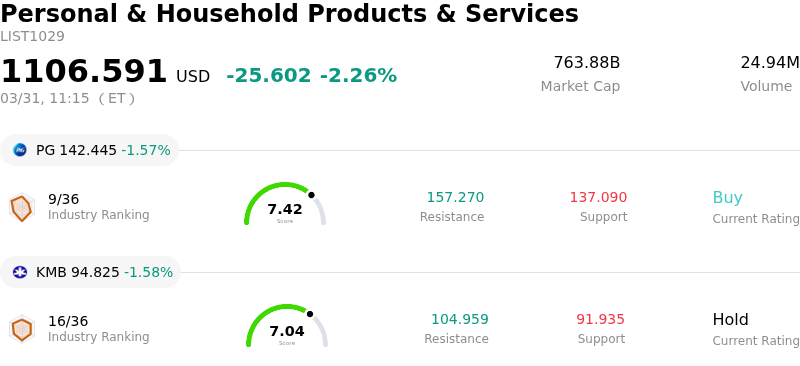
Unilever PLC (UL) moved down by 6.37%. The Personal & Household Products & Services sector is down by 2.26%. The company underperformed the industry. Top 3 stocks by turnover in the sector: Unilever PLC (UL) down 6.37%; Procter & Gamble Co (PG) down 1.57%; Kimberly-Clark Corp (KMB) down 1.58%.
What is driving Unilever PLC (UL)’s stock price down today?
Unilever's stock experienced significant downward pressure today, driven by a confluence of factors including a major strategic announcement, ongoing concerns about its financial health, a cautious outlook, and negative analyst sentiment. The primary event was the definitive agreement to merge Unilever's global Foods division with McCormick & Company, announced on March 31, 2026. This $44.8 billion deal aims to create a global "flavor powerhouse," with Unilever receiving a substantial cash component and a 65% stake in the combined entity, marking a strategic pivot to focus on its higher-growth Beauty and Personal Care segments. However, the market's reaction suggests apprehension, as Unilever's shares have been sliding throughout March, indicating broader investor concerns beyond the strategic merits of the divestment.
Contributing to the negative sentiment are persistent worries about Unilever's financial metrics. The company exhibits a high debt-to-equity ratio, noted at around 190.62% or 1.78, and weak liquidity with current ratios of approximately 0.79 and quick ratios of 0.49 or 0.6. These figures raise concerns about financial strain, especially in a rising interest rate environment.
Adding to investor unease, Unilever issued a cautious outlook for 2026 organic sales growth, projecting it to be at the lower end of its 4% to 6% range due to anticipated slower market conditions. This guidance, following the full-year 2025 results, has been met with skepticism from analysts who question the achievability of the company's growth and margin targets. Several analysts have downgraded the stock or reiterated cautious positions, with a consensus rating of "Reduce" for its London-listed shares and a "Hold" for its NYSE-listed shares.
Further operational pressures stem from a global hiring freeze implemented for at least three months, citing challenges from geopolitical tensions in the Middle East and rising oil-linked input costs that could squeeze margins. This measure, coupled with existing cost-reduction programs, signals tougher conditions ahead for profitability and growth. Investors are therefore digesting a complex picture of strategic transformation, financial leverage, cautious growth forecasts, and rising operational costs, all contributing to the downward movement observed today.
Technical Analysis of Unilever PLC (UL)
Technically, Unilever PLC (UL) shows a MACD (12,26,9) value of [-2.20], indicating a sell signal. The RSI at 26.60 suggests sell condition and the Williams %R at -91.07 suggests oversold condition. Please monitor closely.
Fundamental Analysis of Unilever PLC (UL)
Unilever PLC (UL) is in the Personal & Household Products & Services industry. Its latest annual revenue is $56.94B, ranking 2 in the industry. The net profit is $10.68B, ranking 2 in the industry. Company Profile
Over the past month, multiple analysts have rated the company as Buy, with an average price target of $82.81, a high of $94.95, and a low of $72.00.
More details about Unilever PLC (UL)
Company Specific Risks:
- Unilever faces financial stability concerns due to elevated leverage, indicated by a high debt-to-equity ratio of 1.78 to 190.62, and weak liquidity, with current ratios ranging from 0.79 to 0.6 and quick ratios from 0.49 to 0.6.
- The company has implemented a global hiring freeze for at least three months, citing "significant challenges" from the Middle East conflict, which poses operational headwinds by potentially hindering workforce expansion and adaptation to market demands amidst rising inflationary pressures on raw materials.
- The proposed $44.8 billion combination of Unilever's Foods business with McCormick & Company carries inherent execution risks related to obtaining regulatory approvals and ensuring timely completion, which could impact the anticipated benefits of portfolio simplification and value unlocking.
- Analyst sentiment reflects caution, with a consensus "Reduce" rating from a group of analysts and several "Sell" ratings, indicating concerns about the company's near-term performance and outlook.