


Taiwan Semiconductor Manufacturing Co Ltd Stock (TSM) Moved Down by 3.42% on Mar 30: A Full Analysis



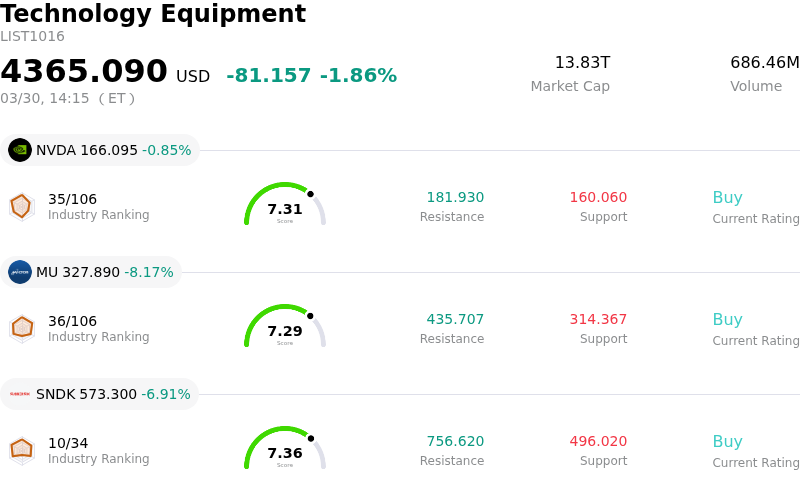
Taiwan Semiconductor Manufacturing Co Ltd (TSM) moved down by 3.42%. The Technology Equipment sector is down by 1.86%. The company underperformed the industry. Top 3 stocks by turnover in the sector: NVIDIA Corp (NVDA) down 0.85%; Micron Technology Inc (MU) down 8.17%; SanDisk Corporation (SNDK) down 6.91%.
What is driving Taiwan Semiconductor Manufacturing Co Ltd (TSM)’s stock price down today?
Taiwan Semiconductor Manufacturing Company (TSM) experienced a notable downward movement today, largely influenced by a confluence of geopolitical uncertainties and shifts in institutional investor sentiment. The ongoing geopolitical tensions in the Middle East, particularly concerns surrounding the Strait of Hormuz and its potential impact on critical energy and helium supplies for chip fabrication, have created a heightened sense of risk for global supply chains. Taiwan's significant reliance on imported energy sources amplifies these concerns for TSM, leading to increased investor caution and a reassessment of its risk profile.
Further contributing to the selling pressure are persistent geopolitical tensions between China and Taiwan. With a substantial portion of TSM's manufacturing capacity located in Taiwan, any signs of regional instability inherently introduce external vulnerabilities that weigh on investor confidence. This broader macroeconomic uncertainty adds to market trepidation.
Evidence suggests that some institutional investors have recently reduced their positions in the company, indicating a potential reallocation of capital away from TSM. Such adjustments in large portfolios can exert considerable downward pressure on a stock's price, reflecting a change in sentiment among key market players.
While TSM continues to benefit from robust demand for artificial intelligence (AI) chips and has a strong long-term growth outlook, with aggressive capital expenditure plans to maintain its leadership in advanced node technology, these positive fundamentals appear to be temporarily overshadowed by the immediate impact of geopolitical anxieties and institutional selling. The company's advanced node capacity, though fully booked for several years, also faces intensifying competition from rivals making significant investments in AI-focused chip manufacturing, such as Samsung.
Technical Analysis of Taiwan Semiconductor Manufacturing Co Ltd (TSM)
Technically, Taiwan Semiconductor Manufacturing Co Ltd (TSM) shows a MACD (12,26,9) value of [-3.30], indicating a sell signal. The RSI at 40.51 suggests neutral condition and the Williams %R at -87.36 suggests oversold condition. Please monitor closely.
Fundamental Analysis of Taiwan Semiconductor Manufacturing Co Ltd (TSM)
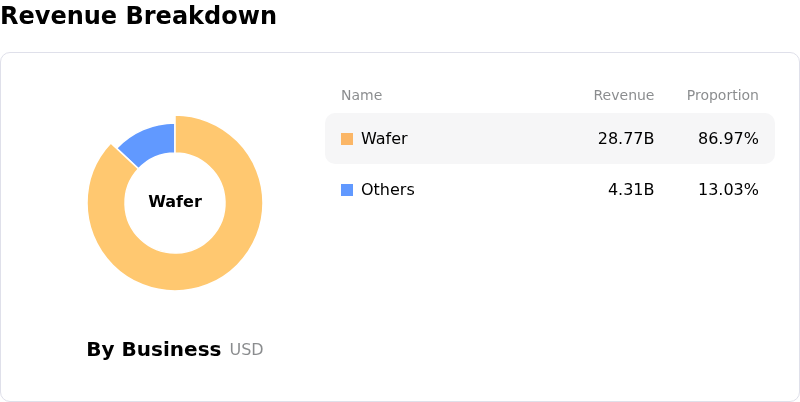
Taiwan Semiconductor Manufacturing Co Ltd (TSM) is in the Technology Equipment industry. Its latest annual revenue is $122.22B, ranking 2 in the industry. The net profit is $55.12B, ranking 2 in the industry. Company Profile
Over the past month, multiple analysts have rated the company as Buy, with an average price target of $410.08, a high of $520.00, and a low of $205.00.
More details about Taiwan Semiconductor Manufacturing Co Ltd (TSM)
Company Specific Risks:
- Ongoing geopolitical tensions between China and Taiwan pose a significant external vulnerability, given TSMC's concentration of over 80% of its manufacturing capacity in Taiwan, which could severely disrupt operations and investor confidence.
- Taiwan's high dependency on imported energy, with only 11 days of natural gas reserves as of March 23, 2026, creates an operational risk where disruptions in global supply chains, potentially exacerbated by the Iran conflict, could lead to increased energy costs and production constraints.
- Reports from March 23-24, 2026, indicate a substantial capacity bottleneck for TSMC's advanced 2nm chips, forcing major clients like Nvidia to reassess product roadmaps and highlighting near-term execution risk if capacity expansion does not meet escalating demand.
- A recent investigation launched on March 30, 2026, into 11 Chinese firms illegally recruiting high-tech semiconductor talent in Taiwan highlights a growing threat to TSMC's intellectual property and skilled workforce, posing a competitive risk to its technological leadership.
This article may include AI-generated content that is human-reviewed, which is for reference and general information purposes only and does not constitute investment advice.
Recommended Articles








Comments (0)
Click the $ button, enter the symbol, and select to link a stock, ETF, or other ticker.