


Who Holds the Stranglehold on the AI Era? Surging Memory Prices Fatten Storage Giants, Downstream Terminals Raise Prices Across the Board



AI Podcast


The memory chip industry is experiencing an AI-driven supercycle, as surging demand for High Bandwidth Memory causes DRAM and NAND prices to skyrocket. Major manufacturers have redirected capacity to high-margin AI components, severely tightening consumer-grade supply. This shift has forced consumer electronics giants like Apple and Microsoft to raise retail prices to combat rising BOM costs. While memory majors and the South Korean government are launching massive, long-term expansion plans, the 18-to-24-month production cycle suggests that global supply constraints and inflationary pressure on consumer hardware will likely persist for the next two years.
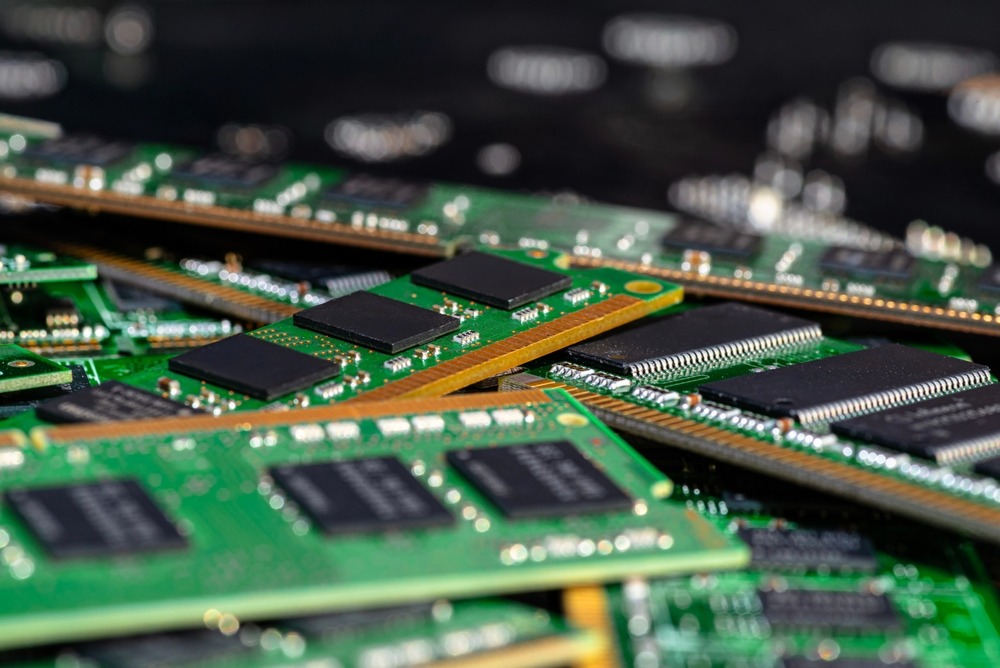
TradingKey - As the artificial intelligence boom drives a sharp rise in demand for High Bandwidth Memory (HBM), global memory chip manufacturers are ushering in an unprecedented golden era of profitability.
Micron Technology ( MU )'s latest financial report shows that for the quarter ended May 28, DRAM memory chip prices rose by more than 60% compared to the previous quarter, and NAND flash prices rose by over 80%. The company's revenue quadrupled year-on-year, with its gross margin soaring to 84.9% from 39% a year ago, and net profit skyrocketing by 1,398% year-on-year.
During the same period, Samsung Electronics' operating profit for the fourth quarter of 2025 grew nearly threefold year-on-year, with chip business profits surging 470% to hit a historic high. SK Hynix's stock price has risen by over 60% year-to-date, with its market capitalization surpassing Samsung's, making it South Korea's largest listed company.
These data points collectively confirm one fact: the memory chip industry is entering an AI-driven supercycle.
Siphon Effect of AI Computing Power Reshapes the Storage Industry Landscape
The root cause of the current surge in memory chip prices lies in the explosive growth of AI computing power demand. The DRAM requirement per AI server is eight times that of a traditional server, and the NAND requirement is three times, with this explosive structural demand directly causing global memory chip production capacity to tilt toward the AI sector.
Upstream giants such as Samsung, SK Hynix, and Micron have shifted over 80% of their advanced production capacity to higher-margin High Bandwidth Memory (HBM) and AI-specific DRAM, resulting in a sharp contraction in the supply of consumer-grade chips.
According to data from Counterpoint Research, memory and storage prices have quadrupled over the past three quarters. The share of memory chips in the bill of materials (BOM) cost of finished consumer electronics has also soared from the previous 10%-15% to 20%-40%.
Taking mobile phones as an example, the price of 12GB LPDDR5X memory has surged from $25 to $70, and the cost of 1TB flash memory has risen from 200 yuan to nearly 600 yuan, directly breaching the profit margins of mid-to-low-end models.
Apple ( AAPL) had previously stockpiled a large volume of low-priced memory chips by leveraging its massive purchasing volume and long-term price-lock agreements. However, this batch of "low-cost ammunition" will have basically run dry by the second quarter of 2026, and subsequent production of new models must source components at current high market prices.
Wave of price hikes sweeps the consumer electronics industry
Apple Inc. announced on June 25 that it would raise prices across its entire MacBook and iPad product lines, a decision that immediately shook the market. The company's shares tumbled 6.1% that day, wiping out approximately $263 billion in market value and marking its largest single-day decline since April 2025.
In an interview, Apple CEO Tim Cook admitted, "In more than 40 years of working in the electronics supply chain, I have never seen such violent commodity price fluctuations," describing the current imbalance in memory supply and demand as a "once-in-a-century flood."
Apple's price hike is not an isolated case. Microsoft announced on the same day that its Xbox gaming consoles would see a price increase of $100 to $150 starting August 1, marking its third price adjustment since May 2025. Brands such as OPPO, vivo, and Xiaomi have also successively adjusted their product prices since March 2026, with some PC models seeing increases of over 20% compared to the beginning of the year.
Apple's Supply Chain Breakout Under Heavy Cost Pressures
Facing unprecedented cost pressures, Apple is actively seeking solutions. According to the Financial Times, Apple is lobbying the U.S. government for approval to procure memory chips from Chinese semiconductor company ChangXin Memory Technologies (CXMT).
Currently, the DRAM memory used in Apple's devices is primarily supplied by Micron Technology of the U.S., and South Korea's Samsung and SK Hynix. The overseas memory chip industry is highly concentrated, with only these three giants remaining. Integrating CXMT into its memory supply chain would effectively alleviate the pressure Apple faces from being squeezed by upstream suppliers.
In the first quarter of 2026, CXMT recorded revenue of 50.8 billion yuan, representing a year-on-year increase of 719.13%, while net profit attributable to the parent company reached 24.762 billion yuan, up 1,688.30% year-on-year. For the first half of 2026, net profit attributable to the parent company is projected to reach 50 billion to 57 billion yuan. The rapid rise of this Chinese semiconductor firm has introduced a new competitive dynamic to the global memory market.
In addition to seeking new suppliers, Apple is also coping with rising costs through product mix adjustments. According to forecasts by IDC, global AI PC shipments are expected to exceed 100 million units in 2026, with a penetration rate of over 30%. Apple plans to roll out upgraded on-device intelligence features across more devices later this year, which places extremely high demands on device memory and computing power.
South Korean Memory Giant Launches Trillion-Won Expansion Plan
Faced with persistently high demand, global memory giants are embarking on astronomical capacity expansions.
Samsung Electronics is poised to announce a 10-year investment plan exceeding 1,000 trillion won (approximately $646 billion) to expand semiconductor manufacturing capacity and advanced technological infrastructure.
Meanwhile, SK Hynix announced a Nasdaq ADR listing to raise 45.45 trillion won (approximately $29.4 billion) to construct chip factories in South Korea and procure ASML's extreme ultraviolet (EUV) lithography machines.
The South Korean government has also announced its largest-ever investment plan for the semiconductor and artificial intelligence industries, investing approximately 800 trillion won in the southwestern region to build four chip factories—with Samsung and SK Hynix each constructing two—with the goal of doubling DRAM production capacity within five years.
At the same time, South Korea plans to invest over 1,000 trillion won in the AI data center sector by 2035, and 81 trillion won in the Chungcheong region to construct chip packaging plants.
While these expansion plans are staggering in scale, they will not alleviate supply constraints in the short term. Memory chip capacity expansion requires an 18-to-24-month cycle, while demand for AI computing power continues to grow exponentially; as a result, the industry widely believes that the tight supply-demand situation is unlikely to see significant improvement for at least the next two years.
This content was translated using AI and reviewed for clarity. It is for informational purposes only.
Recommended Articles








Comments (0)
Click the $ button, enter the symbol, and select to link a stock, ETF, or other ticker.