


SpaceX IPO Nears, Google Sees $100 Billion Return, Early VCs Net $60 Billion



AI Podcast


SpaceX has filed its S-1 for an IPO on Nasdaq (SPCX), aiming to raise $75-80 billion at a $1.75-2 trillion valuation. Elon Musk retains 85.1% voting control via dual-class shares and holds a 42% economic interest. Early investors like Google, Valor Equity Partners, and Founders Fund are poised for substantial returns, with Google's 5% stake potentially worth $100 billion and Valor's 4% stake around $65 billion. Founders Fund's 2008 investment is expected to yield over $60 billion. Musk is also eligible for significant equity awards tied to Mars colonization.
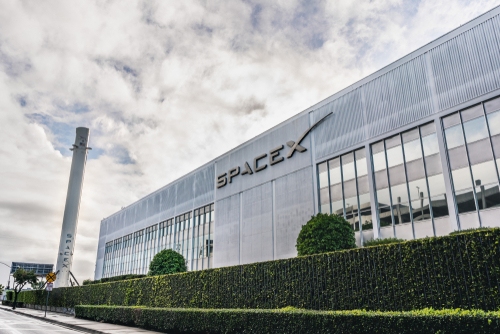
TradingKey - SpaceX officially filed its S-1 registration statement with the U.S. Securities and Exchange Commission (SEC) on May 20, intending to list on the Nasdaq under the ticker symbol "SPCX". The company will launch its global roadshow on June 4, price the offering on June 11, and officially list on June 12.
This IPO aims to raise $75 billion to $80 billion, targeting a valuation range of $1.75 trillion to $2 trillion, which is poised to set a new record for the world's largest IPO.
The prospectus disclosed for the first time that Elon Musk controls 85.1% of the voting power, while Antonio J. Gracias and entities under his control hold 7.3% of Class A shares.
Furthermore, according to media reports, Google ( GOOGL) holds a stake of approximately 5%, positioning it for returns in the hundreds of billions; early venture capital firms such as Valor and Founders Fund have recorded paper gains exceeding $60 billion. The following provides a detailed overview of SpaceX's shareholder structure and investment returns.
Musk exercises absolute control with a minority stake.
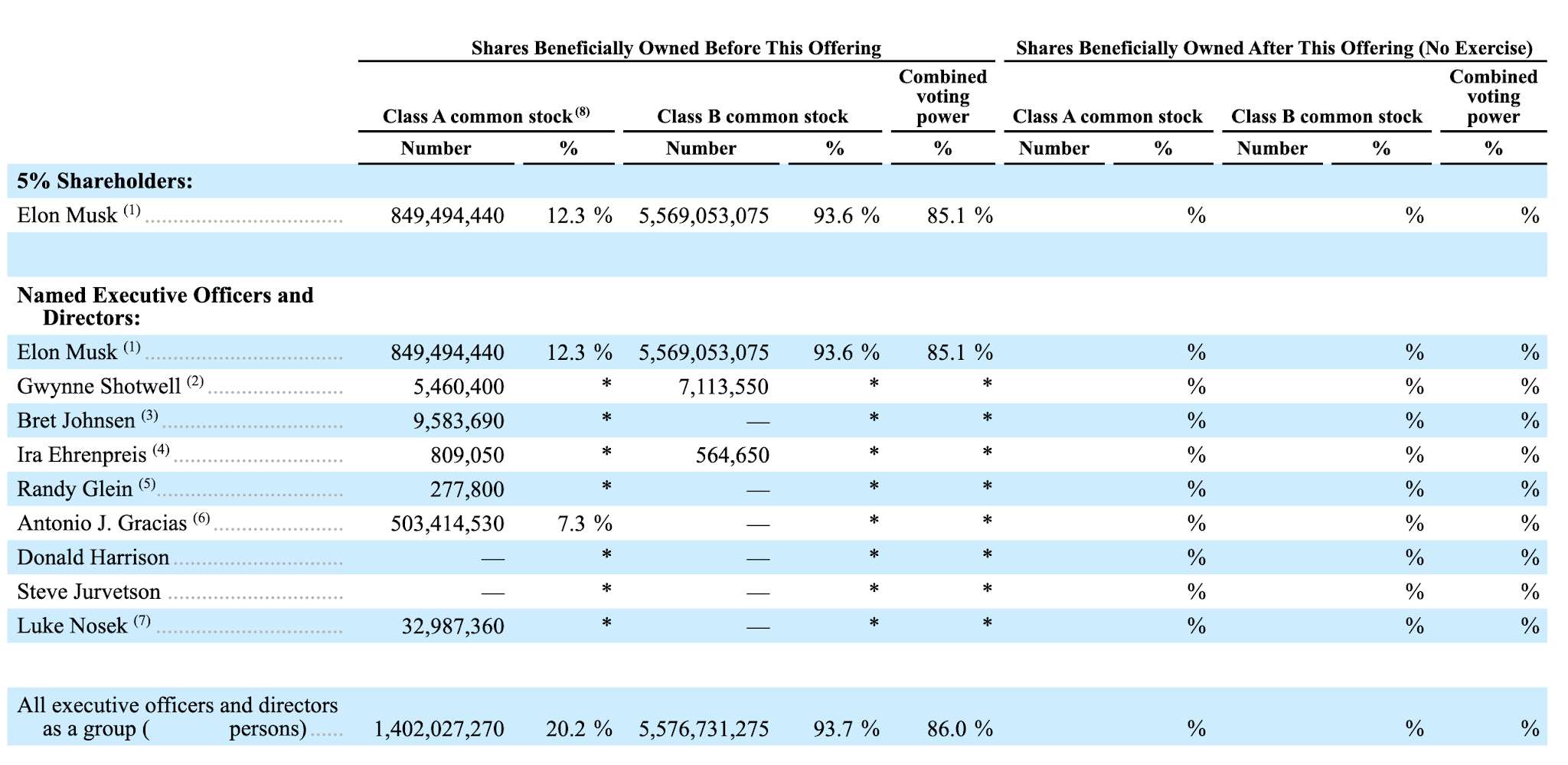
[Source: SpaceX Prospectus]
SpaceX is going public with a dual-class share structure. Class A shares carry one vote per share, while Class B shares carry ten votes per share, with Class B shares held exclusively by Musk and a handful of core insiders. The prospectus shows that prior to the IPO, Elon Musk held 12.3% of Class A shares and 93.6% of Class B shares, representing a total voting power of 85.1%.
According to the latest SEC filings, Elon Musk currently holds an approximately 42% economic interest in SpaceX. Based on a $1.75 trillion valuation, this stake is worth over $700 billion.
The prospectus also disclosed a compensation incentive plan tied to Mars colonization: if Musk establishes a human settlement on Mars with at least 1 million residents, he will receive additional equity awards valued at over $700 billion. Post-IPO, he will continue to serve as CEO, CTO, and Chairman of the Board, and has publicly pledged not to reduce his stake.
Major Shareholder Structure and Investment Returns
Alphabet, Google's parent company
According to regulatory filings submitted by SpaceX in Alaska, Google held a 6.11% stake in SpaceX as of the end of 2025. Based on the valuation at that time, this stake was worth approximately $120 billion.
In 2015, Google and Fidelity Investments jointly injected approximately $1 billion into SpaceX at a valuation of around $12 billion, with the two parties acquiring a combined stake of approximately 10%.
Following the merger of SpaceX and xAI in February 2026, equity was diluted. According to estimates from several financial institutions, Google's current actual stake is approximately 5%. Based on an IPO valuation of $2 trillion, the corresponding value is about $100 billion, representing a roughly 100-fold return over ten years.
Valor Equity Partners
As one of SpaceX's earliest major institutional investors, Valor Equity Partners holds approximately 4% of the company's total economic equity.
According to the prospectus, Valor founder Antonio J. Gracias and his controlled entities hold 7.3% of SpaceX's Class A common stock. Antonio J. Gracias has long served as a member of SpaceX's board of directors and is also a former director of Tesla.
As early as 2006-2008, he began injecting early-stage capital into the then-near-bankrupt SpaceX through Valor funds. Over the following decade, he continued to add investments through multiple funds under his management. Based on SpaceX's target IPO valuation of approximately $1.75 trillion, Valor's roughly 4% total economic equity stake would have a book value approaching $65 billion, delivering staggering compounded returns of hundreds or even thousands of times on its multiple early low-priced investments.
Founders Fund
Founders Fund, co-founded by Peter Thiel, has ties to SpaceX dating back to its "darkest hour" in 2008. At that time, after the company suffered three consecutive rocket launch failures, Founders Fund injected $20 million, marking one of the largest single investments in the fund's history.
After dilution, the fund entity currently holds about 3.5%. Based on SpaceX's target IPO valuation of approximately $1.75 trillion, the book return on this investment has reached over $60 billion, completely setting a new record for a single return in the history of global venture capital.
Fidelity Investments
Fidelity, as a co-investor with Google in 2015, currently holds approximately a 2% stake after dilution. Based on SpaceX's target IPO valuation of about $1.75 trillion, the total value of Fidelity's equity officially reaches approximately $35 billion. This represents a return of over 100 times compared to its early positioning at the $12 billion valuation. Currently, Fidelity has not disclosed whether it plans to reduce its holdings after the IPO lock-up period.
Sequoia Capital
Sequoia Capital partner Shaun Maguire first invested in SpaceX in 2020, when the valuation was approximately $36 billion. Since then, he has also participated in financing for X and multiple rounds for xAI. With a total investment of approximately $2 billion across the three entities, Sequoia holds about 1.5% of SpaceX and has never sold. Based on SpaceX's $1.75 trillion IPO valuation, Sequoia's expected return exceeds $20 billion.
Hedge Funds’ Strategic Entries
D1 Capital Partners, Founded by Daniel Sundheim, the firm entered at a valuation of approximately $36 billion in 2020. According to media reports, the fund has invested a total of about $600 million, and its current holdings are valued at approximately $20 billion, representing a return of over 33 times. The founder has explicitly stated that there are no current plans to reduce holdings and intends to hold for the long term.
Darsana Capital Partners, Founded by Anand Desai, the firm first invested in SpaceX in 2019 at a valuation of approximately $30 billion, subsequently increasing its stake multiple times without selling. The fund's SpaceX position has ballooned to approximately $8.5 billion, accounting for nearly 60% of its assets under management. Based on the IPO valuation, Darsana's unrealized book profit is expected to exceed $10 billion.
This content was translated using AI and reviewed for clarity. It is for informational purposes only.
Recommended Articles




Comments (0)
Click the $ button, enter the symbol, and select to link a stock, ETF, or other ticker.