


In-Depth Analysis of SpaceX Prospectus: Starship, AI and Debt Among Four Core Risks Behind Epic IPO



AI Podcast


SpaceX's upcoming IPO faces significant risks despite its market attention. Starship's successful mass production is critical; failure could stagnate core businesses, leading to increased CapEx and reduced competitiveness. Technical hurdles in Starship's rapid turnaround, supply chain limitations, and regulatory approvals from agencies like the FAA pose challenges. The AI business faces commercial value uncertainty, global compliance risks, and high capital expenditures with an uncertain path to profitability. Power and chip supply chain constraints, along with reliance on third-party cloud services, add further vulnerability. A substantial $29.132 billion debt burden amplifies operational risks during downturns and limits capital for growth.
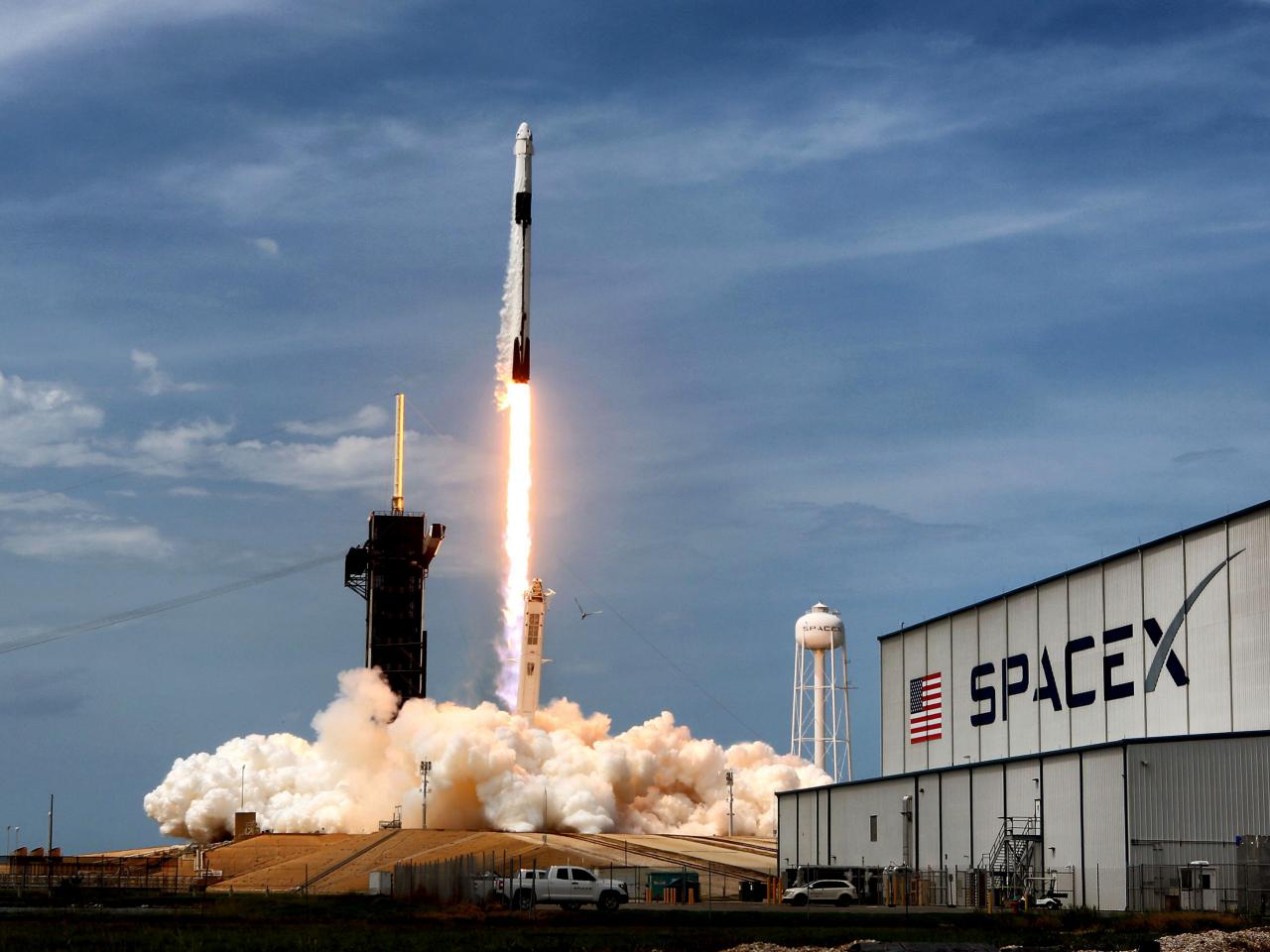
Tradingkey - As an IPO of unprecedented historical scale, SpaceX’s official listing is undoubtedly attracting significant market attention. However, while positioning their portfolios, investors must remain clear-eyed about the various latent risks. SpaceX’s prospectus has unveiled a multitude of risks behind its high-profile facade; the materialization of any of these risks would directly impact its daily operational fundamentals and subsequently cause notable volatility in secondary market share prices, making them critical factors for every investor to monitor.
The successful mass production and stable operation of Starship represent the "lifeline" for all of the company's core businesses.
Strategic and Business Impediments: Current "Falcon" series rocket capacity is insufficient. If Starship fails to achieve large-scale deployment, high-frequency launches, and full recovery as scheduled, core businesses such as next-generation V3 satellites, V2 Direct-to-Cell satellites, and orbital AI computing will face stagnation, directly leading to surging capital expenditures, impaired revenue expectations, and declining market competitiveness.
Technical and Engineering Bottlenecks: As a novel and complex system, Starship faces numerous unproven technical challenges in achieving rapid turnaround. Examples include heat shield durability for high-frequency re-entry, rapid engine refurbishment, launch pad reliability, and the extremely complex microgravity on-orbit refueling technology.
Supply Chain and Infrastructure Shortcomings: High-frequency launch targets are heavily dependent on an extensive support network. Shortages of raw materials (such as steel and fuel), power constraints, and construction delays or accidental damage to infrastructure—including new launch sites and fuel plants—would trigger massive cascading delays and cost overruns.
Regulatory and Compliance Friction: High-frequency launches are highly dependent on administrative approvals from agencies such as the Federal Aviation Administration (FAA). Any anomalies during test flights could spark public safety and environmental concerns, leading to regulatory approval delays or even forcing the company into costly redesigns.
High degree of uncertainty regarding the commercial value of AI business.
Global Compliance Risks: AI products and the X platform are subject to dozens of regulatory categories across multiple jurisdictions, including the U.S. and Europe, covering privacy, data, AI, antitrust, and consumer protection. Requirements vary significantly by country and continue to evolve. Furthermore, market leadership in orbital launch services will trigger more rigorous antitrust scrutiny, where non-compliance could result in substantial fines (calculated based on global revenue), mandated product modifications, or restrictions on business expansion.
Business Continuity and Distribution Channel Risks: The company is highly dependent on third-party app stores (Apple and Google). Failure to meet content moderation or compliance standards poses a risk of removal from these platforms, which would directly disrupt product distribution and severely impact financial performance. Additionally, regulators such as the Irish DPC and the U.S. FTC have launched investigations into data security and chatbots, leading to a significant increase in compliance costs.
Uncertainty in Market Demand and Commercial Value: AI is an emerging and rapidly evolving technology. The commercial value of frontier AI models has not yet been fully validated, and long-term market acceptance remains uncertain. Consequently, there is no guarantee that demand for AI solutions will reach expected levels or remain sustainable.
Capital Expenditure and Profitability Risks: Developing, training, and operating frontier AI models require massive and continuously increasing capital expenditures, covering specialized computing hardware, data centers, energy procurement, and technical talent. The AI business has incurred losses since its inception, and it is expected that years of investment will be required before the segment achieves sustained positive adjusted EBITDA. Profitability may never be achieved or maintained, and the return on investment may be insufficient to cover the costs incurred.
AI compute expansion constrained by power and chip supply chain vulnerabilities.
Energy Bottlenecks and Infrastructure Constraints: The expansion of AI computing power is facing severe constraints from global electricity shortages and high costs. Data centers currently rely heavily on natural gas and gas turbine power generation, making them highly vulnerable to natural gas price fluctuations, long equipment delivery cycles, and sudden shifts in environmental regulatory policies for large-scale fossil fuel power generation.
Fragility of the Core Computing Power Supply Chain: Key chips such as GPUs are extremely dependent on a few third-party suppliers, and the relationship is maintained only through a "purchase-on-order" model without long-term supply agreement protections. Upstream wafer foundry capacity is highly concentrated, making it highly susceptible to geopolitical frictions, natural disasters, or shortages of raw materials such as silicon wafers and rare earths, posing a serious risk of supply disruption.
Uncertainty Surrounding the In-house Chip Project (Terafab) : Terafab, the internal chip factory planned to meet the massive computing demands of "Orbital AI," faces high uncertainty. Currently, no final binding agreements have been signed for cooperation with potential partners like Tesla and Intel. If the project is delayed or fails, the company will be unable to obtain sufficient AI chips to support its business expansion.
Constraints from External Cloud and Network Providers: Telecommunications networks and cloud services are highly dependent on third parties. Suppliers might not only prioritize competitors or suddenly raise prices, but external system outages or cyberattacks could also directly lead to business interruptions. Furthermore, the company has entered into long-term, non-cancelable cloud computing contracts that require continuous payment even when idle, resulting in significant fixed financial cost pressure.
Debt risk
Specifically, SpaceX's total outstanding principal debt as of March 31, 2026, amounted to $29.132 billion. This substantial debt burden could also adversely affect SpaceX's credit ratings or outlook, thereby increasing the company's cost of capital, limiting its access to financing channels, and potentially rendering it unable to obtain financing at all.
The aforementioned circumstances could have a material adverse effect on the company's business, specifically by: significantly magnifying the company's operational vulnerability during economic downturns and industry slumps; forcing the company to dedicate a substantial portion of its operating cash flow to debt service, thereby squeezing the capital available for daily operations, growth strategies, product R&D iterations, and other strategic initiatives; substantially limiting the company's flexibility to plan for and respond quickly to changes in the business and industry environment; and exposing the company to significant interest rate risk—given that current and future borrowings are largely based on floating rates, interest rate fluctuations will directly drive up financing costs.
This content was translated using AI and reviewed for clarity. It is for informational purposes only.
Recommended Articles







Comments (1)
Click the $ button, enter the symbol, and select to link a stock, ETF, or other ticker.