


Meta Starts 8,000-Person Layoffs This Week: An AI Bet Tearing Open the Tech Giant’s Ruthless ‘Efficiency First’ Reality



AI Podcast


Meta will lay off approximately 8,000 employees, representing 10% of its workforce, starting May 20. Over 7,000 staff will be redeployed to new AI departments, including Applied AI Engineering and Agentic Transformation Accelerator, as Meta restructures towards a flatter, AI-native organization. This signals a strategic pivot to AI development, evidenced by a $10 billion increase in full-year capital expenditure guidance. Unlike previous layoffs, this round lacks an apology, contributing to decreased employee satisfaction and rising concerns over AI model training via employee computer monitoring. Further downsizing is anticipated later in the year.
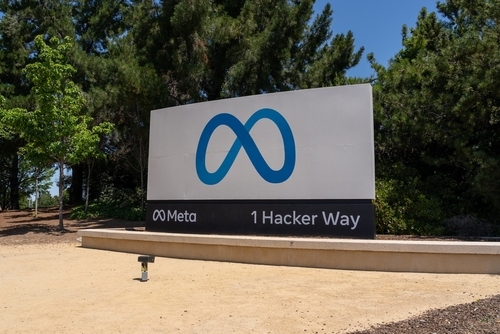
TradingKey - According to an internal memo, Meta ( META) HR head Janelle Gale issued a notice to all staff on Monday, clarifying that layoff notifications will be sent in batches starting at 4 a.m. local time on Wednesday, May 20. This round of adjustments involves approximately 8,000 positions, accounting for about 10% of Meta's global workforce of 78,000.
The layoffs are accompanied by a large-scale internal restructuring, with over 7,000 employees being redeployed to four new AI departments, including Applied AI Engineering and the AI Agent Transformation Accelerator. At the same time, the company will significantly compress management layers and implement a flat, AI-native organizational structure to enhance decision-making efficiency with smaller business micro-teams.
It is worth noting that this round of layoffs is not the end. Meta has clearly hinted at multiple rounds of personnel adjustments throughout the year, with further downsizing plans scheduled for August and the autumn.
Talent Pivot to the AI Mainline
This personnel adjustment is not a simple downsizing, but rather a deep organizational restructuring accompanied by the strategic reallocation of talent.
Janelle Gale noted that, thanks to the leap in productivity empowered by AI tools, the company has been able to strategically reassign over 7,000 employees to several newly established business units.
These include the high-profile Applied AI Engineering (AAI) department. The department had previously recruited top engineers from across the company with the goal of strengthening Meta's technical barriers in the large-model competition; this personnel reallocation undoubtedly doubles down on that strategic objective.
In addition to the AAI department, employees will be reassigned to newly formed teams such as the Agentic Transformation Accelerator (ATA) and the Central Analytics department. These departments carry out the core missions of Meta's "AI for Work" initiative, developing AI agents capable of autonomously completing human tasks. Among them, the ATA team focuses on the implementation and conversion of agents, while the Central Analytics department is responsible for evaluating productivity through data to provide decision support for AI agent R&D.
Advancing in tandem with the personnel reallocation is Meta's organizational flattening reform. Gale emphasized in the memo that the company will cut management positions across the board, replacing traditional hierarchical structures with small, autonomous teams (pods). This model was previously piloted in parts of Reality Labs, with the core aim of granting small teams more autonomy to adapt to the business requirements of the AI era with faster response times.
Meta is betting unreservedly on its AI transformation. Financial data shows that the company has raised its full-year capital expenditure guidance from the original $115 billion–$135 billion to $125 billion–$145 billion, an increase of approximately $10 billion from expectations three months ago, marking an all-time high. Single-quarter capital expenditure reached $19.84 billion, a significant year-over-year increase.
Trust Crisis Amid Meta Layoffs
When Mark Zuckerberg announced the first round of mass layoffs at the end of 2022, he apologized to all employees, admitting to a misjudgment in hiring strategy during the pandemic and promising to take full responsibility for the decision-making error. At that time, Meta's stock price had seen a significant correction, and management defined the layoffs as a necessary corrective measure for the "Year of Efficiency."
However, more than three years later, as a new round of workforce adjustments involving approximately 8,000 people commenced this week, the official rhetoric has shifted noticeably—this round of layoffs was not accompanied by any apology, and the company has refused to comment publicly on specific implementation details.
Anxiety among Meta's internal staff is running high, with survey data from anonymous workplace platforms intuitively reflecting a subdued corporate atmosphere. Compared to the peak in the second quarter of 2024, current overall employee satisfaction at Meta has declined by 25%, while corporate culture ratings have plummeted by 39%. Aside from compensation and benefits, ratings for all other dimensions have trended downward across the board, lagging significantly behind peers such as Amazon ( AMZN ), Google ( GOOGL ), Netflix ( NFLX) and other industry peers.
Meanwhile, reports surfaced on April 22 that internal Meta memos show the company plans to install new tracking software on the computers of its U.S. employees to capture mouse movements, clicks, and keystrokes for training artificial intelligence models; the tool will run across a series of work-related applications and websites.
This monitoring initiative has triggered strong resistance from employees, with over 1,000 staff members signing a petition opposing the company's data collection through such means, signaling employee discontent with management's intensified surveillance.
This content was translated using AI and reviewed for clarity. It is for informational purposes only.
Recommended Articles







Comments (0)
Click the $ button, enter the symbol, and select to link a stock, ETF, or other ticker.