


SpaceX IPO 2026: What History Says About The Stock’s Debut And Long-Term Performance



AI Podcast


SpaceX is preparing for a record-breaking IPO targeting a $1.75 trillion valuation, significantly exceeding past U.S. listings. Despite immense investor excitement for its aerospace and satellite innovations, historical data suggests mega-cap IPOs often underperform in their first year and lag the S&P 500 long-term. While exceptions exist, most large IPOs experience substantial price declines post-listing. Prospective investors are advised to exercise patience, wait for the IPO hype to subside, and consider purchasing shares at a more stabilized, potentially lower price point to maximize long-term returns.
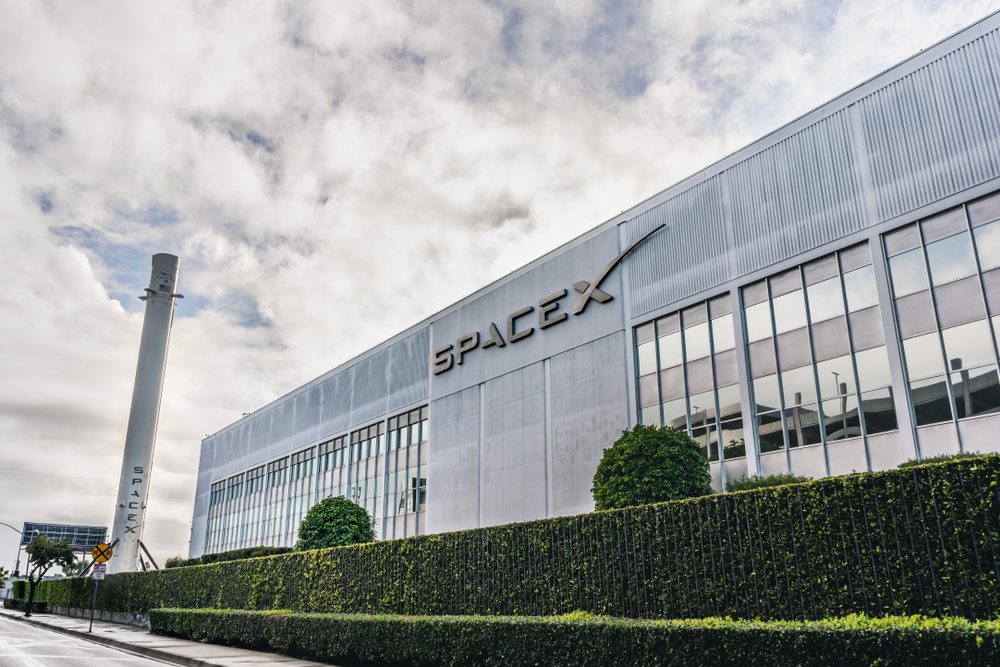
TradingKey - Excitement is building in the financial sector surrounding the SpaceX IPO that is set to break all records in terms of U.S. equity listings, as CEO Elon Musk prepares the aerospace and satellite company to go public for the first time ever. SpaceX filed its initial public offering papers with the Securities and Exchange Commission last month under a confidential basis and plans to kick off their IPO roadshow on June 8, where they will present their business to institutional investors and Wall Street analysts. The formal IPO date remains unconfirmed; however, it is expected shares will be available for trading on public exchanges in late June or early July of 2026. In addition, the company has set a target for a $1.75 trillion market capitalization at the time of going public, which will not only make it the biggest IPO in U.S. history, but also put it well ahead of every previous public company.
SpaceX’s Historic IPO Valuation Breaks U.S. Market Records
In order to understand how massive SpaceX's upcoming IPO is, it is important to compare and contrast SpaceX's anticipated valuation with the record-setting valuations of U.S. companies when they joined public stock exchanges in the past. The largest initial public offering ever completed in the United States was by Alibaba Group, which went public with a market capitalization of $169 billion. SpaceX's targeted market capitalization of $1.75 trillion is over 10 times that of Alibaba's initial market capitalization and would break every record for an initial public offering in U.S. financial history. This staggering value has created significant excitement among retail and institutional investors alike, as many are looking to invest in SpaceX, which has changed the trajectory of commercial space flight, created global satellite internet access with Starlink, and is positioned for continued success as an innovator in aerospace technology. However, despite the euphoria surrounding SpaceX's initial public offering, historical market data indicate that mega-cap companies very often fail to deliver anticipated performance after going public based on consistent long-term trends.
Mega-IPO Stocks Historically Struggle In Their First Year Of Trading
The wider IPO market has a pattern of sharp pops of price on the first day followed by substantial underperformance as the buzz dies down, and that phenomenon is even more pronounced for larger sized firms that join the public marketplace. According to data from Jay Ritter (Director of the IPO Initiative, University of Florida), there were nearly 9,300 IPOs on the NYSE/NASDAQ from 1980 to 2025, with an average first-day return of approximately 19%. The first-day excitement tends to fuel the momentum of the new listing; however, a shift in the relative momentum begins in subsequent months and/or years, particularly for large firms with very high market capitalizations.
According to the 10 largest U.S. IPOs ever (excluding companies that are not trading anymore), all had very similar and poor performance relative to their IPO price when considering short-term holding lengths (i.e. first three months after IPO) and by order of magnitude (i.e. the percentage drop in share value over the first twelve months of trading). For example, in total, the five largest companies listed below had a median three-month loss of 10% and a median twelve-month loss of 31% when comparing respective sale prices: Facebook (50% loss); Rivian (67% loss); DiDi (79% loss); Uber (21% loss); and GM (37% loss).
Arm Holdings was up by an incredible 29% during the first three months of trading, which has seen it gain 189% in the past 12 months compared to an overall increase of greater than 70% across the 34 largest IPOs over that same period. Airbnb also had an amazing return during its initial public offering, with its stock price increasing 186% during its first three months of trading, followed by 167% during its first year of trading. While these particular examples may not represent a normal trend relative to other large initial public offerings, overall evidence from history indicates that large initial public offerings typically experience a substantial price decline within their first year of trading. Additionally, the largest IPOs that have previously experienced significant declines (and to which SpaceX's interest in having a valuation of $1.75 trillion upon its upcoming initial public offering) were far less than the 1.75 trillion dollar valuation SpaceX would be seeking to achieve in the future.
Most Mega-IPO Stocks Lag The S&P 500 Over The Long Term
Many investors may think getting through temporary drop-offs will eventually pay off through long-term price appreciation of owning SpaceX stock, but that assumption about long-term future success is not supported by prior data. I looked at all 10 of the largest U.S. IPO's in terms of total return from the IPO date to the end of the last reporting period, May 4, 2026; of those 10, only 3 have provided investors with a superior overall return compared to S&P 500 index. Among those 10, six have delivered overall returns lower than the index by more than 100 basis points, meaning buying your stock on the first day could have yielded higher total returns had you held it in a low-cost S&P 500 index fund.
A large performance disparity exists among many of the largest corporations appearing on this list. As of this writing, Alibaba has produced a 42 percent total return since its initial public offering (IPO), while the S&P 500 has produced a 258 percent total return over the same period: a 216 percentage point performance gap. United Parcel Service and General Motors have performed similarly poorly against the S&P 500, producing negative performance gaps of 393 and 381 percentage points, respectively, since their IPOs. Even companies that generated positive performance have outperformed the S&P 500 significantly less than expected. For example, Uber Technologies generated a total return of 78 percent from its IPO to date, while the S&P 500 generated a total return of 150 percent during the same time period; thus, ultimately, Uber Technologies produced a performance gap of 72 percentage points compared to the S&P 500.
A small number of exceptions do exist to this trend of long-term underperformance. Meta Platforms has more than 1,500% total return and is the leading company in performance against the S&P 500, outperforming it by over 1,000%. Arm Holdings is also performing well, with total returns of 299% since IPO versus 61% for the S&P 500. Airbnb is slightly above the index with a return of just 8% for its time as a public company. However, these exceptions are few; generally, mega-cap IPOs investing at the time of their initial public offering do not yield favorable long-term returns for the investor.
Patience Is Key For Prospective SpaceX Investors
Investors shouldn’t consider a historical analysis to eliminate SpaceX as a potential investment, nor should they assume that there will never be a good time invest in its stock. History reveals that patient investors who are willing to wait for a more favorable entry point have been rewarded handsomely for doing so, especially in relation to companies that have not performed as well as the overall market during their initial public offering (IPO). An example of this is Uber Technologies (UBER): since its May 2019 IPO, UBER has lagged behind the S&P 500 by a significant percentage; however, since May 2021, UBER has outperformed the S&P 500 by 100% and has produced above-average returns to investors who exercised patience in the face of the hype surround its launch and waited for the stock price to stabilize at a more reasonable multiples to sales. In addition to Uber, there are many other large capitalized companies whose stock performed poorly relative to the overall stock market in their early years of trading (by more than 50%) as a result of the average price of their stock during those periods being well above their long-term fair value. Therefore, with respect to SpaceX, most investors would be better served if they did not rush out and purchase its stock immediately following its IPO but waited for the volatility associated with its IPO to subside and for its stock price to stabilize to reflect the company's long-term earnings potential and cash flow stream.
The SpaceX IPO is one of the most important moments in Wall Street history, with a record-setting valuation for a U.S. public debut. The level of excitement surrounding the company's pioneering efforts in terms of space exploration and global internet provision is certainly warranted, and there is little doubt that the company has generated many transformational opportunities for investors over time. However, investors should use caution when matching this level of emotional response with the realities of the market. History has proven that mega-cap IPOs are generally weak performers in their first full year on the market, and the vast majority of the time fail to outperform the returns of the S&P 500 over the long-term for those who purchased shares at the IPO price. For those investors who are eager to add SpaceX to their portfolio, the smartest way to invest is to exercise patience, allow the hype of the IPO to wear off, and then take advantage of an opportunity to purchase SpaceX stock at much lower prices that will likely become available following the end of the IPO period.
Recommended Articles




Comments (0)
Click the $ button, enter the symbol, and select to link a stock, ETF, or other ticker.