


AI Boom Boosts Market Value by 71%, Why Did South Korea’s Stock Market Jump to Seventh Globally?



AI Podcast


South Korea's equity market is now the world's seventh-largest, surpassing Canada, with market capitalization surging to $4.59 trillion. This rise is primarily driven by Samsung and SK Hynix, whose gains are fueled by soaring demand for memory chips from major cloud providers like Amazon and Google. Tight supply and increased capacity towards HBM have created a seller's market. While short-term outlooks are positive due to strong demand and technological barriers, long-term risks include the ultimate return on AI investments and potential deleveraging from leveraged retail trading. The market's continued ascent hinges on AI's ability to generate new market demand.
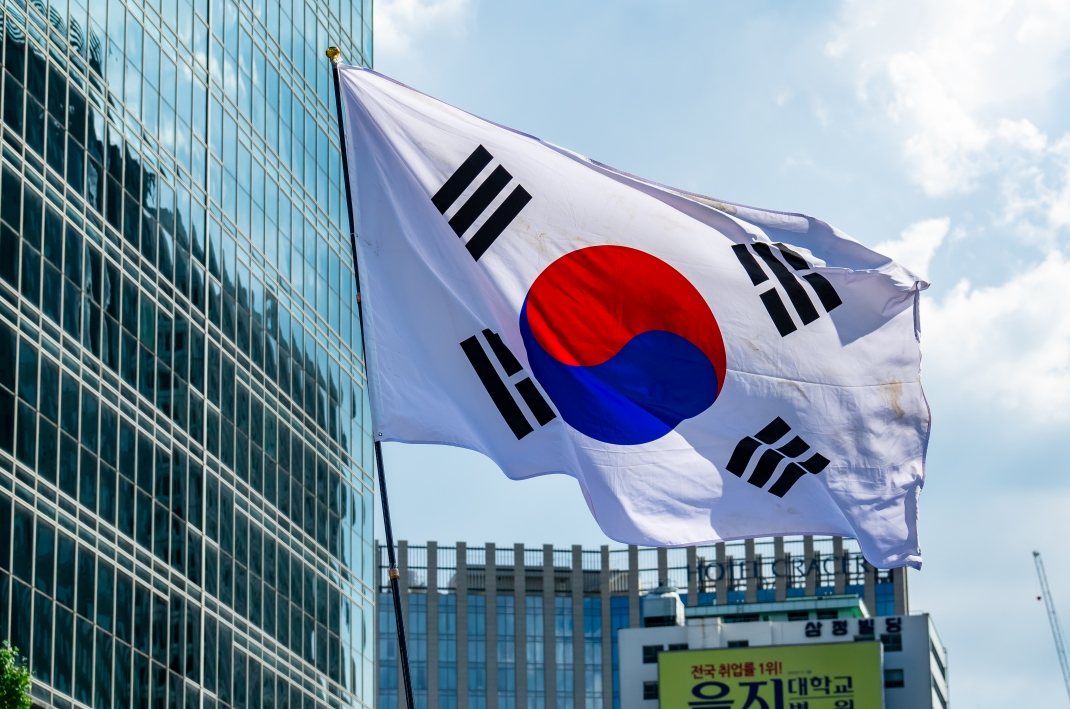
TradingKey - On May 6, the South Korean stock market surpassed Canada to become the world's seventh-largest equity market. The total market capitalization of South Korean listed companies has surged 71% this year to reach $4.59 trillion. Over the same period, the Canadian stock market has risen only about 7%, with a market capitalization of $4.5 trillion.
Canadian stock indices are heavily weighted toward energy and finance, with year-to-date gains hovering in the single digits; meanwhile, South Korea's KOSPI index has climbed more than 75% this year, surging over 6% on May 6 alone. This marks the fourth time this year that South Korea has overtaken a major developed market, surpassing Germany in January, France in February, and the United Kingdom in April; now, Canada has also been left behind.
On May 7, the Korea Composite Stock Price Index (KOSPI) closed up 1.43% at 7,490.05 points. Citi has raised its target for the KOSPI from 7,000 to 8,500 points, implying a potential upside of more than 13% from current levels.

[Source: Yahoo Finance]
Samsung and SK Hynix Bolster South Korean Stock Market
Samsung and SK Hynix accounted for the vast majority of the South Korean stock market's recent rally.
On May 6, Samsung Electronics' share price skyrocketed nearly 15% in a single day, with its market capitalization surpassing 1,500 trillion won, making it the second Asian tech company after TSMC to join the "trillion-dollar club." On the same day, SK Hynix hit a record high for the second consecutive trading session, with its stock price reaching 1.6 million won and its market cap exceeding 1,100 trillion won, bringing its year-to-date gain to over 146%. Together, the two companies account for 45% of the KOSPI's weighting, meaning semiconductor performance almost single-handedly dictates the broader market's direction.
The surge in the stock prices of these two giants is primarily driven by the supply-and-demand dynamics of the memory chip industry.
On the demand side, Amazon ( AMZN ), Google ( GOOGL ), Microsoft ( MSFT ), Meta ( META )—the four major cloud giants—have a combined capital expenditure budget of approximately $700 billion for 2026. A significant portion of these funds is being allocated to data center hardware construction, with memory chips serving as a core procurement item.
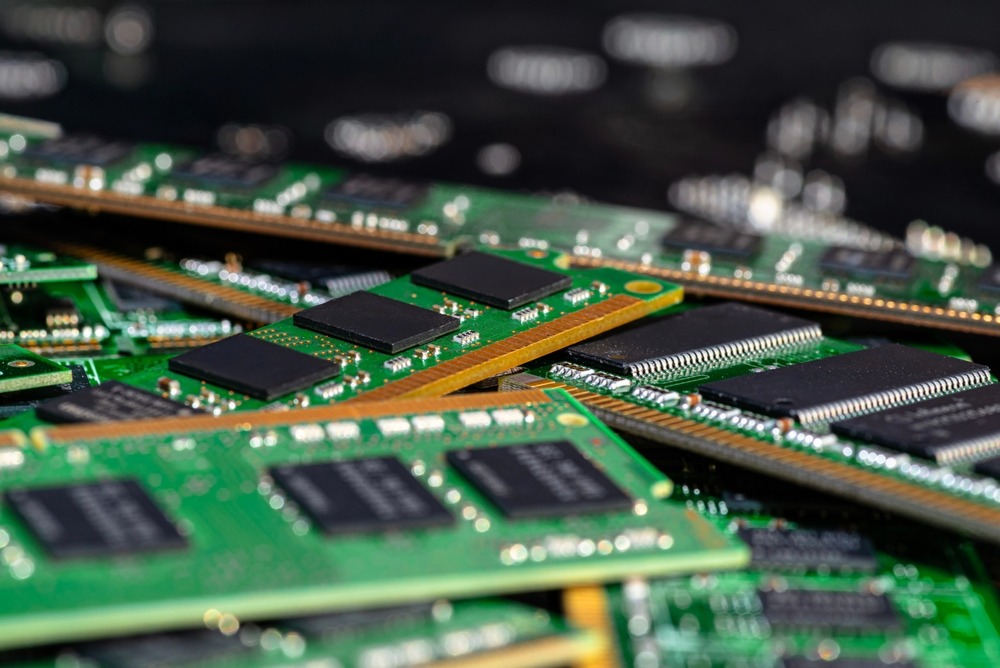
On the supply side, current capacity is failing to keep pace. The three major chipmakers have shifted over 90% of their advanced capacity toward HBM and high-end memory, turning standard DRAM into a scarce commodity and shifting the memory market entirely into a seller's market.
Amidst a tight capacity environment, long-term supply agreements have bolstered revenue certainty. SK Hynix's entire product line capacity for 2026 is already sold out, and Samsung's HBM4 capacity has similarly been fully booked.
How much longer can the South Korean stock market rally continue?
In the short term, the supporting logic remains solid. The HBM duopoly is unlikely to be shaken in the near future, and technological barriers will not be easily broken within three to five years. Manufacturers are still screening customers and pushing long-term supply agreements through lowest-price guarantee mechanisms, keeping bargaining power firmly in their hands.
However, long-term risks are also accumulating. The core question is whether AI investments can ultimately generate a return. The Big Four are expected to spend over $700 billion this year; these companies, which built their foundations on software, are increasingly resembling asset-heavy utilities. The resolve to burn cash is present, but no one can yet answer how much users are willing to pay for AI.
Nevertheless, a recent report from Goldman Sachs indicates that token prices are stabilizing and rebounding while computing costs continue to decline rapidly, creating a margin "scissors gap" by the first half of 2026. More importantly, AI inference is accelerating its upgrade into continuously running agents, and its token consumption magnitude will increase accordingly. The commercialization story may have only just begun.
The core of the bull-bear divergence lies in whether the AI business loop has reached an inflection point or if the end remains out of sight.
The Repricing of Global Capital
South Korea's stock market surpassing Canada's represents a global reallocation of capital; in the AI wave, South Korea has secured a grip on the most critical memory chip segment through Samsung and SK Hynix, resulting in a continuous climb in market capitalization rankings.
While this bull market is supported by multiple factors, stock prices already reflect extremely high earnings expectations. As KOSPI targets are revised upward, the market's margin for error regarding subsequent financial reports is also narrowing.
Another structural risk worth monitoring comes from within South Korea. The volume of margin trading by South Korean retail and institutional investors has surged in tandem with the index; the deep involvement of leveraged funds has amplified returns while sowing the seeds of heightened volatility. Should the market trend reverse, deleveraging pressure could accelerate a correction.
The long-term prosperity of the South Korean stock market ultimately depends not on how fast or expensive chips can be manufactured, but on whether AI can truly create a sufficiently vast new market to absorb current massive investments. Tech giants have already placed heavy bets, and the answer will gradually emerge in capital expenditure and return data over the coming quarters.
This content was translated using AI and reviewed for clarity. It is for informational purposes only.
Recommended Articles





Comments (0)
Click the $ button, enter the symbol, and select to link a stock, ETF, or other ticker.