


Trump Polls Hit New Low of Second Term; What Will Happen to US Stocks If Trump Is Impeached?



AI Podcast


U.S. stocks reached record highs as geopolitical concerns eased, despite a new low in Trump's approval rating. Political uncertainty is now the primary risk for U.S. equities, which trade at multi-year high P/E ratios. While Trump's policies favored tech and manufacturing, declining poll numbers could impact Republican congressional control, potentially hindering future tax reform and deregulation. Market probability of Trump serving a full term has decreased, and impeachment speculation could lead to significant market volatility and a systemic re-evaluation of valuations. A potential successor's policies may initially align with Trump's economic agenda.
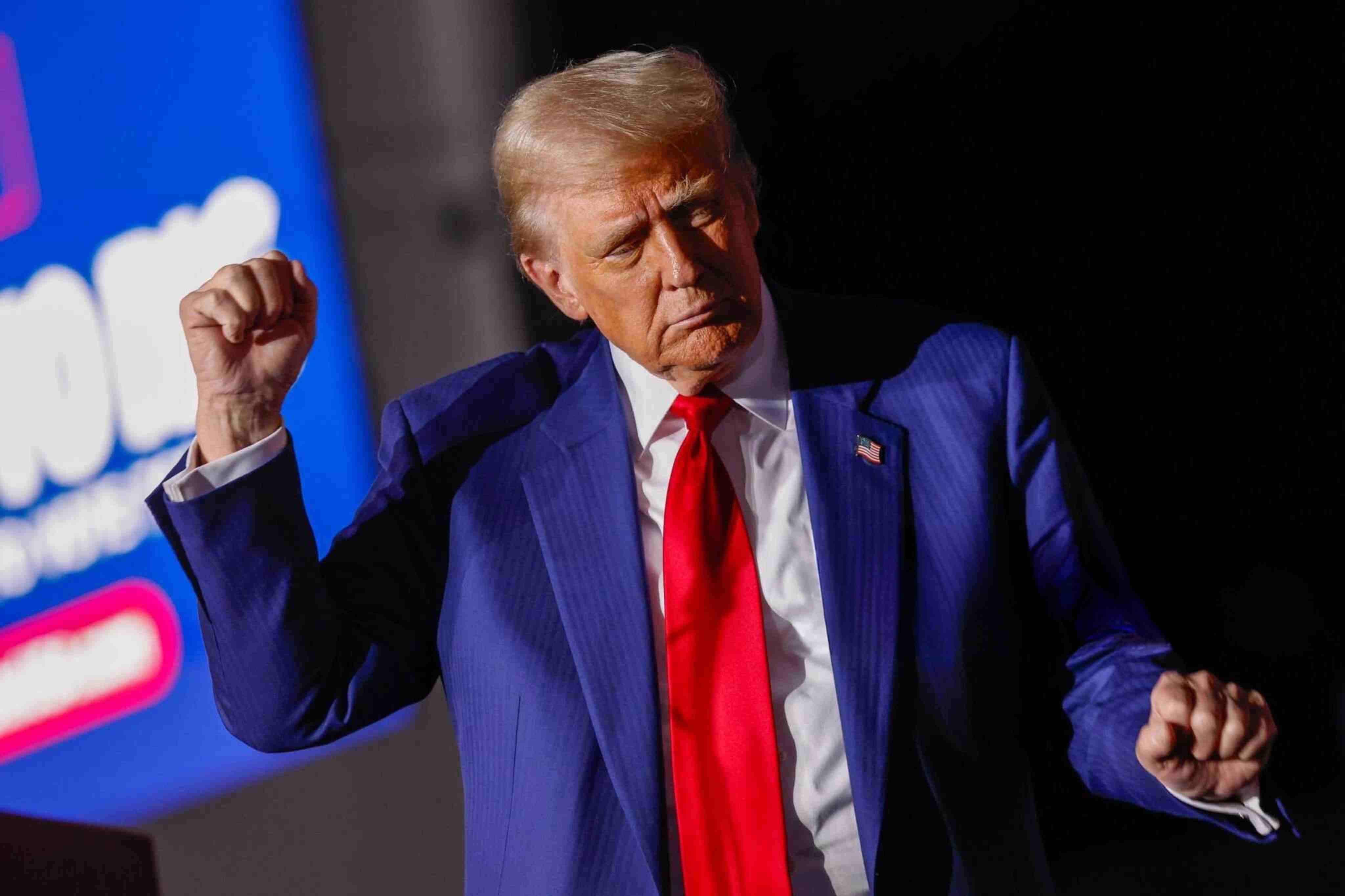
TradingKey - As concerns over the U.S.-Iran conflict gradually dissipate, U.S. stocks continue to trend higher, with both the Nasdaq Composite and the S&P 500 hitting record highs; meanwhile, Trump's approval rating has fallen to a new low for his term.
Reuters reported on April 28 that the latest poll shows Trump's approval rating has dropped to a new low for his term of 34%, down from 36% in mid-April and 13 percentage points lower than the 47% when he took office in January 2025; only 22% of respondents approve of his handling of cost-of-living issues.
At the same time, following Trump's extreme rhetoric regarding the "obliteration of civilization" in Iran, more than 85 Democratic lawmakers publicly supported his removal from office through impeachment or the 25th Amendment in April.
Political Uncertainty Is Currently the Primary Risk Facing Us Equities
US stocks are currently near their highest P/E ratios in three years. Meanwhile, during his term, Trump has advocated for low corporate taxes and deregulation, which directly increases the net profits of tech companies and favors tech giants in mergers, acquisitions, and expansion while reducing compliance costs.
In addition, Trump promotes "America First," placing particular importance on the localization of core technologies and encouraging the reshoring of high-end manufacturing while cracking down on tax loopholes where some companies establish foundries in other countries. There is policy support for domestic semiconductors, defense technology, and AI infrastructure. Previously, the Trump administration's "Big and Beautiful Act" prompted corporate income tax rates for domestic manufacturing to drop further from 21% to 15%.
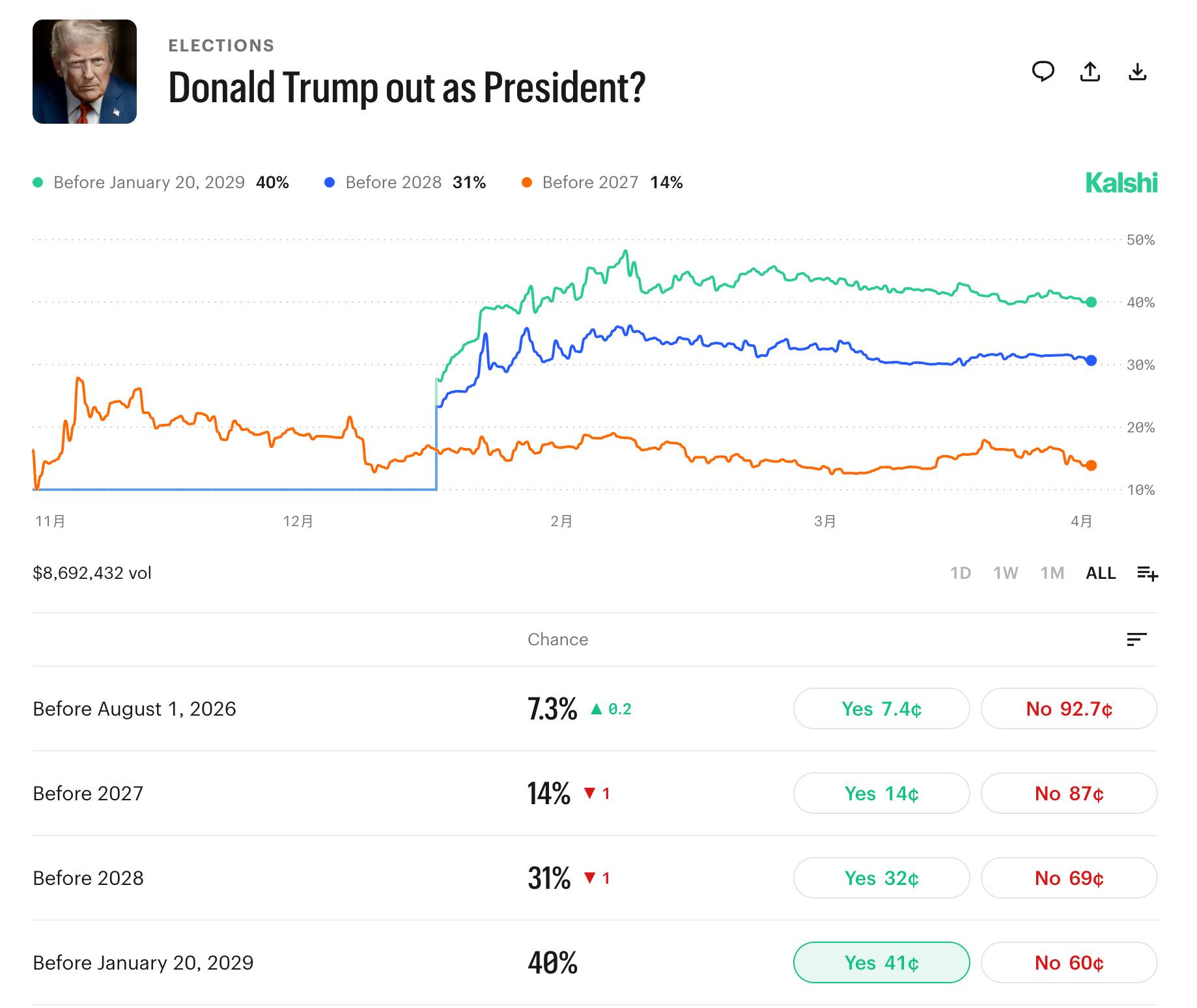
【The market probability of Trump serving until the end of his term has slipped to only 40%, Source: Kalshi】
Once the market shifts from betting on "Trump's continuity" to trading on "Trump's exit," the valuation logic may face a systemic re-evaluation.
When the possibility of "the president stepping down" enters the substantive agenda, the market may enter a risk-off mode within weeks. Referencing the historical patterns of 2024, the impeachment preview phase is often accompanied by weeks of wide market volatility. Once political uncertainty begins to erode the pricing foundation of high-valuation assets, this volatility could exceed the impact of the event itself and evolve into systemic risk-off trading.
Furthermore, a president's departure does not equate to an immediate policy shift. The succession process of the 25th Amendment makes it highly probable that Vance would become the successor, meaning the Republican Party will temporarily retain executive power during the transition period. Vance's takeover ensures that the management path will not immediately overturn Trump's core economic policies.
In fact, declining polls do not exert significant influence on Trump's political continuity. Historically, most presidents with approval ratings below 40% were not removed mid-term, including George W. Bush, whose approval rating fell to around 25% before he left office, once considered one of the most unpopular living presidents.
This also explains why the true lethality of the current polling slump does not lie in the decline of the approval rating itself.
In reality, the systemic decline in polls indirectly affects the Republican Party's congressional votes. If a special election gap leads to the simultaneous loss of the House, the GOP will be unable to unilaterally advance tax reform and deregulation. In other words, Trump's low approval rating is systemically eroding Republican seats in both the House and the Senate.
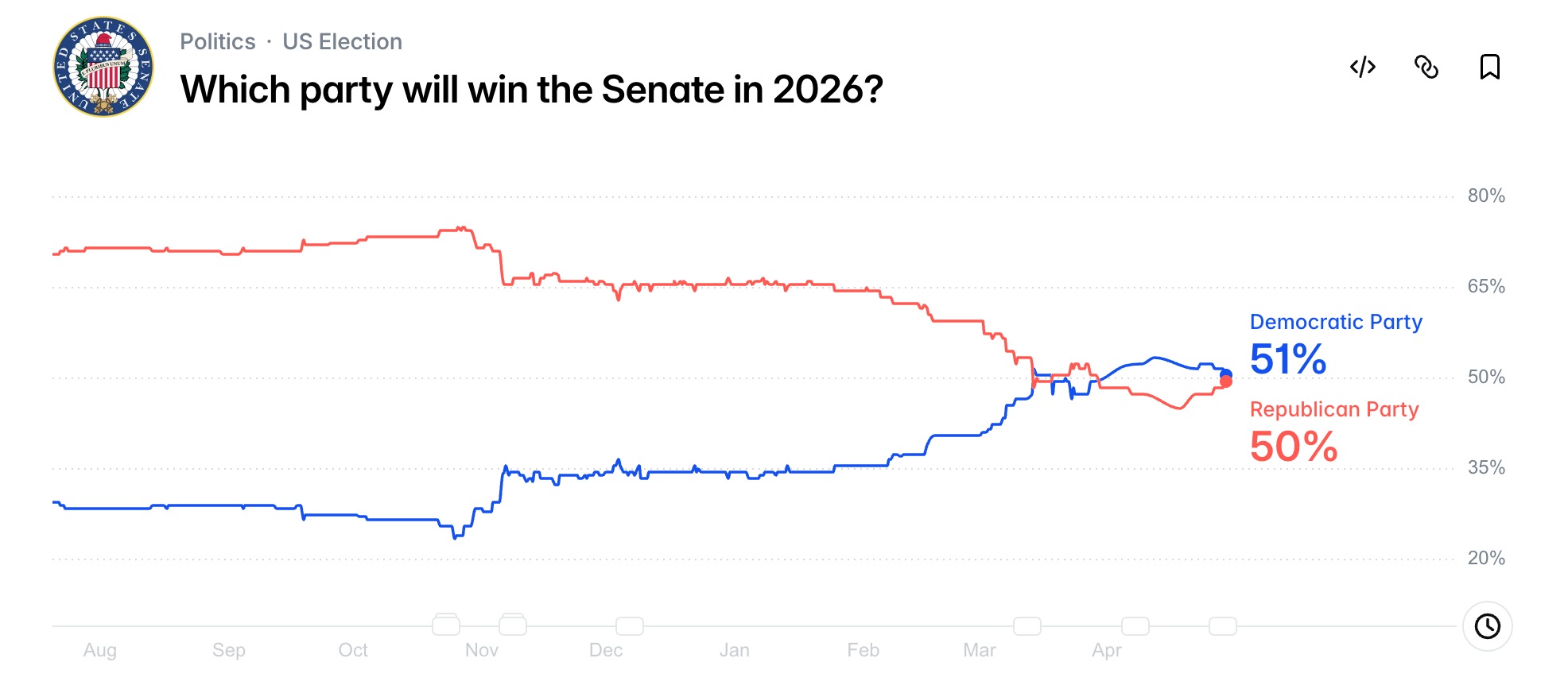
【The probability of Republicans controlling the Senate continues to slide, Source: Polymarket】
Since the outbreak of the US-Iran conflict, the Republican Party's approval rating has plummeted. Prediction market data shows that in the US midterm elections on November 3, 2026, the Democratic Party has a 51% probability of controlling the Senate, after previously rising to 54%.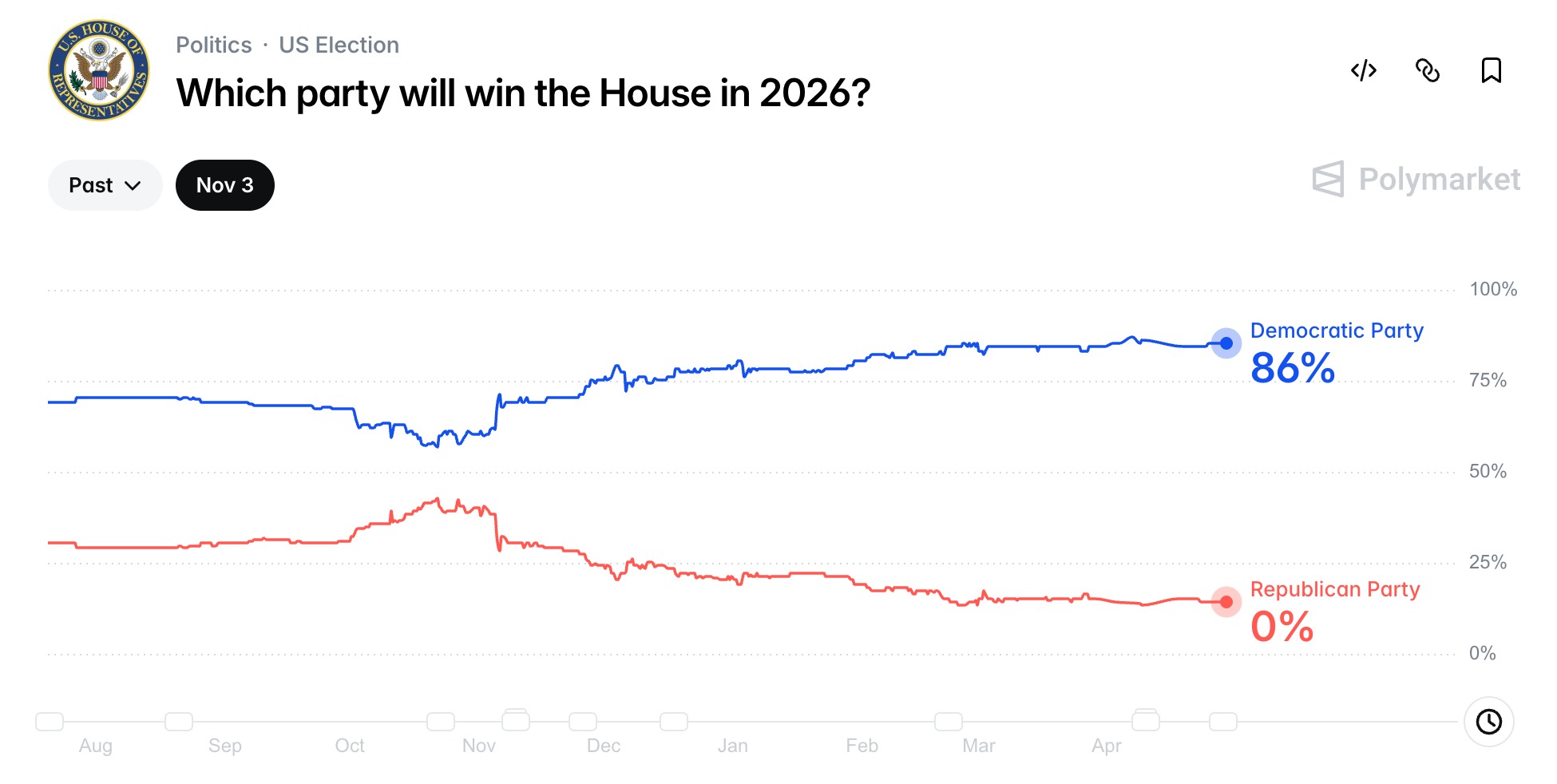
【The probability of Republicans controlling the House is nearly zero, Source: Polymarket】
Historical patterns show that the party in the White House almost inevitably suffers setbacks in midterm elections. Trump himself has hinted multiple times that the GOP "might lose the House" in the midterms. For the US stock market, the worst tail risk is precisely Trump's departure and the shift in congressional power.
The US stock market rally in April gave the market room to breathe, but it is precisely these high valuations that have extremely narrowed the market's margin for error for any major political change. As the market begins to price in "Trump's impeachment," investors betting on political stability are losing their pricing power.
This content was translated using AI and reviewed for clarity. It is for informational purposes only.
Recommended Articles










Comments (0)
Click the $ button, enter the symbol, and select to link a stock, ETF, or other ticker.