


Nike Cuts 1,400 Jobs: Not Merely Downsizing, but a Shift Toward More Thorough Efficiency Repair



AI Podcast


Nike's second round of layoffs, impacting 1,400 employees, signals a strategic restructuring beyond mere cost-cutting. With its stock price significantly down and core business facing pressure, management is adjusting organizational and growth models. Investors' focus remains on inventory, profit margins, and demand recovery, not headcount reduction. The company projects sales declines, including a notable drop in China, highlighting challenges in demand, inventory, and channel efficiency. Direct-to-consumer revenue fell while wholesale grew, indicating struggles with digital transformation. These layoffs are a step in Nike's broader "Win Now" strategy aimed at optimizing operations and market responsiveness.
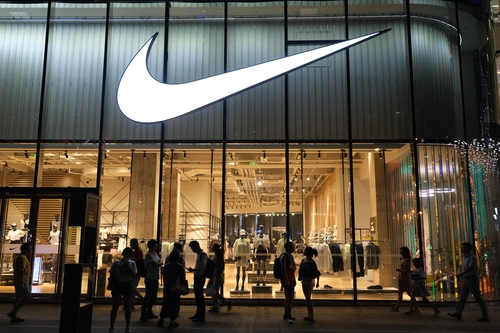
TradingKey - On April 23, Nike ( NKE) initiated another round of layoffs, marking its second workforce reduction this year. On the surface, this appears to be a routine cost-cutting and efficiency-enhancing move; however, against the backdrop of sustained pressure on the company's stock price and the sluggish recovery of its core business, it looks more like a proactive adjustment by management to its existing organizational and growth models. For the market, the layoffs themselves are not the primary focus; the real determinants for a potential valuation recovery remain whether there will be substantial improvements in inventory levels, profit margins, and a rebound in demand as soon as possible.
On April 23, Nike announced it would lay off approximately 1,400 employees, primarily within its global operations department, with a particular focus on technical roles across North America, Asia, and Europe, representing less than 2% of its total global workforce. This marks the company's second round of layoffs this year, following the elimination of 775 positions in January, which focused on distribution centers to drive automation and enhance efficiency.
Following the news, Nike's shares edged up 0.49% in after-hours trading. However, looking at the overall trend, Nike's stock price has plummeted by more than half over the past three years, indicating that what investors truly care about is not the headcount reduction, but whether Nike can successfully engineer an operational turnaround.
Layoffs are merely a superficial move.
These layoffs should not be simply understood as cost reduction and efficiency enhancement; rather, it is more like Nike acknowledging that its organizational and technological configurations over the past period have failed to keep pace with the company's rhythm of restoring growth.
Since taking office in 2024, current CEO Elliott Hill has been emphasizing a shift in focus back to core sports categories such as running and soccer while accelerating new product launches, but the reality is that the transformation progress has not been smooth.
According to Nike's forecasts, sales this quarter will decline by 2% to 4%, with the Chinese market being relatively weak and expected to drop by 20%. These figures indicate that Nike is currently facing not just short-term fluctuations, but simultaneous pressure on demand, inventory, and channel efficiency.
Looking at the business structure, although wholesale revenue grew by 5% year-over-year in the third quarter, direct-to-consumer revenue fell by 4%, indicating that the company's attempt to regain control over brand momentum through direct sales and digitalization has not received a strong enough response from consumers. Meanwhile, the clearing of old inventory continues to drag on discounting levels and gross margins, with promotions still increasing in the European market, while China continues to be affected by competition from local brands and product mix issues.
Therefore, Nike's layoffs are merely a surface-level move; at a deeper level, the company is seeking to restructure its growth model.
Nike Chief Operating Officer Venkatesh Alagirisamy stated in an internal memo that these layoffs are part of the company's overall "Win Now" transformation strategy. The strategic adjustments include restructuring the technology team, optimizing production processes for Air products, migrating portions of the Converse footwear business, and integrating the raw material supply chain operations into the footwear and apparel supply chain team.
Why the market is not viewing layoffs as bad news?
Under current circumstances, these layoffs appear to be a self-rescue move by Nike. The company is re-centralizing global operations, technology, and supply chain into two technical hubs, aiming to enhance synergistic efficiency through a leaner organizational structure. This implies management views the previous architecture as having become too bloated and fragmented, necessitating a contraction to a state better suited for its current stage. For a consumer brand that has seen years of declining sales, high inventory, and margin pressure, the market typically interprets such actions as an effort to repair the business.
Market analysts share a similar outlook.
Morningstar notes that the layoffs suggest underlying issues may be deeper than previously estimated. Nike’s pace of recovery is lagging market expectations, and former management’s continuous hiring to solve problems—especially within technical teams—has resulted in an overly bloated organization.
M Science believes the layoffs themselves are not surprising, as the company had already hinted at personnel adjustments in SEC filings back in March. This suggests the market is not shocked by Nike’s continued workforce reductions, but is instead coming to terms with the reality that Nike’s turnaround will take longer than expected.
Investors should monitor Nike’s gross margin recovery.
From a financial perspective, the most direct impact of these layoffs is the reduction of expense pressure. However, Nike did not disclose the specific amount of savings, indicating that management currently prioritizes the strategic significance of the restructuring over one-time financial optics.
For investors, the key metric is not how much in labor costs the layoffs will save, but whether they can improve inventory turnover, reduce promotional dependency, and ultimately drive gross margin recovery. Recently, Nike's core challenge has not been a lack of sales, but rather a mismatch in demand, an imbalanced product mix, and lagging channel efficiency, all of which have weighed heavily on profitability.
These layoffs are merely one step in Nike's recovery cycle, rather than the turning point itself. The market is now focused on whether these actions can quickly flow through to the financial statements, evidenced by stabilizing revenue, rebounding margins, and easing inventory pressure.
Technical Analysis of Nike Stock Price

Based on Nike's monthly chart, the current share price of $44.78 is down 75% from its 2021 peak of $179.10. With the breach of the $49.01 support level, room for further downward adjustment has reopened, potentially testing the $35.00 support level where dip-buying traders might consider building positions.
Notably, Nike has currently retreated to near the 0.786 Fibonacci retracement level. If this month's closing price can hold above $46.00, the stock may stop falling in the short term, providing an opportunity for bulls to build positions. Resistance is seen near this month's gap at $52.82; a breakout above this level would open up upside room toward $56.40.
This content was translated using AI and reviewed for clarity. It is for informational purposes only.
Recommended Articles










Comments (0)
Click the $ button, enter the symbol, and select to link a stock, ETF, or other ticker.