


Is Texas Instruments Still Worth Investing in After Earnings Beat Expectations and a 19% Surge?



AI Podcast


Texas Instruments reported Q1 revenue of $4.825 billion and EPS of $1.68, significantly exceeding forecasts. The stock surged over 19%, reaching a record high. The company, a leader in analog chips, benefits from an Integrated Device Manufacturer model ensuring internal production. Q1 growth was driven by industrial and data center markets, with the company signaling a price hike wave and an industry upturn. Second-quarter guidance also surpassed expectations. A proposed $7.5 billion acquisition of Silicon Labs aims to bolster IoT connectivity. While many institutions raised price targets, some maintain sell ratings due to stretched valuations and significant capital expenditures impacting free cash flow.
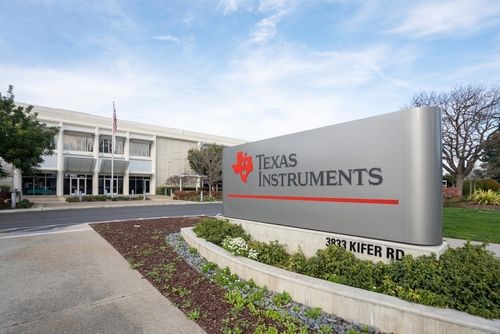
TradingKey - Texas Instruments ( TXN) reported first-quarter earnings after the market close on Wednesday, with revenue of $4.825 billion, up 19% year-over-year and significantly exceeding the market forecast of $4.52 billion; earnings per share reached $1.68, up 31% year-over-year and beating the $1.36 estimate; net income hit $1.545 billion, a 31% increase.
Following the earnings report, shares jumped more than 19% on Thursday to reach a record high. After this rally, whether the company is still a worthwhile investment has become a central focus for investors.

[Source: TradingKey]
What does Texas Instruments do?
Texas Instruments is a global leader in the analog chip market, with a global market share of approximately 19% to 20%. The company offers more than 80,000 analog, power, signal chain, and microcontroller products to over 100,000 customers. Its products have penetrated various end markets, including automotive, industrial, communications, consumer electronics, and healthcare; consequently, the company's financial reports are often regarded as a bellwether for the global semiconductor industry and the broader macroeconomy.
The company's primary advantage lies in its Integrated Device Manufacturer (IDM) vertically integrated manufacturing model. By maintaining control over the entire process—from wafer fabrication to packaging and testing—the company ensures that 95% of its chip production is handled internally. This model provides a foundation for long-term capacity expansion and supply chain stability.
Q1 results exceeded expectations across the board.
By business segment, the company's first-quarter revenue for the Analog Chips department was $3.924 billion, up 22% year-over-year; the Embedded Processing department recorded revenue of $723 million, up 12% year-over-year, and operating profit of $122 million, a 205% year-over-year increase; revenue for Other segments was $178 million, down 16% year-over-year.
CEO Haviv Ilan stated that revenue growth was primarily driven by the industrial and data center markets, as demand for industrial components has fully recovered across various sectors. Although current revenue has not yet reached historical peaks, the growth momentum has bolstered market confidence.
Meanwhile, the company provided second-quarter guidance, forecasting revenue between $5 billion and $5.4 billion, exceeding the average analyst estimate of $4.85 billion; earnings per share are projected to be between $1.77 and $2.05, well above the expected $1.57.
Industry Cycle: Destocking Complete, Price Hike Wave Initiated.
The first-quarter performance signals deeper underlying trends. Several institutions have determined that inventory reduction for analog chips is largely complete, and the industry cycle is entering the initial stages of an upturn. After Texas Instruments previously issued guidance for sequential revenue growth in the first quarter, its actual performance exceeded the upper bound of that guidance, confirming that the strength of downstream demand recovery has outpaced seasonal factors.
More crucially, leading manufacturers such as Texas Instruments, NXP, and Infineon have raised prices on certain products effective April 1. KeyBanc analysts believe that products including power management chips are seeing across-the-board price hikes, while lead times have lengthened and channel bookings have significantly improved.
Acquisition of Silicon Labs: Addressing IoT Shortcomings
On February 4 of this year, Texas Instruments announced an all-cash acquisition of Silicon Labs for approximately $7.5 billion. The transaction is expected to close in the first half of 2027 and generate approximately $450 million in annual synergies within three years of completion.
Silicon Labs possesses extensive patents and customer resources in low-power Wi-Fi, Bluetooth, and Zigbee, which can synergize with Texas Instruments' microcontroller product line. This will address Texas Instruments' gaps in IoT connectivity and enhance its competitiveness in the wireless connectivity sector.
Institutions Raise Target Prices
Following the earnings report, several investment banks raised their ratings and price targets for Texas Instruments. BofA Securities upgraded its rating from 'Neutral' to 'Buy' and significantly raised its price target from $235 to $320; Barclays upgraded the stock from 'Underweight' to 'Equal-weight' and increased its target from $175 to $250; Rosenblatt raised its price target to $330, the highest among institutions.
However, not all firms turned optimistic. Goldman Sachs maintained its 'Sell' rating and only raised its price target from $175 to $200, believing current valuations are already stretched; Morgan Stanley similarly maintained its 'Sell' rating and $180 price target, expressing concerns regarding pressures on long-term gross margins and free cash flow.
Potential risk factors
Following a 19% surge on Thursday, Texas Instruments' P/E ratio has climbed to approximately 48x, significantly above its 12-month average of about 35x, which increases the likelihood of a technical correction in the short term.
Regarding capital expenditure, the company is expanding capacity with the goal of achieving 95% internal chip production by 2030. While this is beneficial for gross margins and supply chain control in the long run, massive short-term investment will weigh on free cash flow.
According to its roadmap, the company plans for $2 billion to $3 billion in capital expenditures in 2026. Based on projected depreciation of approximately $2.3 billion, analysts estimate full-year free cash flow at $3.5 billion to $4 billion, a year-over-year decrease of 23% to 33%. Stifel analysts expect a free cash flow inflection point in 2027, when capex is projected to fall to $1.5 billion to $2 billion.
Is now an opportune time to buy?
Fundamentally, Texas Instruments is benefiting from a recovery in industrial and automotive demand, as well as incremental demand driven by AI data centers. The company has raised its dividend for 22 consecutive years, and with a current yield of approximately 3%, it remains attractive for long-term allocation.
For short-term investors, the nearly 20% single-day surge has propelled the stock to record highs. Given the stretched valuations and significant divergence among institutional perspectives, coupled with persistent macroeconomic uncertainty, the risk of chasing the rally is substantial.
This content was translated using AI and reviewed for clarity. It is for informational purposes only.
Recommended Articles










Comments (0)
Click the $ button, enter the symbol, and select to link a stock, ETF, or other ticker.