


SpaceX IPO Enters Countdown: Chartered Tours of Core Bases, Sovereign Wealth Funds Join



AI Podcast


SpaceX's IPO process has entered the implementation phase, targeting $75 billion in fundraising. The company is conducting site visits for potential anchor investors, including sovereign wealth funds. Key milestones include an analyst day in late April, prospectus filing in late May, roadshow starting June 8, and pricing on June 15. While Starlink is profitable with strong revenue growth and rocket operations remain robust, the xAI acquisition has led to significant losses, impacting overall profitability. Despite a high valuation, SpaceX faces competition from Blue Origin and Amazon, and potential risks associated with Starship's development delays and xAI's substantial cash burn.
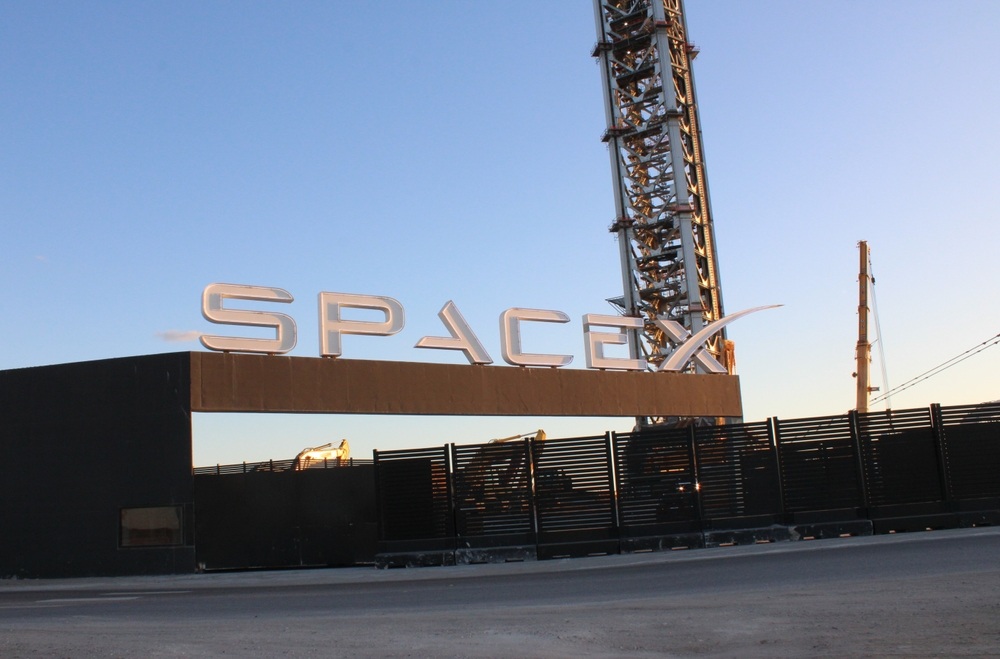
TradingKey - As of April 16, ET, SpaceX's IPO process has entered the implementation phase. According to people familiar with the matter, the company is planning chartered flights for site visits targeting potential anchor investors, with the itinerary covering multiple major facilities across the U.S. Invitees include sovereign wealth funds, which may take a significant stake in the offering. Flights departing from New York in the coming weeks will stop in Mississippi and maintain a close relationship with the xAI data center campus.
Sources said the timeline is as follows: SpaceX plans to hold an analyst day in late April, formally file its prospectus in late May, begin its roadshow on June 8, and finalize pricing on June 15. The sources also noted that the specific details of the site visits and key milestones are subject to change.
$75 Billion Fundraising: Outlines of the Largest IPO in History Emerge
SpaceX's initial public offering fundraising has reached $75 billion, far exceeding Saudi Aramco's 2019 record of $29 billion. Based on the valuation ranges currently discussed in the market, SpaceX's market capitalization after listing could rank among the highest in the U.S. market, trailing only NVIDIA ( NVDA ), Apple ( AAPL ), Google ( GOOGL ), Microsoft ( MSFT) and Amazon ( AMZN ).
Bank of America, Citigroup, Goldman Sachs, JPMorgan, and Morgan Stanley are jointly underwriting the deal. On the cornerstone front, Saudi Arabia's Public Investment Fund (PIF) is negotiating a $5 billion subscription commitment. Musk also plans to allocate 30% of the new shares to individual investors, whereas retail investors typically receive only 5% to 10% in U.S. IPOs.
In February 2026, SpaceX acquired xAI through a stock swap. Transaction data cited by Bloomberg indicates the merger consideration was approximately $1.25 trillion, with SpaceX valued at $1 trillion and xAI at $250 billion. By April, market expectations for the IPO valuation had reached $1.75 trillion.
Financial Performance: Starlink Profitable, Rocket Operations Robust, xAI Burning Cash
According to undisclosed data obtained by The Information, the combined revenue of SpaceX and xAI for 2025 is approximately $18.7 billion, with Starlink contributing $11.4 billion, rocket launches accounting for roughly $4.1 billion, and xAI adding about $3.2 billion. However, the net loss approached $5 billion.
The net loss is primarily attributable to xAI. Following the merger of SpaceX and xAI, capital expenditures for xAI's chip procurement and data center construction exceeded $13 billion, surpassing the combined total of the rocket and satellite divisions. SpaceX recorded a profit of approximately $8 billion in 2024, but faced a loss of nearly $5 billion in 2025, highlighting the tangible impact of the xAI acquisition.
The Starlink division remains profitable. Its 2025 revenue reached $11.4 billion, a 50% year-over-year increase, with an adjusted EBITDA margin of 63%. PitchBook estimates the company's EBITDA for that year was approximately $5.8 billion, representing a 54% margin as the profit structure shifts toward a software subscription model. By the end of last year, active users exceeded 9 million—a net annual increase of over 4.6 million—covering 155 countries and regions. The number of satellites in orbit grew from over 7,000 to more than 9,000, maintaining the world's largest low-Earth orbit (LEO) constellation.
Rocket launches constitute a competitive moat. Falcon 9 is the world's most frequently launched commercial rocket; SpaceX completed 170 missions in 2025, with Falcon 9 accounting for 165 launches and Starship for 5, while Falcon Heavy was not utilized. Reusable technology has significantly reduced unit launch costs, making it difficult for competitors to catch up in the short term. The Information reported that launch services and Starlink together contributed approximately $8 billion in EBITDA.
xAI and space-based data centers define the valuation ceiling. Musk's logic is straightforward: terrestrial data centers face challenges regarding power and cooling, whereas space eliminates land costs and offers stable solar power and superior heat dissipation. In January 2026, SpaceX submitted an application for an orbital data center system to the FCC, planning to deploy compute satellite nodes in low-Earth orbit. According to Musk's assessment, space will become the lowest-cost deployment location for AI computing within two to three years.
What is the objective of the chartered flight tour?
Sovereign wealth funds are the primary choice for cornerstone investors, as the trillion-dollar scale is difficult for ordinary institutions to absorb; the Saudi PIF has made a preliminary commitment of $5 billion, while other Middle Eastern funds are also in discussions. Field visits to the Starship base and the xAI data center are more persuasive than any roadshow materials.
The ownership structure is also gradually becoming clearer. Regulatory filings submitted by SpaceX to Alaska show that Google held a 6.11% stake by the end of 2025. Following the merger with xAI in February, Google's stake was diluted to approximately 5%. When Google and Fidelity jointly invested $1 billion in 2015, SpaceX's valuation was only $10 billion. Currently, the only shareholders meeting the 5% reporting threshold are Musk, with a stake near 40%, and Google. This high concentration of equity means the intentions of a few parties can dictate the pace of issuance, explaining why SpaceX is willing to bear the cost of chartered flight tours for these potential cornerstone investors.
Competition and Risks
SpaceX accounts for approximately 52% of global launches, but competitors are also striving to catch up. Blue Origin's New Glenn rocket completed its maiden flight last year, with the first-stage recovery finished simultaneously, and transitioned to commercial missions this April. Amazon has been highly active, renaming its low-Earth orbit satellite project from Project Kuiper to Amazon Leo and beginning enterprise testing on April 8, with Verizon, AT&T, and NASA on the initial partner list. On April 14, Amazon announced plans to acquire satellite operator Globalstar for approximately $11.6 billion, directly obtaining its satellite operations, ground infrastructure, and global spectrum licenses, with plans to launch direct-to-device satellite communication services in 2028.
The progress of Starship V3 represents the largest technical variable. Elon Musk announced on April 4 that the V3 maiden flight would be postponed by four to six weeks, potentially occurring as early as the first half of May. He had previously provided time windows in both January and March, neither of which were met. The V3 Super Heavy booster conducted a static fire test of 10 engines in mid-March but ended early due to ground issues; a 33-engine full-condition test is next. Whether Starship can achieve major flight milestones during the IPO roadshow window will directly affect market expectations for its commercialization pace.
Valuation pressure persists. Based on current circulating valuation ranges, the price-to-sales ratio significantly exceeds Nvidia's 40 to 45 times during the peak of the AI cycle. The market has yet to reach a consensus on how much valuation Starlink's actual cash flow can support and how much of a premium is being paid for the future narrative of Starship and Space AI.
xAI burns approximately $14 billion annually. Even with $75 billion in funding fully received, it would only last five to six years at the current burn rate. Once the pace of commercialization falls behind, the refinancing window will close quickly.
Tug-of-war Ahead of Price Finalization
The charter flight roadshows indicate that SpaceX's IPO has moved from the preparatory phase into the final sprint toward execution. Starlink possesses a solid earnings foundation, and the cornerstone interest from sovereign wealth funds provides a buffer for the issuance process. Furthermore, the space-based data center narrative introduced by xAI has significantly expanded the potential for valuation. However, current pricing levels have almost no historical precedent. The continuous delays in Starship test flights, coupled with the massive losses emerging in the AI sector, are both factors that must be considered. Before formal pricing is finalized, SpaceX's valuation will continue to undergo a tug-of-war between grand expectations and financial realities.
This content was translated using AI and reviewed for clarity. It is for informational purposes only.
Recommended Articles





Comments (0)
Click the $ button, enter the symbol, and select to link a stock, ETF, or other ticker.