


Warren Buffett Selling Stocks and Buying in His Last Quarter as Berkshire Hathaway CEO: Should You Follow Him?



AI Podcast


Warren Buffett's final quarter as CEO in Q4 2025 saw significant portfolio adjustments. He reduced holdings in Amazon (77% sale) and Apple, while increasing investments in traditional cash flow generators like billboards (Lamar Advertising) and pizza (Domino's Pizza), alongside Chubb and Chevron. This reflects a strategy prioritizing durable cash flows and disciplined capital allocation during a period of high valuations. Berkshire Hathaway maintained a cautious stance, holding substantial cash and acting as a net seller of stocks. Investors are advised to focus on Buffett's underlying principles of value investing and risk management rather than replicating specific trades.
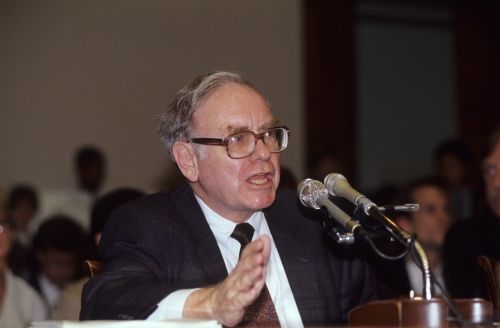
TradingKey - Warren Buffett just stepped down from the CEO position at Berkshire Hathaway (BRKB) in 2025 Q4, and he left a $400 billion trail of crumbs behind him. His last-quarter transactions were anything but predictable: a colossal 77% sale of Amazon stock (AMZN); a tactical withdrawal from Apple (AAPL); and a surge into old-school reliable cash flows such as billboards and pizza. What can do-it-yourself shareholders learn from his trades?
Who Is Warren Buffett and Why Should I Care About Berkshire Hathaway?
Warren Buffett is probably the most successful value investor of all time, and he has long demonstrated his ability to select and acquire quality businesses at fair prices. His style supports resilient businesses, solid financials, and reasonable costs. It must be said: Berkshire isn't a run-of-the-mill fund. It employs the cash flow from its operating units, in particular from the insurance float, to invest across cycles. That set-up gives Buffett and his team leeway to wait out high prices and pounce on value when it turns up.
A notable blend of selling and selected purchasing featured in Buffett's final quarter as CEO, Q4 2025. Berkshire had entered the quarter with a record $381.7 billion in cash and Treasury bills, according to its Sept. 30, 2025, 10-Q. By year-end, that cash hoard was edging toward $400 billion as the company continued to hold back at a time when bargains were hard to come by.
What Were Buffett's Major Moves During Q4 of 2025?
Warren Buffett's selling off of his various equities during late 2025 is an indicator not only of multiple positions he may have trimmed, but also of how much he reduced or cut out different companies that had been in his portfolio for the longest period of time. As an example, he cut his stake in Amazon by almost 77%, but he also decreased his holdings in Apple, Bank of America (BAC), etc. He developed new positions in things like (i.e., about $352 million) but also continued to purchase some of the same companies, like The New York Times (NYT), Chubb (CB), Chevron (CVX), and Lamar Advertising (LAMR). Berkshire and its other managers continued to build a stake in Domino's Pizza (DPZ).
Berkshire Hathaway's statement of cash flows detailed that approximately $3.5 billion was spent in the quarter on stock purchases, while Berkshire Hathaway received approximately $6.6 billion for stock sales. Although this $3.5 billion stock purchase is considered somewhat significant on its own, it represents a very small percentage of the total amount of liquidity Berkshire Hathaway has available. Berkshire Hathaway continues to be more of a net seller than a net buyer of stocks; this has been noted by the media, including Reuters, which reports that Berkshire Hathaway has continued to be a net seller of stocks over the last twelve months and has suspended share repurchases for the past five consecutive quarters. Accordingly, with an ongoing mix of stock selling and targeted stock purchase activity, it appears that Warren Buffett has consistently maintained a preference for caution during periods where the levels of valuation for the stock market are considered full, as opposed to being a wholesale retreat from owning stocks.
What Are Buffett's Reasons Behind Selling Amazon, Apple, and Bank of America?
Over time, Buffett has made consistent declarations about why he sells stocks. These consist of following rules like selling due to valuation discipline, high percentage of holdings in one stock for the size of a portfolio, or opportunity cost of holding onto a stock too long when he could invest elsewhere.
Although we do not know exactly why he sold any of these companies (what has made him sell them), the same themes apply to selling all three stocks (Amazon, Apple, and Bank of America).
In the case of Apple, Buffett may have felt his relative position in Apple's stock was greater than the rest of his holdings after Apple had a great run, although he would not say anything about his opinion of their continued success. Therefore, by selling some of his Apple shares, he would lessen his risk from that stock and free up some money for new opportunities even though he could still believe in Apple long-term as a good business.
The sale of nearly 77% of Amazon stock likely reflects Buffett's opinion on how much value Amazon is going forward with its current investments and whether or not he believes they will continue to increase in value over time after such a large run-up. Buffett's selling down to these levels from his original purchase price proves he will only go up until the company reaches the price at which he believes it can earn its investment.
The level of sensitivity by Bank of America to interest rate movements, credit cycles, and the changing capital regulations is increasing. Given the volatility in interest rates and a significant amount of discussions that are happening at the regulatory level, it is reasonable for Berkshire Hathaway to look for a resizing of its position in Bank of America. A trim in this case is not a judgment on the franchise of the bank but rather an attempt to keep financials as a balanced portion of the portfolio. If the expected return does not now look attractive in relation to the other investment opportunities available or if the level of risk has increased, Buffett’s playbook would say to reduce the size of the position and wait.
Why Buffett Invested in Chubb Limited, Chevron, The New York Times, and Lamar Advertising?
The logic behind purchasing these securities in aggregate is that they all represent highly durable streams of cash generated at an attractive cost-to-income ratio as well as a price-to-earnings ratio; where possible, these investments are in sectors that represent areas within Buffett's core competency.
Buffett has clear visibility into Chubb, given that he has worked in insurance operations for decades. The overall pricing environment for the industry has created an opportunity for well-run underwriters to increase premium rates, grow their underwriting income, and compound the equity in their business. Chubb's focus on a disciplined underwriting process and conservative reserve practices where needed resonates well with Buffett. Additionally, the opportunity to generate float at a favorable combined ratio is just one of the reasons why the position has developed into a substantial percentage of the total equity portfolio (having been built prior to 2023).
Chevron is a second example of a Buffett investment characteristic: investing in commodity producers who have adopted a disciplined approach to their capital structure and cash management and who have relatively strong balance sheets and shareholder-friendly policies. Consistent with historical energy earnings, the profitability of Chevron's operations is subject to cyclical operational performance. However, when an operator has control over low-cost assets, exercises operational spending discipline, and provides for cash returned to shareholders (buybacks) and dividends, the downside risk associated with energy performance generally can be diminished while the upside potential (the potential for increasing performance) often remains quite large. Following the volatility associated with the high volatility of oil prices in early 2025, the strategic rationale for holding a scalable operator with long-lived reserves remains solid—long after the short-term volatility associated with oil prices is resolved.
The New York Times has established itself as the only legacy media business that transitioned from print to digital through a subscription format. The growth of subscribers in each of its news, games, and recipe segments, along with the increasing average revenue per subscriber compared to the publishers they grew up from the print environment, indicates how much more friendly these are to generating additional income as part of their broader diversified revenue stream as opposed to relying solely on print before the launch of the digital service. While the value of the New York Times increased after the investment of Berkshire Hathaway, a key reason to extend its position seemed to be based on the strength of the brand name, the ability to charge premium prices for its top-quality content, as well as having a strong enough balance sheet where the company will continue to invest without using too much leverage.
Lamar Advertising has created a different type of durability with its product, outdoor billboards. Outdoor advertising space does not currently have true digital competition since both billboard and transit placements provide views to the local community as well as those traveling through the area and will contain ads from local advertisers. The rental contracts that these companies create with advertisers can carry escalation clauses based on inflation, while the increased number of digital billboard conversions has improved yield for the company at each of its billboard sites. Although this is still subject to the cyclical nature of advertising spending over time, the combination of both a tangible asset base, the recurring nature of contracts, and prudent capital allocation decisions will provide a fairly consistent stream of cash available for dividend payments over time.
Another item of interest is that Berkshire Hathaway has added onto its trade position in Domino's Pizza for six consecutive quarters, bringing it close to having a 10% ownership in DPZ. Domino's has turned its scale and its distribution network into a means of providing better service and margin opportunities while also increasing its off-premise business. Although this was not the highest-dollar investment during the quarter for Berkshire Hathaway, it still reflects a trend of approaching highly successful franchise businesses that have identifiable unit economics.
Should Individual Investors Replicate Warren Buffett's Trading Strategies?
The overarching question surrounding many articles about Warren Buffett's stock sales: should I replicate them? The answer: context matters much more than replication. Berkshire Hathaway has a capital pile (aka cash), an insurance "float," and a multi-year view of time that clears most types of individual investors. Berkshire can afford to amass record amounts of cash when prices appear large; it can also quickly deploy that cash when volatile prices present buying opportunities. Individual investors tend to have materially different time horizons, liquidity requirements, and tax implications.
In addition to these fundamental issues, there are also hard realities. Although Buffett was still the CEO in Q4 2025, that doesn't mean all trades reported were his trades, as there are actually portfolio managers that operate under Buffett's direction at Berkshire. Therefore, not all trades can be attributed to Buffett's conviction. For example, the net sell-off from Berkshire over the past few quarters per Reuters, combined with the cessation of net share repurchases, indicates high hurdle rates to qualify for investments and limited opportunities to invest in the current market environment.
Another useful takeaway is that you should focus your study on the principles driving the trades rather than just following along by going long or short. If a position constitutes a concentration risk in your portfolio, you need to trim it back. You need to be patient for the valuation level to justify any uncertainty before making a change. You should prefer businesses that provide a long-lasting competitive advantage, a solid debt-to-equity ratio, and a management team that excels in capital allocation. Last but not least, you must ensure that the portfolio matches up with your investment objectives, risk appetite, and investment time horizon. This strategy has been successful for both Warren Buffett and his partnership (Berkshire Hathaway) over the course of many years, and will likely prove beneficial to individual investors who wish to use a repeatable methodology rather than trading the market by emulating every transaction each quarter.
In summary, Buffett's last quarter as chairman of the board combined many significant divestitures along with only a couple of very specific strategic acquisitions that were made based on key investing principles. If you want to emulate anything that he has done, it should be investing discipline: Invest in quality at a reasonable price, reduce risk when your investments advance significantly beyond an acceptable valuation range, and keep cash available to invest when the probabilities are highest. This structure has been a constant lesson across the years, regardless of the specific quarter regarding which one is reporting selling activity by Warren Buffett.
Recommended Articles





Comments (0)
Click the $ button, enter the symbol, and select to link a stock, ETF, or other ticker.