


Best Nuclear Energy Stocks and ETFs in 2026 — And How to Invest



AI Podcast


Nuclear energy stocks gained prominence due to climate targets and electrification demand. In 2025, uranium prices and sentiment were strong, though volatility emerged from production guidance and project delays. Diversified companies with long-term contracts outperformed pure miners. For 2026, demand for baseload power, policy support, and SMR progress are positive drivers, despite a tight uranium market. Risks include project delays and cost overruns. Key investments include Cameco for uranium exposure, GE Vernova and Brookfield Renewable Partners for diversified services, and Constellation Energy for nuclear operations. NuScale Power represents a speculative SMR play. ETFs like URA offer direct uranium exposure, while NLR provides a more diversified approach. Risk management involves commodity cycles, project execution, and policy, alongside disciplined valuation and staggered purchasing.
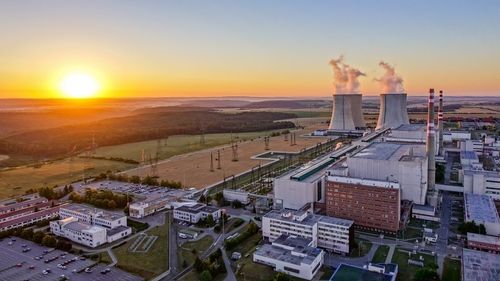
TradingKey - The pursuit of reliable sources of clean energy has brought nuclear energy stocks from the back of the pack to the front. The combination of climate targets, renewable intermittent sources, and long-term safety and performance experience has brought this sector back into focus. The industry economics, to this point, still boil down to uranium prices, project delivery, and regulation, so the investor needs to have a clear vision of the potential for both reward and risk. This guide will tell you how the industry ended 2025, what makes 2026 potentially interesting, which nuclear energy stocks and ETFs are worth looking at, and how to invest in this space pragmatically.
How Nuclear Energy Stocks Performed in 2025
Uranium prices were strong and the nuclear sentiment bullish at the end of mid-2025. Cameco (CCJ), among others, got a boost from tighter supply and additional reactors as time moved on. Volatility picked up later in the year. Changes in production guidance, delays in projects, and shifting outlooks on rates reminded investors that commodity equities can be big mood swingers. Companies with diversified power portfolios and services revenue were better overall than pure miners because their cash flows were less tied to spot uranium prices and more to long-term contracts. This divergence was also reflected in ETF performance, as mining-focused funds tended to perform stronger in rallies and give back more on declines, while diversified uranium exposure provided more stable performance in this period of time. Overall, if there is a positive overall perspective towards 2025, there may still be rocky terrain ahead, so maintaining a disciplined approach to valuation, exercising patience with your investments, and preparing for high-cost projects are very important now.
Nuclear Energy's Potential for 2026
There are several logical and simple assumptions driving the outlook for 2026. For example, according to research, as data centers expand and demand for electrification and firm power sources grow (e.g., nuclear), there will be more demand for Baseload electrical generation that uses high-capacity, low-emitting sources (e.g., nuclear) as opposed to intermittent options (e.g., wind).
Second, policy support has materialized in various forms, including life extension and upgrading of existing plants, as well as options that enhance the competitiveness of zero-emission power.
Third, Small Modular Reactors (SMRs) are progressing from design to deployment, providing the industry a way to expand capacity in smaller, more flexible pieces.
Supply dynamics also matter. The Uranium market is tight following years of underinvestment; therefore, the pricing can be rich for producers even on moderate demand growth.
At the same time, these positives do not negate risks. Periods can change, projects can be delayed, and cost overruns can eat into returns.
For investors, the year 2026 appears attractive as the structural demand for clean firm power becomes more clear, but it continues to allow for selective stock picking and prudent sizing.
2026's Top Performing Nuclear Energy Stocks
Cameco continues to be the best name for pure uranium exposure. As a large and low-cost producer, it profits when the prices are high and also the integrated conversion and fuel element play gives the company additional profit streams. The company’s past highlights the dual nature of the upside and cyclicality: it earned positive operating cash flow through many cycles, but earnings and its share price have fluctuated with uranium’s highs and lows as well. The management cut parts of its 2025 production guidance due to McArthur River delays, signaling responses in supply might be lumpy. Cameco is well positioned if uranium remains tight in 2026, but the stock is volatile and should be bought with an eye on valuation.
Investing in GE Vernova (GEV) provides exposure to nuclear energy stocks that is more diverse than purchasing individual firms. Its subsidiary and supplier of nuclear reactor technologies, GE Hitachi, develops and installs technologies associated with reactors, as well as the services around those reactors. For example, GEV has developed the third-generation BWRX-300 as a Small Modular Reactor design. This reactor has been licensed for construction in Ontario and is expected to have the capacity to provide power to tens of thousands of residential customers upon the completion of construction in mid-2025. The growing demand for modularism has become an important factor to consider when investing in these stocks. In the context of the pure energy play GEV, which focuses on gas, steam, hydro, wind, electrification, and nuclear — these are far more steady businesses than a pure-play coal miner. For investors, the big story in 2026 is the ability to participate in the nuclear build-out and services while having some exposure to the overall energy value chain.
Brookfield Renewable Partners (BEP) isn't a pure play on nuclear, but its majority ownership of Westinghouse, with Cameco as a minority partner, gives it significant exposure to nuclear services and fuel cycle work. Brookfield has a history of entering underappreciated nooks and crannies of clean energy where there was a clear path to returns, as when it transitioned from hydro into wind, solar, and storage. Westinghouse’s installed base and service revenues are less cyclical than mining revenue, and so that can provide a bit of balance alongside a portfolio that already owns multiple renewable assets. In 2026, Brookfield provides a way to get exposure to the service and maintenance economics of nuclear while maintaining diversified cash flow from other clean power assets.
Constellation Energy (CEG) is the largest nuclear power producer in the U.S. with significantly more capacity than the next biggest peer. The company’s long-term agreements for power, including the 20-year contract with Microsoft (MSFT) announced in 2024, underscore expanding corporate appetite for 24/7 clean electricity to power data centers. Constellation’s size and organized fleet management approach allow for further “fleet management” efficiencies in maintenance, uprates, and extensions of life. The company has talked about growing its clean energy footprint, and its base of earnings and free cash flow could greatly expand if the big deals close as expected. For 2026, Constellation offers a way to play the operating rather than commodity side of nuclear energy stocks.
NuScale Power (SMR) is at the riskier end of the spectrum. Its SMR approach is designed to make nuclear easier to finance and deploy, but commercialization has been sluggish. The termination of a Utah project in 2023, and no near-term, fully funded, get-in-the-door project with a definitive place on the calendar makes the stock speculative. That said, policy tailwinds and new interest in modular reactors could help them find support for development, and any breakthroughs in orders or financing would be significant. For 2026, NuScale is the play for investors willing to hold through disappointments whose position size is such that they can afford to have outcomes ranging from significant upside to significant delays.
Top Nuclear Energy ETFs to Buy Now For 2026
Global X Uranium ETF (URA) is focused on miners, developers, and related uranium companies. Names listed in the portfolio include Cameco, Oklo (OKLO), and the Sprott Physical Uranium Trust (SRUUF) as well as international exposure in Canada, the U.S., and other jurisdictions. By contrast, miner-heavy exposure causes URA to be more sensitive to uranium prices, and consequently more vulnerable to strong positive but also negative swings. The fund has traditionally exhibited Beta greater than that of the broader market and its fee reflects the exclusive exposure. For those investors that want a more direct way to play the uranium cycle, URA can be effective — just remember it is better suited for those that are comfortable with volatility.
VanEck Uranium and Nuclear ETF (NLR) is a mix of uranium producers and nuclear utilities and service providers. This mechanism diffuses risk throughout the value chain and shifts dependence away from spot price surges to drive return. Some of its holdings are Cameco, Denison Mines (DNN), and BWX Technologies (BWXT), to name a few. NLR’s expense ratio is also lower than that of URA, and while it too has had above-market Beta, its diverse construction has often made it a lot less volatile than miner-only pools. For 2026, NLR can suit an investor looking for exposure to nuclear energy stocks with a more stable profile than a pure mining ETF and be reasonably well diversified throughout the nuclear landscape.
What Is the Best Way to Invest in Nuclear Energy Stocks and ETFs?
Decide whether you want to open a brokerage account that allows trading on US markets and has a research platform that is not too complicated. Assess individual companies and the nuclear value chain ETF (Exchange-Traded Fund) as well as how they generate revenue and cash flow. Determine the amount of your portfolio that you are willing to allocate for this theme and realize that development property or explorers and early-stage developers have more volatility compared to utilities and service suppliers that have a diversified portfolio. Employ limit orders when trading to set your purchasing price, particularly when buying after sharp moves. A staggered purchase such as buying in tranches is also a good way to manage risk in a cyclical industry. After you buy, watch your positions — watch uranium market moves, regulatory updates, project landmarks, and valuations. Rebalance anything that takes on too large a share of your plan, or if the fundamentals change.
How to Manage Risk and Return
The major risks are commodity cycles, project execution, and the policy environment. Prices of uranium may also be affected by supply guidance, mine disruptions, and global politics, which rapidly modify the earnings stream of producers. For large nuclear, construction and regulatory barriers have to be overcome, and delays or overruns can squeeze returns for technology suppliers and operators. Movements in interest rates are also significant because they influence the expense of borrowing to buy long-life assets. On the other hand, the potential rewards are substantial. The established nuclear fleets have high capacity factors, long-term contracts, and those life extension policies can underpin stable cash flows. Services companies related to maintenance, fuel, and uprates can have recurring revenue. If SMRs scale in a predictable way, companies in that league might get a new run of growth. A reasonable way to play the middle ground is to diversify across the value chain — own a quality producer like Cameco, an operator like Constellation, technology plays via GE Vernova, plus a balanced ETF like NLR — and keep your speculative plays like NuScale to a minimum. Valuation discipline is just as important all the way through, since buying cyclicals at peak enthusiasm can diminish long-term returns.
Recommended Articles










Comments (0)
Click the $ button, enter the symbol, and select to link a stock, ETF, or other ticker.