


What Is the Best Drone Stock to Buy in 2026? RCAT Stock, DPRO Stock or the Others?



AI Podcast


The drone industry shows favorable tailwinds for 2026 due to increased defense budgets, AI advancements, and expanding commercial applications. Leading companies like AeroVironment (AVAV), Textron (TXT), and Kratos Defense (KTOS) offer exposure through tactical drones, diversified platforms, and high-performance systems, respectively, with positive analyst price targets and strong financial health scores. Ondas Holdings (ONDS) provides communication infrastructure for autonomous operations, while Red Cat Holdings (RCAT) focuses on counter-drone and AI capabilities, presenting higher risk but potential for outsized gains. Diversified giants like Boeing (BA) and Northrop Grumman (NOC) also offer exposure through their unmanned programs. Investment opportunities exist in pure-play manufacturers, defense contractors, and enabling technologies, with ETFs like SHLD and ARKQ providing diversified exposure. The market is projected to double with a mid-teens CAGR.
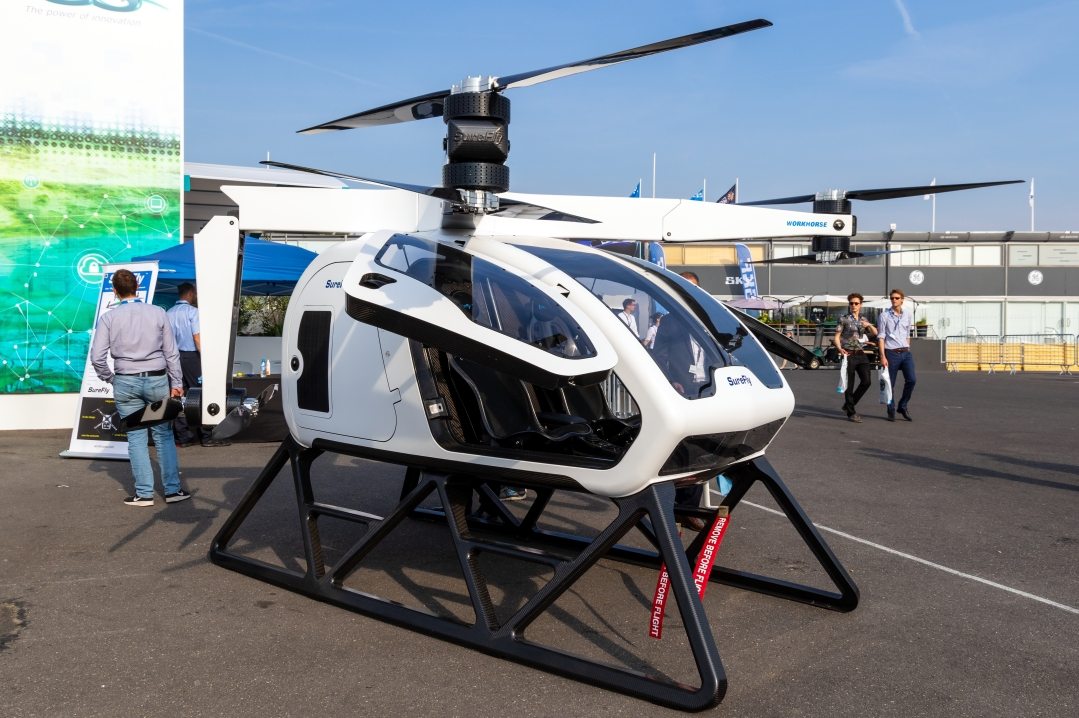
TradingKey - Drone stocks began 2026 with more favorable tailwinds versus a year ago. Growing defense budgets in the U.S. and allied countries, unmanned systems moving more towards the center of military planning, and commercial use—ranging from inspection to logistics—continuing to improve as AI and autonomy reduce operating costs. The Department of Defense’s Replicator program suggested ongoing interest in scalable, AI-enabled uncrewed systems, which has lent credence to sentiment across the space.
Leading Drone Stocks to Consider in 2026
AeroVironment
AeroVironment (AVAV) remains the name to watch for tactical drones. Its Switchblade loitering munition and Puma reconnaissance systems have enjoyed steady demand, and the company is pushing into AI-enabled swarming and autonomy. The stock now is around $216, with a market cap close to $10.9 billion. With a strong balance sheet and long-standing government relationships, to those wanting to focus exposure to military UAS with established field experience, there is still nothing wrong with AeroVironment from a risk/reward perspective.
Textron
Textron (TXT) is a play on its Systems segment with platforms, such as the Aerosonde VTOL UAS, plus strength in unmanned ground vehicles. The shares are trading at around $90 with a market capitalization of around $15.9 billion, and the stock has a potential to go as high as $115 by 2026, according to analysts. With a diversified defense portfolio, Textron is a stable play for investors seeking a value-oriented, diversified exposure to drones for the long run.
Kratos Defense & Security Solutions
Kratos Defense & Security Solutions (KTOS) is a leader in the high-performance unmanned systems and target drones market. Its jet-powered XQ-58 Valkyrie—a low-cost platform—has been showcased in Pentagon demonstrations as an example of affordability and teaming concepts. At approximately $92 a share and a market capitalization of $15.5 billion, analyst targets of $150 imply a significant upside potential. Continuing awards in hypersonics and unmanned systems bolster the growth case, as these sectors align with the shifting priorities of AI-enabled warfare.
Ondas Holdings
Ondas Holdings (ONDS) is building the communications backbone that facilitates autonomous drone operations. Its IronDrone solution enables security, real-time workmanship on industrial and defense applications. The near $11 share price and $4.8B market cap reflect a company that tripled in 2025. The forecasts predict strong revenue growth through 2028 with scale of AI-powered deployments. Ondas demonstrates how infrastructure providers can prosper as increasing fleet numbers drive demand for reliable, high-bandwidth links—a scalable enabler that compounding in value as usage multiplies
Red Cat Holdings
Red Cat Holdings (RCAT) is a small-cap company focused on counter-drone and AI-enabled autonomy for defense and security. Its portfolio includes the ARACHNID family for ISR and precision missions, Teal Drones for Short Range Reconnaissance, and FlightWave’s Edge 130 tricopter for VTOL. Recent accomplishments include being selected for the U.S. Army’s Short Range Reconnaissance program of record, production work with Palantir on GPS-denied navigation, and for uncrewed surface vehicles, the introduction of Blue Ops. Now this share trading near $17 and a market cap of 2B. The company is facing high risk and there is more execution risk, but it also means there’s potential for outsized gains if its contract pipeline converts. For those tracking RCAT stock, it’s important to keep this dynamic of opportunity and uncertainty in mind.
Boeing
Boeing (BA) remains a leader in the aerospace and defense industry by market cap and provides diversified exposure to uncrewed vehicles in air, sea, and space. The MQ-25 refueling aircraft, which is planned to enter service in 2026, is one of the programs; the Loyal Wingman jet, MQ-28, and long-endurance maritime and space platforms are others. Boeing reported challenging 2025 revenue at $89.5 billion, operating cash flow was positive at $1.1 billion, and backlog reached an all-time high of $682 billion. For risk-averse investors that still want to participate in drone stocks within a diversified industrial company, Boeing is a solid pick.
Northrop Grumman
Northrop Grumman (NOC) has a broad suite of fielded systems, including the MQ-4C Triton for maritime patrol and the RQ-4 Global Hawk for long-endurance ISR, as well as the MQ-8B Fire Scout and capabilities with NATO AGS. With a historic $95.7 billion order backlog going into 2025 and 23 consecutive dividend increases in its history, Northrop Grumman is also appealing to investors seeking income with exposure to established unmanned programs.
Draganfly
Draganfly (DPRO) has been identified as a pioneer in commercial drone technology and is turning its attention to defense. Management on its 2025 calls suggested that military could represent the majority of sales, and by 2026 it announced an award with U.S. Air Force Special Operations Command for the provision of Flex FPV drones and training. For those watching DPRO stock, the big question is how quickly the company scales those defense deals from a smaller revenue base. If execution rivals recent awards, Draganfly could see a growth profile shift.
Risks and Potential Rewards in Drone Stocks
The biggest draw to drone stocks is the long-term positive trend of uncrewed systems replacing manned systems both in the defense and commercial markets. With AI-driven autonomy-based capabilities and costs going down, the addressable market expands to more missions and more industries. Diversification between the air, land, sea, and communication layers can also help insulate against company-specific slumps. But investors need to also take into account the risk that adoption may take longer than expected to materialize (timing risk), the risk that policy may change in the future if governments change priorities (policy risk), and the risk that these solutions may become obsolete if funding pressure limits R&D (innovation risk). Small caps can rack up big gains when milestones are achieved, but they can also collapse if contracts fall through, margins disappoint, or capital grows tight.
How to Invest in Drone Stocks
A good offense starts with understanding what is playing on the exposure front. Begin by determining if you want to invest in pure-play drone manufacturers, diversified defense contractors with substantial unmanned programs, or enabling technologies such as communications. Keeping that in mind, open a brokerage account, then search for companies by ticker to read profiles, recent filings, and news. Consider how each name fits in your portfolio size and risk tolerance, and have a plan for how you'll buy. Some investors like to have their orders executed immediately (market order), while others prefer to specify a price they want to buy/sell at (limit order). Monitor position size, contract announcements, and quarterly results after purchase to make sure the thesis is playing out as expected. Over time, rebalancing helps keep risk in line with your preferences as prices change.
ETFs with Exposure to Drone Technology
For investors who prefer a basket approach, drone-heavy names are found in a few ETFs. The Global X Defense Tech ETF (SHLD) had 49 holdings and over $8 billion in assets as of early March 2026, with exposure to Kratos Defense & Security Solutions, AeroVironment, and Red Cat. Its total expense ratio is 0.50%. The ARK Autonomous Technology & Robotics ETF (ARKQ) is another way to play autonomy and robotics. AeroVironment was also a substantial 3.8% and Kratos Defense & Security Solutions an even greater 7.7% as of March 2026. ARKQ has an expense ratio of 0.75%, with about $2 billion in net assets as of now. These are vehicles that can be used to hedge single-name volatility while still getting exposure to the key themes moving the space.
Outlook for the Drone Industry
Automation makes for good growth prospects in unmanned systems. Defense need is changing with armies seeking cheap mass, robust communications, and AI-enabled teaming. As platforms evolve and rules of the road mature, commercial operators are using drones for inspection, mapping, farming, and delivery. The forecasts are different, but both IDTechEx and Grand View Research predict that the global drone market will roughly double over the next few years, with a compound annual growth rate in the mid-teens. Amazon (AMZN) with its Prime Air program is among the top major logistics players leading future demand.
Recommended Articles








Comments (0)
Click the $ button, enter the symbol, and select to link a stock, ETF, or other ticker.