


US-Iran Conflict Ignites, Global Arms Race Heats Up, Will Defense Stocks See a New Round of Gains?



AI Podcast


The U.S. and Israel's airstrikes on Iran have escalated geopolitical tensions, significantly boosting defense stocks. The iShares U.S. Aerospace & Defense ETF has gained 14% year-to-date, with Lockheed Martin and Northrop Grumman showing substantial share price increases since June. While defense stocks typically follow a "conflict escalation – stock price surge" pattern, analyst Byron Callan notes potential weakening demand for conventional equipment if Iran's missile forces are degraded. The industry is shifting towards long-term service contracts, resembling recurring revenue models similar to enterprise software, with maintenance and support comprising a large portion of life-cycle costs. This structural transformation, coupled with increased global defense spending and demand for high-tech equipment, positions defense companies for sustained growth.
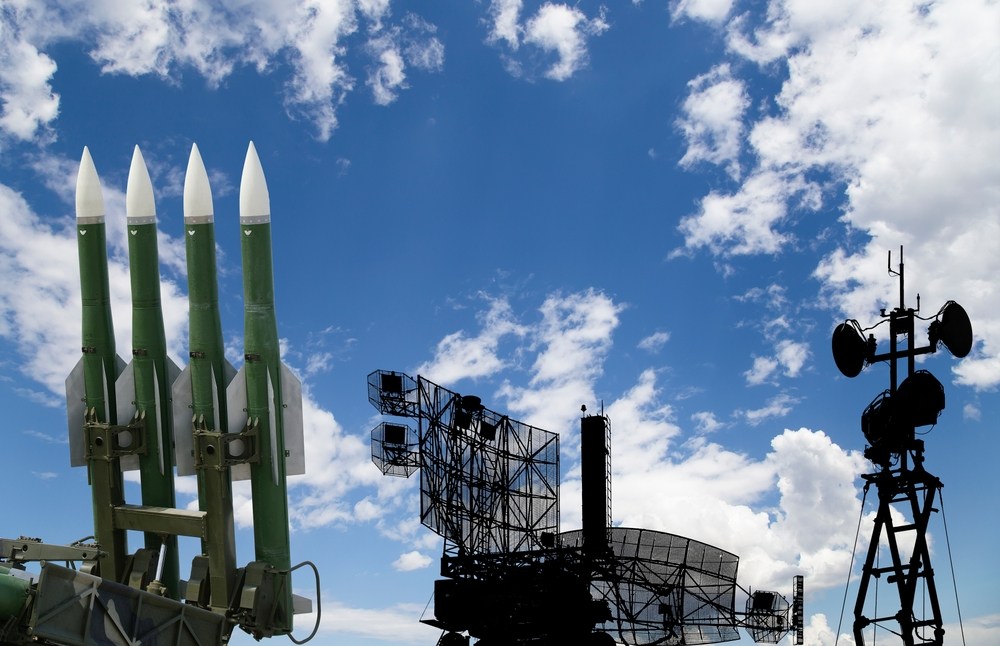
TradingKey - On February 28, local time, the United States and Israel launched a joint large-scale airstrike against Iran, targeting its nuclear facilities, missile industry, and naval forces. This marks another sharp escalation in conflict following the U.S. strike on Iranian nuclear facilities last June. This military action not only exacerbates already tense geopolitical tensions but has also sent ripples through global capital markets, which will further boost defense stocks.
Geopolitical Conflict Ignites Rally in Defense Stocks
The escalation of the U.S.-Iran conflict has directly stimulated expectations for countries worldwide to increase defense spending, with defense stocks becoming a market focal point in response.
As a bellwether for the U.S. defense sector, the iShares U.S. Aerospace & Defense ETF has gained 14% year-to-date, with a total surge of 35% since the first U.S. strike on Iranian nuclear facilities last June. Between June 2024 and June 2025, the ETF also climbed 34% driven by rising military expenditures and geopolitical tensions.
Regarding individual stocks, Lockheed Martin ( LMT) and Northrop Grumman ( NOC ), the two defense giants, have delivered stellar performances, with their share prices rising 40% and 46%, respectively, since last June.
Northrop Grumman continues to gain market favor through its core businesses, including stealth bombers, drones, missiles, and radar technology.
Lockheed Martin's stock performance was tepid in 2024-2025 due to market concerns that the military would shift more resources to low-cost autonomous systems; however, shares staged a strong rebound as the F-35 fighter jet played a pivotal role in the U.S.-Iran conflict.
Structural Transformation
Historical experience shows that defense stocks are highly sensitive to geopolitical events, exhibiting an impulsive volatility pattern of "conflict escalation – stock price surge – waning enthusiasm – declining volume." The current U.S.-Iran conflict is expected to follow this pattern, with defense stocks likely to continue rising in the short term due to risk-off sentiment and order expectations.
However, Byron Callan, an analyst at Capital Alpha Partners, cautioned that if Iran's missile forces are destroyed, it could weaken demand for conventional military equipment, adding uncertainty to future developments.
Notably, behind the short-term market fluctuations, the defense industry is undergoing a structural transformation, evolving from the traditional "one-off weapon sales" model toward a "long-term service contract" model.
U.S. Government Accountability Office (GAO) data show that operations and maintenance costs account for approximately 70% of a major weapon system's total life-cycle costs, including spare parts supply, equipment overhauls, personnel training, and software updates. This means that once a nation deploys assets like fighter jets or missile defense systems, it generates maintenance demand lasting decades.
Typically, the builders of weapon platforms are deeply involved in subsequent maintenance; every new fighter jet delivered brings the company long-term, stable revenue from maintenance, logistics support, and modernization upgrades. This business model is increasingly resembling the aerospace aftermarket and even shares similarities with the enterprise software industry—the core driver being recurring cash flow powered by the installed base of equipment.
Using Lockheed Martin as an example, according to its 2024 10-K filing, F-35 program sales accounted for 26% of the company's consolidated net sales, with revenue covering the entire lifecycle from R&D and production to maintenance. By the end of 2025, the company's backlog reached $194 billion, a significant portion of which consists of long-term maintenance and software service contracts, providing a solid foundation for corporate cash flow.
Looking at RTX Corporation (formerly Raytheon Technologies), it leverages Collins Aerospace's massive installed base of aircraft systems to achieve recurring profitability through parts supply and maintenance services, significantly enhancing earnings stability.
Igniting a Global Arms Race
The Trump administration has proposed increasing U.S. military spending by approximately $500 billion while urging European and Asian allies to ramp up their security investments.
Jefferies analyst Sheila Kahyaoglu believes that the demand for increased military spending in the Middle East is emerging, and U.S. contractors are poised to dominate thanks to their existing market advantages.
From a global perspective, the ongoing escalation of the U.S.-Iran conflict is likely to serve as a catalyst for a new round of the global arms race. Beyond increased demand for traditional military equipment like tanks and fighter jets, market demand for high-tech equipment such as drones, missile defense systems, and AI-powered combat platforms is showing explosive growth.
For defense companies, the ability to seize the critical opportunities presented by this technological iteration—and to build service capabilities covering the entire life cycle of equipment R&D, production, and maintenance—will be the core factor determining their long-term competitiveness.
This content was translated using AI and reviewed for clarity. It is for informational purposes only.
Recommended Articles











Comments (0)
Click the $ button, enter the symbol, and select to link a stock, ETF, or other ticker.