


OpenAI IPO Process Falling Behind? CFO Warns Not Ready to Go Public



AI Podcast


OpenAI faces internal disagreements regarding its IPO timing, with CEO Sam Altman pushing for an early listing and CFO Sarah Friar advocating caution due to incomplete preparations and significant future spending commitments. The company has reportedly missed revenue targets and lost market share to competitors like Anthropic, whose valuation is nearing $1 trillion. SpaceX is also pursuing a record-breaking IPO. Financial market sentiment suggests that management friction and underperformance pose considerable risks for OpenAI's public offering, impacting its valuation and competitive positioning.
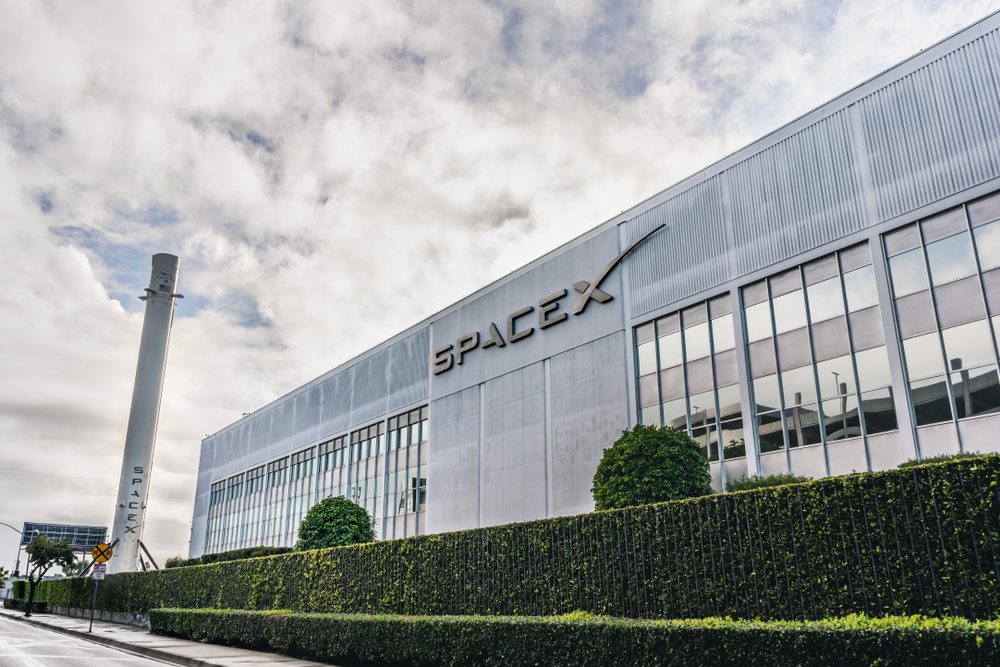
TradingKey - As SpaceX makes a full-tilt sprint toward the largest IPO in history and Anthropic's valuation surpasses $1 trillion amid intense demand, OpenAI—once considered the "frontrunner" in the AI race—is repeatedly hitting the brakes at the IPO starting line.
According to recent reports, OpenAI CFO Sarah Friar recently stated clearly to industry insiders that the company will not be ready for a public listing by the end of 2026, as the necessary process and organizational work are far from finished.
CEO and CFO Disagreement over Listing
Previously, OpenAI CEO Sam Altman had been eager to accelerate the pace of going public, privately expressing a desire to complete an IPO as early as the fourth quarter of this year, ahead of competitor Anthropic, which is also discussing fourth-quarter listing plans. His logic was simple and direct—to seize the narrative high ground as the "first large-model stock" and establish a leading capital position for the brand in the AI sector before his rivals.
However, Sam Altman overlooked a key variable: Sarah Friar's style and professional background are starkly different. Having joined OpenAI as CFO in May 2024, she previously led Nextdoor and witnessed the entire process of the post-pandemic tech stock valuation collapse, leading her to be extremely cautious in her judgment regarding the timing of an IPO.
According to reports from The Information, Sarah Friar explicitly stated that conditions for an IPO would not be met by 2026, as relevant processes and organizational preparations are incomplete. Furthermore, she believes that the massive commitment of $600 billion in spending over the next five years poses significant risks.
The two executives subsequently issued a joint statement to "resolve differences," claiming they are "in full agreement on the point of purchasing as much computing power as possible."
Wall Street has long held that management friction during an IPO—a state where the "brake" and "accelerator" are applied simultaneously within the organization, regardless of how unified their public stance may be—represents the most fatal structural weakness in listing preparations.
The performance gap continues to widen.
The fundamental reality that public denials cannot mask is that OpenAI's rate of monetization is failing to keep pace with the massive compute checks it is writing.
According to The Wall Street Journal, OpenAI has not only missed its year-end 2025 ChatGPT revenue targets, but has also yet to officially announce the milestone of reaching one billion weekly active users.
Entering 2026, OpenAI has continued to lose market share to Anthropic in the programming tools and enterprise markets, resulting in several consecutive months of missed revenue targets. For a company planning to go public in just a few months, persistent underperformance is a highly alarming signal.
Concurrently, a series of massive deals spearheaded by Sam Altman has saddled OpenAI with approximately $600 billion in future spending commitments. Sarah Friar has voiced concerns to several executives that the company might struggle to honor its extensive compute contracts if revenue growth falls short of projections. Internal projections suggest that cash expenditures will exceed $200 billion before the company reaches positive cash flow.
While a window for an OpenAI IPO exists, its financial footing is evidently unstable; as the market begins to question a company slated for a listing this year following months of "missed revenue targets," the foundation of its valuation in capital markets will inevitably be undermined.
Loss of Competitive Positioning: From Front-runner to Follower
In recent weeks, OpenAI has gradually fallen behind in the narrative of the "race for the first public offering." SpaceX officially filed a confidential IPO application with the SEC on April 1, planning to complete its listing between June and July, aiming for the largest IPO in history at a $1.75 trillion valuation.
Meanwhile, Anthropic has consistently hit new highs in the private secondary market, with its valuation on the Forge Global platform approaching $1 trillion. In contrast, demand for OpenAI in the secondary market has seen a significant decline; current market estimates place OpenAI's valuation at just $880 billion, only slightly up from its March funding round.
Comparing the three, the gap is precisely reflected in the hard constraints of fundamental data. Anthropic reached a valuation of $380 billion just five years after its founding and is driving prices higher through a logic of "ultra-low supply and ultra-high demand." SpaceX's Starlink business has already achieved an EBITDA margin of approximately 54% in 2025, with its profitability logic repeatedly validated by the market ahead of its IPO.
By comparison, OpenAI's push for an IPO—against a backdrop of failing to meet both revenue and user targets and with cash flow still a distant prospect—suffers from both a weak narrative and the structural risk of a valuation reassessment.
The combination of warnings from the CFO, performance gaps, and a loss of competitive positioning is creating a practical constraint of "high valuation, high spending, and low visibility."
In summary, when a company with a valuation near $1 trillion and tens of billions in annual revenue must repeatedly prove it is "actually capable of making money," capital markets will naturally make the most prudent choice. For OpenAI, the current issue is no longer limited to "when to go public," but how to regain market recognition and favor while its competitors' narrative engines are running at high speed.
This content was translated using AI and reviewed for clarity. It is for informational purposes only.
Recommended Articles



Comments (0)
Click the $ button, enter the symbol, and select to link a stock, ETF, or other ticker.