


How Tesla Survives the Cold Winter, Will Tesla Stock Continue to Fall in 2026?



AI Podcast


Tesla's stock decline, nearing 20% from its December 2025 high, stems from fundamental pressures and valuation concerns. Weakening global EV demand, intensified competition, and squeezed profit margins impact its core business. Simultaneously, tempered expectations for AI and autonomous driving commercialization, coupled with a high-interest-rate environment, are recalibrating its premium valuation. Regaining market favor hinges on re-establishing growth logic, necessitating improvements in both EV profitability and the realization of AI/autonomous driving revenue. Investors are advised to manage risk through controlled position sizing and hedging strategies.

TradingKey - Recently, influenced by factors such as earnings missing expectations, as well as the AI bubble debate and AI disruption theories, Tesla (TSLA) its stock price has continued to decline, falling nearly 20% from its December 2025 high.
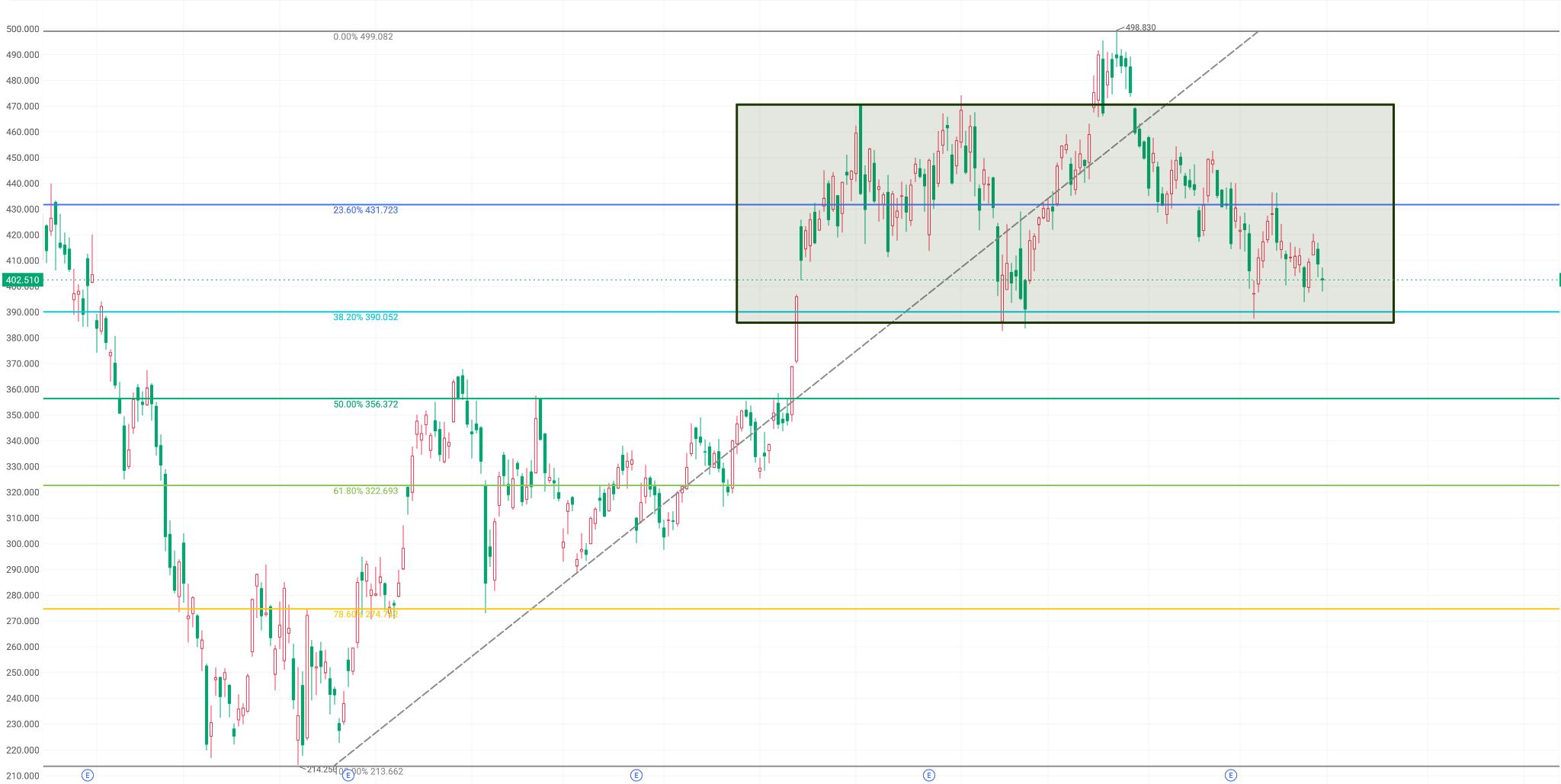
The Real Reasons Behind Tesla's Current Decline
The prevailing view is that Tesla's current correction is not caused by a single factor, but rather by simultaneous pressure on its fundamentals and valuation logic.
First, on the performance level, the electric vehicle (EV) business continues to slow. Global demand growth is weakening, price wars are squeezing profit margins, and competition in the Chinese market is intensifying as domestic automakers like BYD seize market share. Additionally, the withdrawal of subsidies in Europe and the high-interest-rate environment in the U.S. dampening consumer demand have all put pressure on deliveries.
The latest financial report shows that automotive gross margins remain low, far below previous peak levels, leading the market to doubt the pace of earnings recovery.
Secondly, expectations for AI have cooled. Over the past year, the market viewed Tesla as an "AI + autonomous driving" play rather than just an automaker, which significantly boosted its valuation.
However, as the AI bubble controversy heats up and the progress of autonomous driving commercialization falls short of some investors' expectations, capital has begun to reassess the rationality of the premium. Uncertainties remain regarding the approval and implementation of FSD in key markets like China, and the Robotaxi business model has yet to be proven, making it difficult to contribute stable cash flow in the short term.
Furthermore, the macroeconomic environment remains unfriendly. The Federal Reserve has maintained high interest rates longer than previously expected, putting overall pressure on high-valuation growth stocks in 2026; the stock price's nearly 20% pullback from its December 2025 high is essentially a valuation compression rather than mere sentiment volatility.
Can Tesla Regain Market Favor?
Whether Tesla can regain investor interest depends not on whether the stock price has fallen deep enough, but on whether its growth logic can be re-established. Current market divergence over Tesla is very pronounced.
Some investors still view it as a core AI and autonomous driving play, believing that once FSD is commercialized at scale and Robotaxi begins contributing revenue, the valuation framework will shift from an "automaker" to a "tech platform." However, most mainstream institutions are currently cautious for a direct reason: growth in the core EV business is slowing while new businesses have yet to generate stable profits.
Looking at the reality, the EV business remains the core of profits. If global deliveries continue to grow at a low rate and price wars keep gross margins low for an extended period, even the most ambitious AI narrative will struggle to support a high valuation.
Conversely, if sales growth resumes around 2026 and gross margins return to a relatively healthy range, while the FSD monetization model becomes clearer, market sentiment could see a significant improvement.
Another variable is the shift in capital market styles. If expectations for rate cuts continue to diminish, tightening financial conditions may make it difficult for high-valuation growth stocks to rally; if the monetary environment turns accommodative and risk appetite improves, Tesla, as a high-beta stock, often tends to be among the first to rebound.
Ultimately, Tesla's ability to regain market favor depends on whether its performance can keep up with its narrative. Talking about AI is not enough, and just selling cars is not enough. Both fronts must improve simultaneously for the market to grant a premium again.
How Should Investors Handle Tesla Stock?
From a trading perspective, the current stage is better suited for controlling position sizes rather than blindly bottom-fishing. Investors might consider risk hedging, such as using options to hedge downside risk or diversifying single-company volatility by allocating to new energy ETFs.
From a medium-to-long-term perspective, the key is to determine whether Tesla can resume growth. If you believe it still holds long-term advantages in areas like autonomous driving and energy storage, you could adopt a strategy of buying in batches during pullbacks and adding to positions as the trend strengthens. This involves buying in increments when the valuation retreats to historical means or key technical support levels, and increasing position sizes when performance improvements are confirmed and the trend gains momentum. Doing so helps avoid the risk of directional errors associated with a single large position.
To be clear, whether the stock price continues to fall in 2026 depends on two variables: first, whether EV profit margins can stop declining and rebound; second, whether autonomous driving and AI businesses can deliver on expectations.
If profitability remains weak, the market is likely to continue compressing valuations; if growth re-accelerates, there is significant room for a stock price recovery. At this stage, rather than predicting the bottom, it is better to manage risk.
This content was translated using AI and reviewed for clarity. It is for informational purposes only.
Recommended Articles












Comments (0)
Click the $ button, enter the symbol, and select to link a stock, ETF, or other ticker.