


$60 Billion. AMD and Meta Deeply Tied, Directly Challenging Nvidia’s AI Chip Dominance



AI Podcast


Meta and AMD announced a $100 billion five-year agreement for AI chips, with AMD supplying up to 6 gigawatts of custom Instinct GPUs and EPYC CPUs. This strategic partnership aims to advance AI infrastructure and positions AMD as a significant player in the market, challenging NVIDIA. Meta receives performance-based warrants for 160 million AMD shares, tied to GPU shipments and stock performance. The deal, expected to boost AMD's revenue and profitability, includes custom GPU designs and the Helios rack-scale platform, marking a direct competition with NVIDIA's systems.
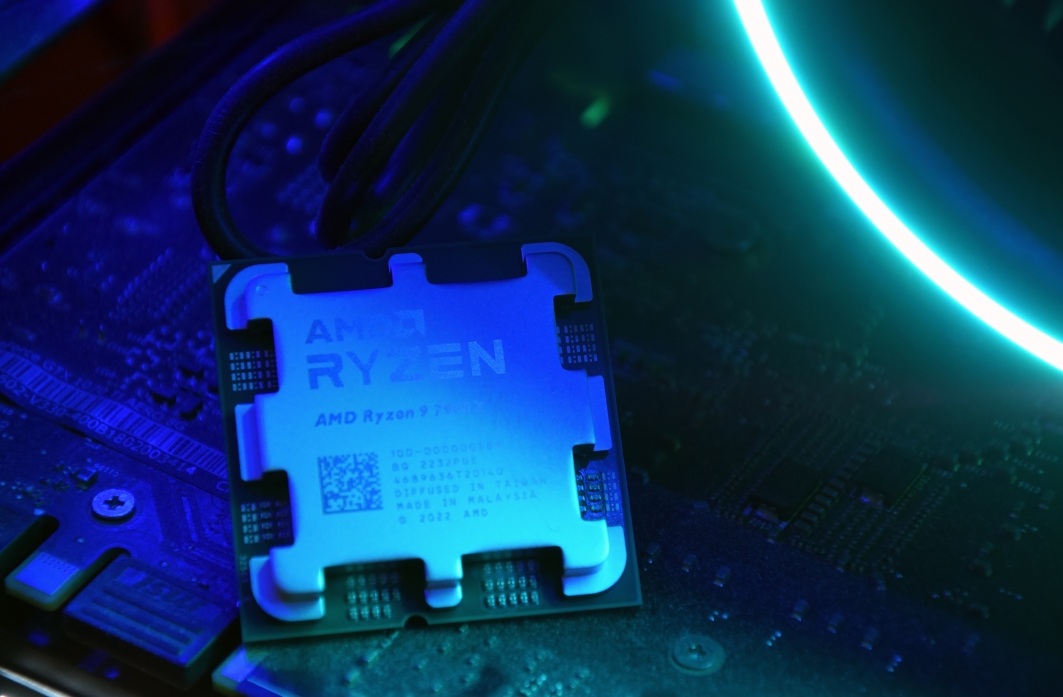
TradingKey - February 24, Meta ( META) and AMD ( AMD) announced a major five-year artificial intelligence chip and equipment procurement agreement with a total value of up to $100 billion. This unprecedented partnership not only intensifies investment competition among global tech giants in the AI infrastructure sector but also secures a vital strategic position for AMD in a computing power market dominated by Nvidia.
The agreement involves an order value of up to $60 billion, with both parties announcing a deep integration to support the development of next-generation AI infrastructure.
Under the agreement, AMD will provide Meta with up to 6 GW of customized Instinct GPUs based on the MI450 architecture, optimized for Meta's workloads. The initial 1 GW deployment is scheduled to begin shipping in the second half of 2026.
The most striking part of the deal is a performance-based warrant agreement: Meta will have the right to acquire 160 million shares of AMD stock (approximately 10% of AMD's total outstanding shares). The first batch of warrants will vest upon completion of the initial 1 GW Instinct GPU shipment; as Meta's procurement progresses toward 6 GW, the remaining tranches will take effect in stages. Naturally, the exercise conditions are also deeply tied to AMD's stock price performance as well as Meta's own technical and business milestones.
Lisa Su revealed that the design of these warrants provides a win-win scenario for shareholders, offering solid financial support for an ambitious plan. She believes that as AMD continues to expand its AI footprint, this deal has become one of the most 'transformational' transactions in the company's history.
Furthermore, the collaboration will extend into the CPU sector, with Meta planning to deploy a large number of AMD EPYC CPUs and becoming the launch customer for AMD's sixth-generation EPYC CPUs.
AMD is expected to ship customized Instinct GPUs based on the MI450 architecture and sixth-generation EPYC CPUs codenamed 'Venice' by the second half of 2026. These products will run on ROCm software and be built on the Helios rack-scale platform.
Meta CEO Mark Zuckerberg said in a statement: 'We are excited to establish a long-term partnership with AMD to co-deploy efficient inference computing power and provide personal superintelligence.'
In addition, AMD Chair and CEO Lisa Su stated that she is honored by the strategic partnership with Meta and believes this collaboration will help Meta achieve unprecedented breakthroughs in the field of artificial intelligence.
She emphasized that the partnership covers Instinct GPUs, EPYC CPUs, and rack-mounted AI systems, with both companies' product roadmaps closely aligned to provide high-performance, high-efficiency optimized infrastructure for Meta's workloads. This will accelerate the world's largest-scale AI deployment and place AMD at the center of global AI development.
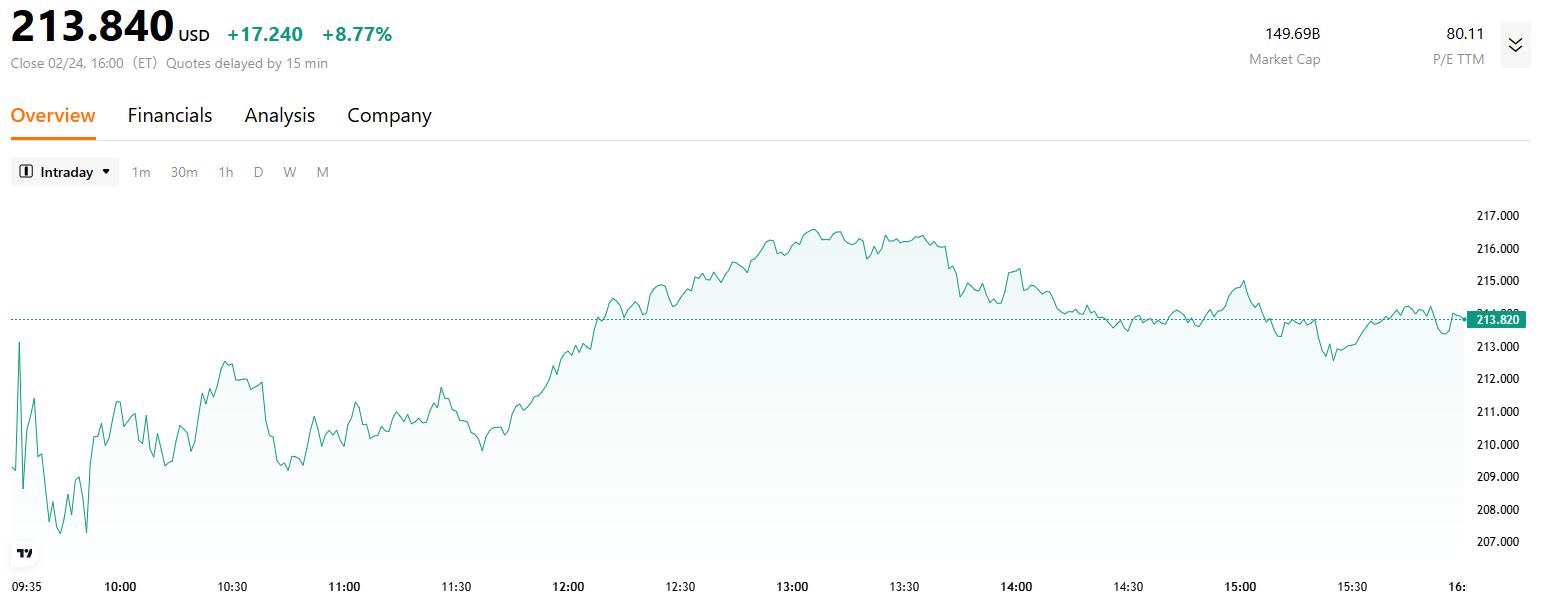
Boosted by the news, AMD shares surged more than 8% on Tuesday.
Strategic Significance for AMD
Lisa Su stated that the industry is still in its early stages and the ultimate returns have yet to fully manifest; therefore, it is essential to make forward-looking investments and precisely target directions that offer the greatest yields.
In fact, AMD is steadily solidifying its position as the 'second choice.' In October last year, AMD reached a similar agreement with OpenAI, granting OpenAI the right to subscribe to 160 million AMD shares, an agreement also tied to deployment scale and stock price.
The partnership announced this time is undoubtedly a key breakthrough for AMD. AMD's initial deliveries will include customized GPUs, a strategy that, compared to Meta's partnership with Nvidia ( NVDA ), is significantly different.
Meanwhile, the large-scale delivery of AMD's Helios system marks the first time the company will compete head-to-head with Nvidia's Grace Blackwell system.
In the current AI chip market, AMD still faces a significant gap with industry leader Nvidia, which has a market capitalization of $4.66 trillion and roughly 90% market share, while AMD's valuation is approximately $320 billion.
AMD's CFO stated that the partnership with Meta is expected to significantly boost the company's revenue over the coming years and improve non-GAAP earnings per share, marking a major step toward achieving long-term financial goals. Additionally, this performance-based collaboration model closely aligns AMD and Meta in terms of execution and long-term value creation.
Goldman Sachs noted in its latest research report that this partnership significantly strengthens AMD's position in the accelerator market and marks significant progress in AMD's competition with industry giants like Nvidia.
However, the bank emphasized that it will only adjust AMD's rating after gaining clarity on the actual deployment timelines for Meta and OpenAI. Currently, Goldman Sachs maintains a 'Neutral' rating on AMD while raising its price target to $240.
This content was translated using AI and reviewed for clarity. It is for informational purposes only.
Recommended Articles





Comments (0)
Click the $ button, enter the symbol, and select to link a stock, ETF, or other ticker.