


Nuclear Energy Is Paving the Way for the Future of AI: Should You Invest in Nuclear Energy Stocks in 2026?



AI Podcast


Nuclear energy is experiencing a resurgence driven by climate concerns, policy shifts, and increased demand for reliable, carbon-free baseload power, particularly from data centers. Utilities are securing long-term uranium contracts, supporting miners. The extension of existing reactor lifespans and progress in Small Modular Reactor (SMR) deployment, aided by government incentives and regulatory streamlining, are bolstering the sector. While market fundamentals appear strong, investors face volatility due to project risks, supply chain constraints, and interest rate sensitivity. Companies like Cameco, GE Vernova, Brookfield Renewable, and Constellation Energy offer diverse plays on this evolving industry, with NuScale Power representing a high-risk SMR play.
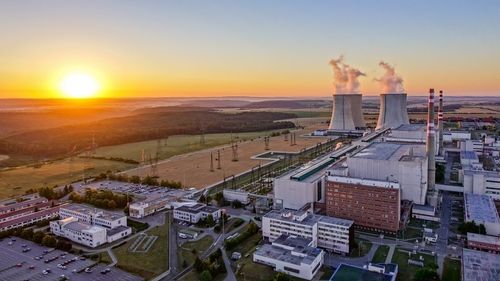
TradingKey - Nuclear power stocks have gone from the sidelines to the center stage of many portfolios in recent years. Climate targets, the limitations of wind and solar without long-duration storage, the more expensive hydrogen route, and decades of operating data demonstrating strong safety performance have caused investors to take a second look. The question for 2026 is not whether nuclear should play a role but how to invest in the sector with discipline, given that it is cyclical and subject to project risks.
What Supercharged Nuclear Stocks in 2025?
For the last several years, the share prices of companies in the nuclear energy sector have been influenced by a rather small set of often identified, sometimes converging factors. Policy progress windows for policies have been inconsistent. States are beginning to extend the life of plants and to provide more predictable routes for Small Modular Reactor (SMR) deployment. Canadian regulators have authorized pre-construction activities for an SMR in Ontario based on GE Hitachi's technology, a step beyond the pilot project cycle debate. And the domestic policy environment has continued to be supportive of recognizing nuclear as critical for decarbonization in the U.S. and revenue for existing plants as needing to be stabilized.
That commercial interest was also more concrete. Constellation Energy (CEG) said it has enhanced its portfolio of long-term deals to provide for a stable power supply for data centers, including a 20-year power purchase agreement with Microsoft (MSFT) signed in 2024. These agreements are a seismic event in the space: hyperscalers and big power users want firm, carbon-free baseload, which nuclear brings to the table.
Uranium supply and demand (upstream side) grew tight. Underinvestment, supply shocks, and firm production ended with a revival of long-term contracting by utilities. The impact was rising prices (both real and anticipated prices), which brought smiles to the faces of miners and fuel-cycle players. And then there’s the capital-intensive aspect of nuclear: macroeconomic factors — such as interest rates and currency movements — also influence valuations, particularly for capital-intensive developers and small companies that must raise funds externally.
Will the Fundamentals and Policy Support Nuclear Energy Stocks in 2026?
The fundamentals that support nuclear energy stocks for 2025 appear to be well established. Utilities are going back to multi-year contracts for uranium, and the supply is still concentrated and susceptible to disruption, which could keep the market tighter than it has been over the past decade or so. The operating lives of many existing nuclear reactors throughout the world are being extended, and these extensions do often represent the quickest and cheapest option to keep providing clean baseload power to the grid. A handful of countries are progressing greenfield development projects or SMRs to provide additional flexible, dispatchable capacity.
Now the policy backing for this is broader. Already-constructed U.S. nuclear plants qualify for production tax credits under recently passed energy legislation as well, giving those plants even more of a financial incentive to stay in operation. Loan guarantees from the federal government and regulatory streamlining for advanced reactors additionally help de-risk financing and compress timelines for SMR deployment. Canada continues to be an advocate for SMR technology development, and parts of Europe see nuclear as eligible in their sustainable finance taxonomies that help in capital raising. These structures don’t remove risk, but they do add sight lines along the way.
Demand-side fundamentals are evolving as well. Electrification, reindustrialization, and particularly the explosive expansion of artificial intelligence and data centers are driving up demand for 24/7 power with low carbon intensity. That’s good for technologies that produce a reliable source of energy and grid stability. Nuclear fits that bill, as long as projects are delivered on time and on budget.
Will Nuclear Energy Stocks Strengthen in 2026?
The 2026 base case is volatile but bullish. If uranium contracting is still active by the time new supply arrives slowly, prices upstream can remain supportive, which is good for uranium miners and fuel-cycle service providers. Further advances in SMR licensing and early-site activities would be supportive of equipment and services vendors. Operators have potentially a greater number of long-term power contracts with financially sound counterparties and favorable state or federal policies to stabilize their cash flows and support prudent growth plans.
But expect a bumpy ride for those who invest. Timelines on projects can be pushed back and costs can rise due to tight labor and supply chains, and financing continues to be sensitive to interest rates. Uranium prices may violently reverse, policy may change, or permits may be delayed, and multiples can rapidly compress. That structure is conducive to milestone-driven investors who have respect for valuations and can hold through volatility rather than run with the headlines.
What Stocks Should You Watch in 2026
Cameco (CCJ) is a leading global provider of uranium fuel services and one of the largest producers of uranium, nuclear utility contracting services, and has a trading arm for uranium. The company has a high-quality asset portfolio at Cigar Lake and McArthur River / Key Lake and seeks to be the supplier of choice for long-term supply commitments. The fact that it had to lower its 2025 production guidance due to operational delays showed that even the most professional mining company on the planet has execution risk. In addition to its mining business, Cameco also has a minority interest in Brookfield-controlled Westinghouse, giving the company a stake in the very heart of the nuclear fuel cycle. Basically, to say it has a very high likelihood of consistent operating cash flow-positive results is an understatement. Still, nuclear risk and cash flow cyclicality do require a disciplined philosophy of valuation.
Spun off in 2024, GE Vernova (GEV) brings together GE’s energy businesses, such as GE Hitachi nuclear business, with gas, steam, hydro, wind, and grid electrification. This should allow for more focused capital allocation and accountability within the standalone entity. The company’s nuclear play covers all aspects of reactor technology and services – and in particular SMRs, where the company obtained mid-2025 approval to start construction in Ontario on what could become the first of its kind in the Western Hemisphere. GE Vernova isn’t a pure-play on nuclear, but its diversified exposure to the energy transition means it has a variety of ways to win if SMRs take off and grid investment accelerates.
Brookfield Renewable (BEPC) is a diversified clean power owner/developer in hydro, wind, solar, and storage solutions with ancillary exposure to nuclear services through a majority stake in Westinghouse since 2023, together with Cameco. Westinghouse’s sizeable installed base and recurring service contracts provide a somewhat more stable cash flow than that of commodity mining. In a way, Brookfield’s focus on acquiring distressed and/or poorly run assets, improving their operations, and recycling the cash generated into more assets within a capital-efficient managed structure remains central to the thesis. Brookfield investors get a play on nuclear within a much larger renewables platform that should theoretically provide more volatility dampening for a portfolio than pure uranium plays.
Constellation Energy has the largest portfolio of nuclear reactors in the U.S., and the company is rapidly establishing itself as one of the top clean energy producers with reliable baseload. Its two-decade pact with Microsoft, sealed in 2024, signaled growing demand in the market for reliable carbon-free energy. The company has also sought scale through a buyout strategy — the acquisition of Calpine, completed in early 2026, which has significantly enlarged capacity and free cash flow. For investors, the appeal is in long-duration assets, policy support for existing nuclear, and the opportunity for additional premium-priced contracts for data centers and industrials that want reliability. The major risks are regulatory approvals for and integration of new assets, and commodity risk outside of nuclear.
NuScale Power (SMR) is the high-risk, high-reward play for the SMR theme. The company is pre-scale and listed in 2022. The company walked away from a Utah project in 2023, and it hasn’t had a near-term, shovel-ready project with a defined end date since. Perhaps assistance from policy and demand-side customers will be forthcoming, but timing, funding, and execution are indeterminate. The potential upside is massive if SMRs are commercialized; the potential downside is massive if they are not, because that is when investors take the dilution and the delay. This is a speculative stake that should be sized accordingly and monitored closely for confirmed milestones.
Recommended Articles










Comments (0)
Click the $ button, enter the symbol, and select to link a stock, ETF, or other ticker.