


$660B Capex Bill Triggers $900B Wipeout: Why Apple Shares Outperform Amazon and Google Despite AI Lag



AI Podcast


Tech giants Amazon, Google, and Microsoft saw significant market value wiped out following earnings reports, totaling $900 billion, due to concerns over escalating capital expenditures for AI development and a perceived low return on investment. While AWS revenue showed growth, Amazon's projected $200 billion 2026 capex and Google's $175-$185 billion forecast alarmed investors. Apple, however, experienced a surge, driven by its asset-light AI strategy, outsourcing development and incurring lower capital expenditures. This divergence highlights a market shift towards prioritizing return on investment over high spending, favoring companies demonstrating tangible productivity gains from AI.
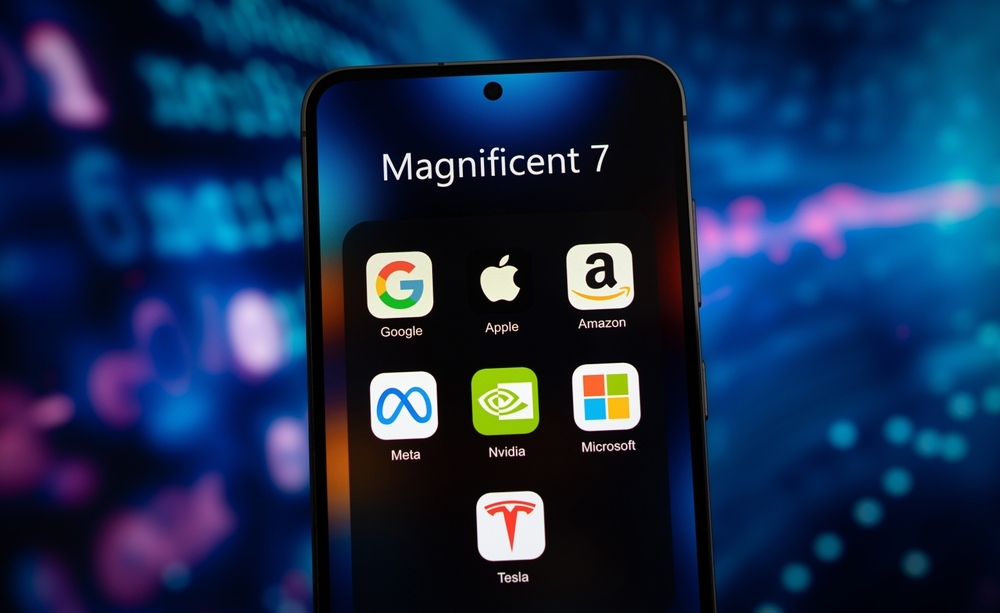
TradingKey - Over the past week, Amazon, one of the "Magnificent Seven" in the U.S. stock market, (AMZN) , Google (GOOG) (GOOGL) and Microsoft (MSFT) all experienced varying degrees of investor sell-offs after their earnings reports, with a total of $900 billion in market value wiped out.
Microsoft's stock price fell as much as 12% intraday last Thursday, with the market cap loss reaching $430 billion, marking the second-largest single-day market cap destruction in U.S. history, trailing only NVIDIA (NVDA) 's $593 billion loss in January 2025 due to concerns surrounding DeepSeek.
According to financial disclosures, Meta (META) along with the three aforementioned companies, is projected to reach a combined 2026 capital expenditure of $660 billion—significantly higher than $410 billion in 2025 and $245 billion in 2024, and even exceeding Israel's GDP. Jim Tierney, head of Concentrated US Growth at AllianceBernstein, stated the scale of their capex is staggering.
This wave of selling indicates that the market has grown weary of the tech giants' high-investment, low-return AI race.
Record Growth Fails to Offset Capex Bloat
After the bell on Thursday (February 5), Amazon announced that its 2026 capital expenditure is expected to reach $200 billion, $50 billion above estimates and far exceeding that of other Magnificent Seven companies. CEO Andy Jassy explained that this is to prepare for Amazon's growth in AI, chips, robotics, and satellites. In addition, AWS revenue grew 24%, proving that investments have begun to yield returns. Nonetheless, Amazon shares tumbled 11% that day.
Google saw a similar development. After the market close on February 4, Google released its capital expenditure guidance for 2026, projecting a range of $175 billion to $185 billion—nearly double its full-year spending for 2025. CEO Sundar Pichai explained that this level of expenditure is to support the development of frontier models at Google DeepMind and meet the surging demand from cloud customers. Alongside the high spending, Google reported record-breaking fourth-quarter results: total revenue grew 18% year-over-year, hitting a new quarterly high after revenue first topped $100 billion in the third quarter; Google Cloud revenue surged 48% year-over-year. However, this failed to stop investors from selling off.
The Apple Paradox: Winning by "Falling Behind"
In this wave of selling, the sole survivor was, surprisingly, Apple, which had recently fallen out of favor (AAPL) , having risen nearly 7% since the release of its earnings report on January 29.
Unlike companies such as Google that have waded in and invested heavily in proprietary AI R&D, Apple has adopted a more asset-light strategy since last year: outsourcing its AI operations directly. For instance, Apple has signed agreements with Google and OpenAI, under which computing power and model training costs are borne by these partners. Apple merely pays for the services, avoiding the burden of fixed capital expenditures like production equipment.
Apple's capital expenditures for Q4 2025 dropped 17% to just $2.4 billion, totaling approximately $12 billion for the full year; its 2026 capex forecast is only about $14 billion, less than one-tenth of Google's.
This stands in stark contrast to its performance throughout 2025. Over the past year, Apple faced constant criticism for lagging behind in the AI race, with its AI-powered Siri failing to materialize. Consequently, its stock rose only 8% for the year, trailing the S&P 500's 16% gain.
However, against the backdrop of a massive sell-off in software and a persistent decline in tech stocks, this has turned into a competitive advantage for Apple. On Tuesday, U.S. markets tumbled following the release of a new tool by AI startup Anthropic that can handle various clerical tasks, fueling fears that the software industry might be displaced. According to data, approximately $285 billion in market value was wiped out from the software, financial services, and asset management sectors that day.
Apple has now reclaimed its spot as the world's second-most valuable company, with a market capitalization of $4.06 trillion, slightly edging out Google. Andrew Graham, founder and portfolio manager at Jackson Square Capital, noted that as capital exits software stocks, investors are seeking new targets within the tech sector, and Apple is reaping the rewards.
Show Me the Money, Not the Story: Markets Demand ROI
Analysts believe that the divergence in stock performance among the Magnificent Seven reflects a shift in investor sentiment; the phase of blind mania over AI spending has officially passed, and investors are now focused on return on investment (ROI).
Chris Maxey, Managing Director and Chief Market Strategist at Wealthspire, stated that companies can no longer be rewarded by the market for merely beating estimates by 1% to 2% and increasing capital expenditures. They must demonstrate accelerating growth and exceed targets by a significant margin.
In response, Wells Fargo (WFC) Chief Investment Officer Darrell Cronk stated that tech has become more of a show-me story. He believes that if these Silicon Valley giants can continue to deliver stellar results, capital will flow back into the tech sector.
Deutsche Bank pointed out that the market environment has quietly changed, with the benefits of AI investment shifting from a broad market rally to a "winner-takes-all" dynamic: most tech stocks are seeing deep pullbacks, while only certain tech giants post gains. In this new market environment, Deutsche Bank believes only those companies capable of deploying truly effective AI tools—making them ultimately affordable, scalable, and capable of driving meaningful productivity gains—will see their stock prices rewarded for AI investment.
This content was translated using AI and reviewed for clarity. It is for informational purposes only.
Recommended Articles






Comments (0)
Click the $ button, enter the symbol, and select to link a stock, ETF, or other ticker.