


Alibaba Share Price Projections: What Will Happen With Alibaba?



AI Podcast


Alibaba (BABA) is poised for a new growth phase, driven by AI, cloud computing, and international e-commerce expansion, despite recent underperformance and significant competition. Alibaba Cloud's intelligence division shows over 30% annual revenue growth, with substantial investments planned in AI and cloud infrastructure. While traditional e-commerce segments offer solid unit economics, international diversification via Lazada and AliExpress targets broader growth potential. Analysts project over 50% upside in five years, expecting EPS to double. However, regulatory uncertainty, intense domestic and global competition, and high capital outlays for AI infrastructure present considerable risks and potential stock volatility.
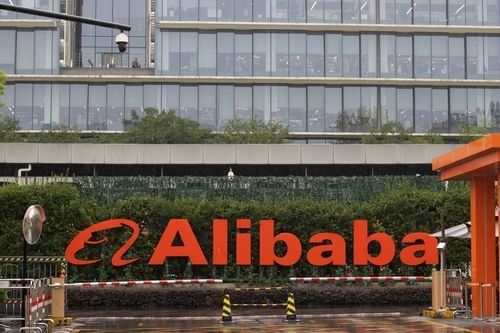
TradingKey - As we move toward the end of 2025 and prepare for 2030, Alibaba group (BABA) is truly at the beginning of a brand new growth trajectory. While Alibaba has been regarded as one of the top e-commerce and cloud service companies in China, its stock price has severely lagged behind its U.S. counterparts (such as Amazon), losing well over 40% relative to U.S. technology shares during that same time frame. The rapidly changing landscape of Artificial Intelligence (AI), Cloud Computing and Global Expansion provides a tremendous amount of potential to enhance the long-term performance of the BABA share price over the next five years.
What is Alibaba's Growth Potential?
According to research conducted by analysts, Alibaba would be considered among the biggest global tech firms by market cap (hundreds of billions), whereas many of the business segments they provide are technology driven (e-commerce, Cloud, Logistics, etc.) and also Digital Media. As a result of their similarities with respect to business model functions for E-Commerce and Cloud provide a basis for them to be referred to as, "the Amazon of China". The increase in revenue from AI productivity based on Cloud-hosted solutions has been driven by the increased level of Cloud usage and Enterprise Digitalisation, and therefore, with the aforementioned trends indicating the potential for growth as well as upside on Alibaba stock will be much better than many had initially expected.
Nonetheless, Alibaba still faces major competition in terms of market share with the likes of Pinduoduo, Douyin's eCommerce platform, as well as falling consumer spend rates resulting in higher volatility of stock price and uncertainty regarding Alibaba's valuation.
The Primary Strategic Growth Engine for Alibaba Will Be Ai and Cloud Computing:
Alibaba Cloud's intelligence division has become one of Alibaba's higher revenue growth divisions, increasing its annual revenue by more than 30% every year. Alibaba also offers a wide range of AI products, including large language models and entire architecture that support Alibaba Cloud's business. Alibaba Cloud is expected to accelerate its growth as companies continue to increase their adoption of artificial intelligence.
As a way of building a competitive barrier against Alibaba's global competition and continuing to grow Alibaba beyond eCommerce for many years to come, Alibaba plans to invest billions into AI and Cloud infrastructure in the next few years.
Global Growth and E-Commerce
Alibaba has a significant number of users (an existing user would be defined as someone that has made at least one purchase on their e-commerce sites) and strong underlying unit economics through its traditional e-commerce brands (i.e., Taobao, Tmall, Alibaba.com), and is generating millions of dollars for the overall business through logistics and innovations in speed of delivery and customers engaging with the services/products offered.
Alibaba has a diversified portfolio of e-commerce businesses into international markets (Lazada, AliExpress, Trendyol, etc.) providing additional exposure outside of China and increasing revenue by being able to access larger growth potential within all developing regions than it would have received if the company did not have this diversification strategy.
Value and Future Projections
For Alibaba, total revenues can grow modestly in 2020 - about 3% - with the highest potential from Alibaba shares currently trading below average analyst consensus price targets and a greater than 50% upside from these current levels over the next five years based on an expected doubling of company EPS over the same time frame.
Per indications, there will be a supporting level of revenues to create a larger company with higher average pricing multiples for Alibaba. Consequently, the stock valuation of Alibaba may grow even further during the next five years if Alibaba's earnings increase substantially compared to current consensus projections.
All Risks and Different Viewpoints
Presently, Alibaba has considerable uncertainty surrounding regulatory issues that may pose challenges as they continue to grow their business. Historically, this uncertainty has contributed significantly to declines in investment; often overnight. Besides At the same time Alibaba faces domestic competition and significant amounts of competition from other e-commerce companies offering very similar services globally which will limit Ali Babu’s ability to grow and maintain necessary profit margins, thus blocking the ability of Ali baba to grow profits.
The vast capital outlay associated with developing the companies’ Datacentre’s and artificial intelligence infrastructure will require significant ongoing short-term capital investments similar to prior capital outlay and won’t provide any short-term asset return until finished, while at the same time, there is a heightened level of excitement regarding AI that has expanded the valuation multiples for the company, which could lead to extremely volatile pricing of Ali Baba securities if growth expectations do not materialize or if macroeconomic headwinds affect Ali Baba’s operations.
All of these factors have also led some analysts to predict that future growth will vary and to not all independently provide similar upside projections. Some analysts believe that growth expectations will not be sufficiently high enough to support e-commerce or the cloud sector.
The following describes how institutional and other large scale investors will interpret the investment landscape—specifically Alibaba Group Holdings (BABA)—based upon three key themes.
Buy-and-hold investors who view investment opportunities through a thematic lens are likely to see BABA stock as an opportunity to capitalize on China’s rapidly evolving digital economy and the adoption of artificial intelligence. As the company expands in its cloud and AI businesses, those two areas could become significant sources of profit for the company and result in Alibaba’s long-term growth potentially mirroring the growth of global tech leaders.
More conservative and cautious investors, on the other hand, will want to consider structural risks associated with BABA, regulatory uncertainty, and the company’s competitive position in the marketplace when evaluating an investment in this stock. For investors who decide to invest in BABA, limiting their investment size and investing over a longer time period is of utmost importance given the high likelihood of experiencing near-term volatility and unpredictable macroeconomic conditions in China and globally.
To summarize, while BABA has underperformed relative to peers in the past, there are many forecasts indicating a significant potential for growth in the next five years based on the momentum associated with the adoption of AI technology, the, dominance of the cloud, the expansion of international sales, and the continued solid economics associated with operating a core marketplace business—creating a compelling—thematic—and complex—long-term investment opportunity for investors who are willing to navigate cyclical and geopolitical risk.
Recommended Articles









Comments (0)
Click the $ button, enter the symbol, and select to link a stock, ETF, or other ticker.