


LCID Is the EV Make-Under Too Good to Be True?



AI Podcast


Lucid Group's stock has fallen significantly from its peak, but the company is expanding deliveries and product lines, including entering autonomy and robotaxis. Despite seven consecutive quarters of record deliveries and 46% year-over-year growth, Lucid posted a substantial operating loss ($2.4 billion on $834 million revenue) as its cost base remains skewed. While new models and strategic partnerships like with Nvidia and Uber offer future potential, robotaxi commercialization and achieving scale remain uncertain. Lucid has increased liquidity through debt financing but faces shareholder dilution. The company's financial fragility and reliance on the Saudi PIF create significant investment risk, with profitability still a distant goal.
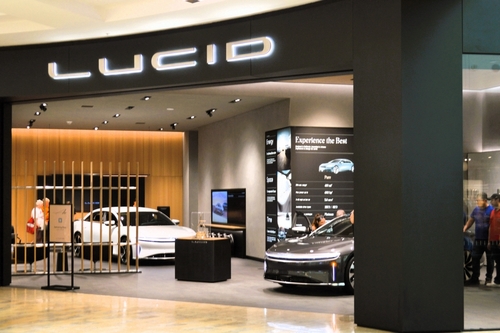
Lucid Group (NASDAQ: LCID) was once among the most hyped names in electric vehicles, touted as a luxury new arrival with best-in-class range, breathtaking design, and moonshot technology goals. Such optimism has long dulled. Lucid’s equity value is now down roughly 98% from its peak in 2021, and LCID is a bitter reminder of how quickly sentiment can reverse in the EV space.
But Lucid is not waiting around. Deliveries have increased, product lines have expanded and the company is moving into and partnering in autonomy and robotaxis. The question for investors is whether such strategic initiatives will translate into financial impact at all—or if LCID’s stock will remain dragged down by repeated dilution and ongoing capital needs.
From Market Darling to Survival Test
Lucid made its ambitions to reshape the luxury electric vehicle market known when it went public. It’s been a lot messier, the truth is. The firm has achieved some efficiency gains, but size and profitability are still distant objectives.
Lucid has already posted seven consecutive quarters of record deliveries, with the most recent quarter hitting 4,078 vehicles — a 46% year over year surge. Revenue is growing and is about 45% higher than last year. But the financial gulf remains vast: Lucid registered an operating loss of some $2.4 billion on revenue of $834 million through Sept. In other words: The growth is real — but the cost base is staggeringly skewed.
Meanwhile, the more enabling overall policy backdrop has weakened. U.S. fuel economy standards are being relaxed to be more attainable for traditional cars, adding less pressure via regulation that was previously pushing for faster EV adoption. Some analysts say the industry could be stuck in an “EV winter” for years.
A Broader Product Offering Is Necessary, but Not Sufficient
Lucid’s only current product is the Lucid Air sedan, which has now become the best-selling model in the EV sedan category, even surpassing the Tesla Model S. It also introduced the Lucid Gravity, a full-size electric SUV, with seating for seven and a projected 450-mile range, aimed at a mainstream luxury market.
On a more strategic note, the large-volume midsize platform is still expected by management to enter production in 2026. It is designed to be sold in volume to a significantly larger audience, and is broadly considered as the company’s best shot at achieving the scale it needs to boost gross margins and manufacturing efficiency.
But even a good product roadmap does not address the short-term problem. Lucid still needs to raise more funds and pour them into R&D for several years before these vehicles can have a material effect on its bottom line.
Autonomy and robotaxis are the consequence of having more choices, not having a predefined conclusion.
Lucid is trying to be more than a carmaker. The company is partnering with Nvidia to roll out Level 4 fully autonomous vehicles based on the NVIDIA DRIVE platform. In addition, Uber has pledged US$300 million to buy a minimum of 20,000 Lucid Gravity SUVs for its driverless ride-hailing service, with Nuro integrating its self-driving technology.
If successful, this could open up an entirely new business model for Lucid, with more utilization and different sources of revenue. Yet robotaxi commercialization is still uncertain, with fierce competition, and massive capital requirements. For the moment, autonomy is just strategic upside optionality, not a near-term solution to Lucid’s financial problems.
The liquidity Fact on the Balance sSheet: Liquidity Has a Cost
The biggest overhang on the LCID shares is the financing.
So far, Lucid:
- Increased the term loan facility (delayed draw) from $750 million to $2 billion.
- Issued $875 million in 6.5% convertible senior notes due 2031, partly to refinance outstanding debt.
- Shares outstanding are rising faster than at some peers, diluting shareholders.
These transactions have raised total liquidity to about $5.5 billion, providing the company with some breathing room. But that time is not free. The market is slowly waking up to dilution more as a matter of “when,” not “if.”
The problem for Lucid is its reliance on Saudi Arabia’s Public Investment Fund (PIF), which is the major stakeholder with about a 60% stake. On one hand, it provides powerful financial backing.On the other, it uncovers Lucid’s reliance on a single anchor shareholder.” Were PIF to retreat from its long-term commitment, it would exponentially increase the firm’s risk exposure.
Why the Market Remains Suspicious
The improvement in operations has been overshadowed by several factors:
- Consensus sell-side analysts reduce target prices as dilution risk is material and EV sentiment gets more cautious.
- The losses are still staggering in relation to the revenue, and no obvious path to short-term profitability is visible.
- Policy background and demand uncertainty are likely to temper expectations of a broader EV recovery.
When that dust clears, you have a stock that "looks cheap on the chart, but looks expensive to execute."
What to Make of Lucid Stock for Investors
Lucid is a financially fragile company, but it’s not a broken company. The technology is real, the products are competitive and ties in autonomy and ride-hailing offer long-term strategic appeal. But the model still demands a steady stream of external cash, and the existing shareholders are paying to keep it alive by diluting themselves.
If anyone needed confirmation that this isn’t a typical recovery story such as LCID would be right at the top of your list for high risk, high uncertainty plays. A meaningful re-rating will probably require greater visibility that the mid-sized platform can scale profitably and cash burn is falling on a sustained, not merely quarter-to-quarter basis — even as deliveries improve.
Until that point Lucid remains a company with both promising assets, but also with a balance sheet and funding situation that much of the investment community is still deeply uncertain about.
Recommended Articles










Comments (0)
Click the $ button, enter the symbol, and select to link a stock, ETF, or other ticker.