


Easing U.S.-Iran Conflict Prompts Asia-Pacific Market Recovery, South Korea’s Kospi Posts Biggest Weekly Gain in 5 Years.



Asia-Pacific markets rallied as risk appetite recovered, driven by progress on the U.S.-Iran ceasefire and Israeli negotiation signals. The Nikkei 225 and KOSPI saw significant gains, marking substantial weekly increases. A last-minute ceasefire announcement by the U.S. and Iran, alongside conditional suspension of attacks and planned political negotiations, eased market panic over energy supply disruptions. This shift from safe-haven preference to risk appetite supported a broad rally. Analysts suggest Japanese and South Korean markets retain upside resilience. However, the rally's sustainability hinges on the ceasefire's implementation, with lingering negotiation uncertainties and potential risk reversals to monitor.

TradingKey - Boosted by factors such as the continued progress of the U.S.-Iran ceasefire agreement and signals from Israel regarding negotiations with Lebanon, risk appetite in the Asia-Pacific region continued to recover, and Asia-Pacific equity markets closed higher.
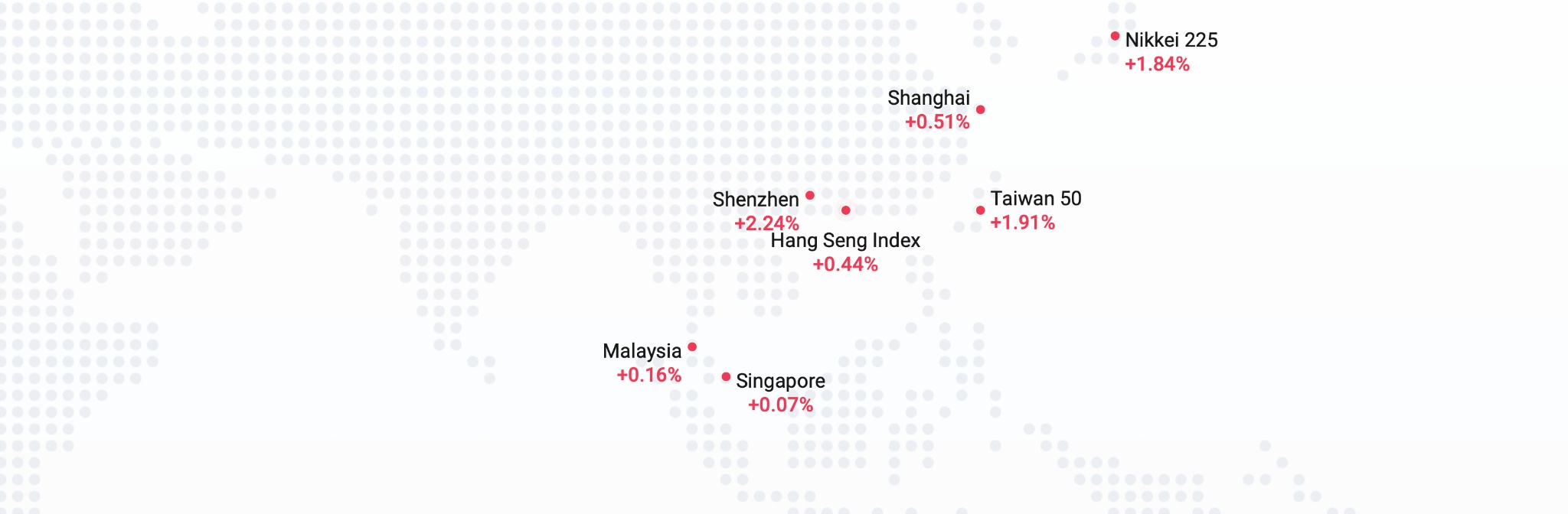
At the close, the Nikkei 225 Index rose 1.84% to 56,924.11 points, gaining 7.15% for the week; the KOSPI rose 1.4% to 5,858.87 points, with a cumulative gain of 8.96% this week, marking its largest weekly increase since January 2021.
The catalyst for this rally originated from the last-minute announcement of a ceasefire between the U.S. and Iran on April 8.
U.S. President Donald Trump announced on social media on the evening of the 7th local time that he agreed to suspend bombings and attacks on Iran for two weeks, on the condition that Iran agrees to fully reopen the Strait of Hormuz; both parties are scheduled to initiate political negotiations in Islamabad, the capital of Pakistan, on April 10.
Analysts pointed out that with the U.S., Israel, and Iran reaching a ceasefire agreement and safe navigation being restored in the Strait of Hormuz, although Iran restricted daily transit vessels, the previous hostile stance has softened slightly. Fears of energy supply disruptions in the market have partially subsided, and global asset pricing logic has shifted from risk-off priority to a recovery in risk appetite, driving a broad market rally.
David Kotok, co-founder of Cumberland Advisors, dubbed this rally the "Hormuz Hope" rally. The news of easing geopolitical risks directly improved risk appetite in Asia-Pacific markets. Previous market shocks did not change the long-term value of core assets, and Japanese and South Korean stock markets still possess upward resilience.
It should be noted that the sustainability of this rally fundamentally depends on the strength of the ceasefire agreement's implementation. Uncertainties remain in the negotiation process, and Asia-Pacific markets still need to be wary of risk reversals. Subsequently, the market will gradually return to being fundamental-driven.
This content was translated using AI and reviewed for clarity. It is for informational purposes only.
Recommended Articles






Comments (0)
Click the $ button, enter the symbol, and select to link a stock, ETF, or other ticker.