


U.S.-Iran Saturday Pakistan Talks Preview: What Is the Impact on Assets If Negotiations Fail?



AI Podcast


U.S.-Iran direct talks begin amid significant disagreements on uranium enrichment and a Lebanese ceasefire. Iran insists on a Lebanese ceasefire, while the U.S. and Israel reject this, creating pre-negotiation stalemate. Israel's actions in Lebanon are a key variable. Despite a fragile truce and potential easing of Strait of Hormuz transit, oil prices are unlikely to return to pre-conflict levels, with a higher price floor expected. Negotiations are arduous, and a comprehensive agreement remains uncertain. Gold prices face bidirectional sensitivity, influenced by inflation, rate-cut expectations, and U.S. dollar strength.
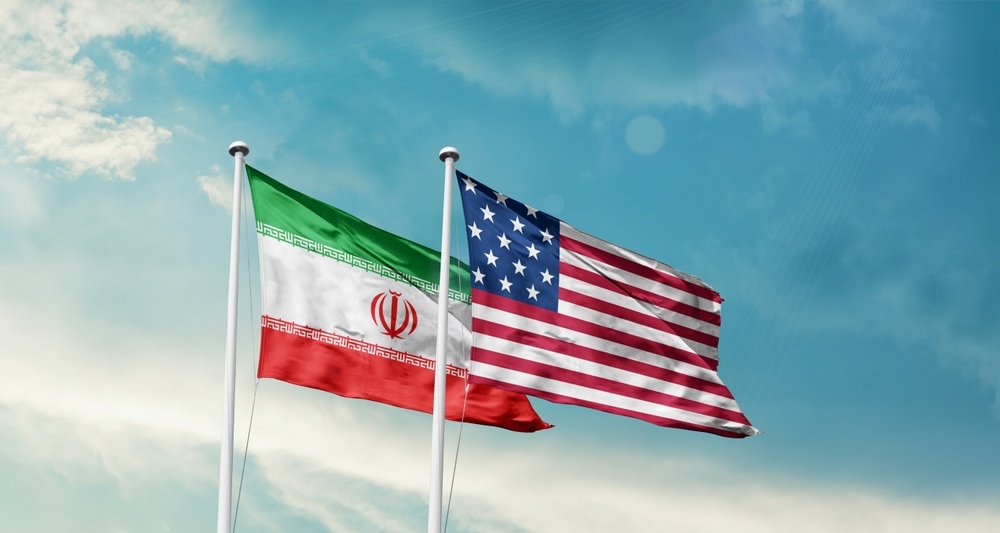
TradingKey - Following five weeks of military conflict, the U.S. and Iran will officially commence their first round of direct talks in Islamabad, Pakistan, on the morning of April 11 local time. This marks the third round of negotiations between the two nations within a year; in both previous instances, the U.S. and Israel launched sudden military operations against Iran.
Whether the two-week ceasefire can transition into a lasting peace depends on the strategic maneuvering between Iran's 'ten-point plan' and the U.S. 'fifteen-point plan' on core issues, as well as Israel's next moves on the Lebanese battlefield.
What signals are the negotiations sending?
There is a clear "fault line" between the U.S. and Iran. The core disagreement lies in uranium enrichment. White House Press Secretary Leavitt explicitly stated that Trump's "red line" requiring Iran to cease uranium enrichment activities remains unchanged.
But she also revealed that Iran has indicated it will hand over enriched uranium, which will serve as the top priority in the upcoming rounds of discussions. Iranian Supreme Leader Mojtaba subsequently put forward three claims in writing: "Aggressors must compensate for losses," "Management of the Strait of Hormuz will enter a new phase," and "Iran will never abandon its legitimate rights."
Meanwhile, the precondition of a Lebanese ceasefire and the issue of passage through the Strait of Hormuz pushed the negotiations into a stalemate before they even began.
Iran conveyed its position to the U.S. via Pakistan: the Iranian delegation refuses to attend peace talks with the U.S. until a ceasefire is achieved in Lebanon. Simultaneously, Iran informed regional mediators that if Israel continues to attack Iran and Lebanon, Iran will retaliate against regional countries including Israel, and warned that it may change its decision to reopen the Strait of Hormuz.
The transit status of the Strait of Hormuz has also experienced dramatic reversals. Following the ceasefire announcement, two oil tankers were briefly allowed to pass, but the strait was closed again on April 8 as Israel launched large-scale airstrikes on Lebanon. Several shipping agencies stated that the Iranian side has notified them that the resumption of passage requires a reassessment of the security situation.
Anticipating Negotiation Outcomes
Tai Hui, Chief Market Strategist for Asia Pacific at J.P. Morgan Asset Management, stated that the willingness of both sides to return to the negotiating table is a positive first step, but the talks remain fragile. Given high short-term volatility and the lack of clarity surrounding Israel's role and stance, he remains cautiously optimistic about a ceasefire.
David Chao, Global Market Strategist for Asia Pacific at Invesco, believes there are clear divergences between Iran's "ten-point plan" and the U.S. "fifteen-point plan." For example, both sides are at a stalemate over whether Iran's uranium enrichment program should be retained or fully dismantled; negotiations are bound to be arduous, and the prospect of a comprehensive agreement remains highly uncertain.
The negotiating conditions proposed by both the U.S. and Iran contain numerous conflicts, and reaching an agreement still faces significant uncertainty. While the Strait of Hormuz has shown initial signs of easing through "tiered passage," oil prices are unlikely to return to pre-conflict levels even if geopolitical tensions significantly subside; the price floor may shift notably higher.
U.S. Vice President Vance described the ceasefire as a "fragile truce," implying that hostilities could reignite if negotiations break down.
Beyond the core U.S.-Iran negotiations, Israel's role is the biggest variable. Iran insists that Lebanon should be included in the ceasefire arrangements, but both the U.S. and Israel have explicitly denied this. Israeli Prime Minister Benjamin Netanyahu stated that there is "no ceasefire" in Lebanon and that Israel will "continue to strike Hezbollah with full force." While the Islamabad talks focus on U.S.-Iran relations, the key variable determining the direction of the negotiations lies in Lebanon.
Impact of negotiation outcomes on the asset side
In a base-case scenario, if the ceasefire holds and navigation through the Strait of Hormuz gradually resumes, oil prices will enter a "new high-level normal." Although a ceasefire may cause prices to retreat, multiple financial institutions predict that international oil prices are unlikely to fall back below pre-conflict levels of $70 per barrel in the short term.
ING expects the market to remain volatile during negotiations. Capital Economics anticipates that if the ceasefire agreement holds, Brent crude will average around $95 per barrel in the second quarter before falling to approximately $80 per barrel by the fourth quarter.
In an adverse scenario, should Israel continue its attacks on Lebanon, leading to Iran's absence, negotiations could be hampered and the reopening of the Strait delayed, forcing the oil price equilibrium further upward due to Middle Eastern supply losses. Barclays noted that while the ceasefire temporarily averted the "worst-case scenario," damaged energy infrastructure and uncertainty regarding the conflict's ultimate resolution mean that oil prices are unlikely to fully reverse their gains anytime soon.
Under extreme market conditions, if negotiations collapse and conflict resumes, the risk of surging oil prices will be repriced, and global assets will come under sudden and severe pressure. According to reports from CME Group, the U.S. Energy Information Administration (EIA) expects Middle East production shutdowns to expand to 9.1 million barrels per day (bpd) in April. The EIA also forecasts that global oil demand growth in 2026 will be just 600,000 bpd, down from its previous forecast of 1.2 million bpd.
If the resumption of shipping falls short of expectations or if conflict resumes, oil prices still have the potential to break new highs above $100.
Regarding gold prices, the impact of the negotiation outcomes exhibits "bidirectional sensitivity across bull and bear cases," reflecting a mirror image of the "unjustified sell-off logic" where surging oil prices previously weighed on gold.
If negotiations fail and the conflict escalates, gold prices will face double pressure. An escalation would exacerbate inflation, prompting the market to revise Federal Reserve rate-cut expectations, which would weigh on gold. Simultaneously, the conflict would bolster the U.S. dollar's safe-haven appeal, driving capital flows from gold to the dollar and causing gold prices to pull back. Conversely, if negotiations proceed smoothly and tensions ease, falling oil prices will alleviate inflationary pressures, reviving rate-cut expectations and removing the headwinds for gold, potentially providing it with upward momentum.
Over the medium to long term, the core bullish logic for gold remains intact. State Street expects gold prices to eventually break above $5,000, while Morgan Stanley anticipates gold prices will remain stable in the second quarter before resuming their rally in the second half of the year.
This content was translated using AI and reviewed for clarity. It is for informational purposes only.
Recommended Articles











Comments (0)
Click the $ button, enter the symbol, and select to link a stock, ETF, or other ticker.