


Breaks 100 Level. Dollar Index Rises for Two Straight Weeks



AI Podcast


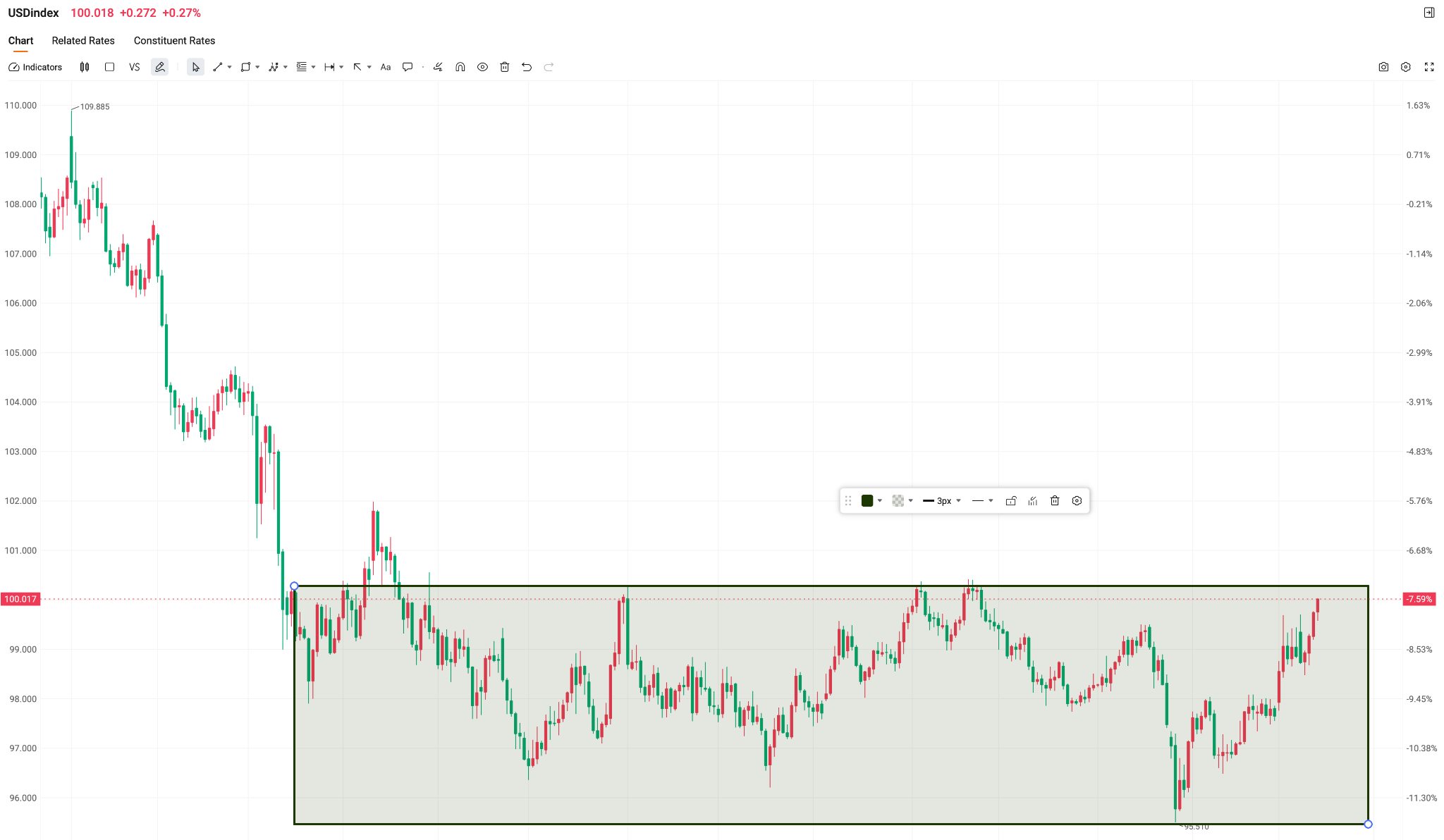
Escalating Middle East conflict and renewed risk aversion have propelled the U.S. Dollar Index to strengthen for two consecutive weeks, breaching the 100 level. Increased demand for safe-haven assets, specifically U.S. dollars and Treasuries, is driving this trend as capital flows out of emerging and riskier markets. Additionally, the Federal Reserve's cautious stance on interest rates, influenced by persistent inflation and labor market concerns, is undermining expectations for rate cuts. This prolonged high-interest-rate environment maintains a yield advantage for U.S. assets, attracting international capital. A stronger dollar may pressure commodity prices and trigger capital outflows from emerging markets.

TradingKey - Recently, as risk-aversion sentiment rebounded and interest rate expectations were adjusted, the U.S. Dollar Index has strengthened for two consecutive weeks, having previously broken through the 100 psychological level.
Safe-haven demand boosts the dollar
The continuous escalation of conflict in the Middle East has triggered global asset volatility, particularly in relatively immature emerging markets. In this context, investors tend to reduce exposure to high-risk assets and pivot toward assets with higher liquidity and credit ratings, while the U.S. dollar and Treasuries are generally regarded as the most representative safe-haven assets.
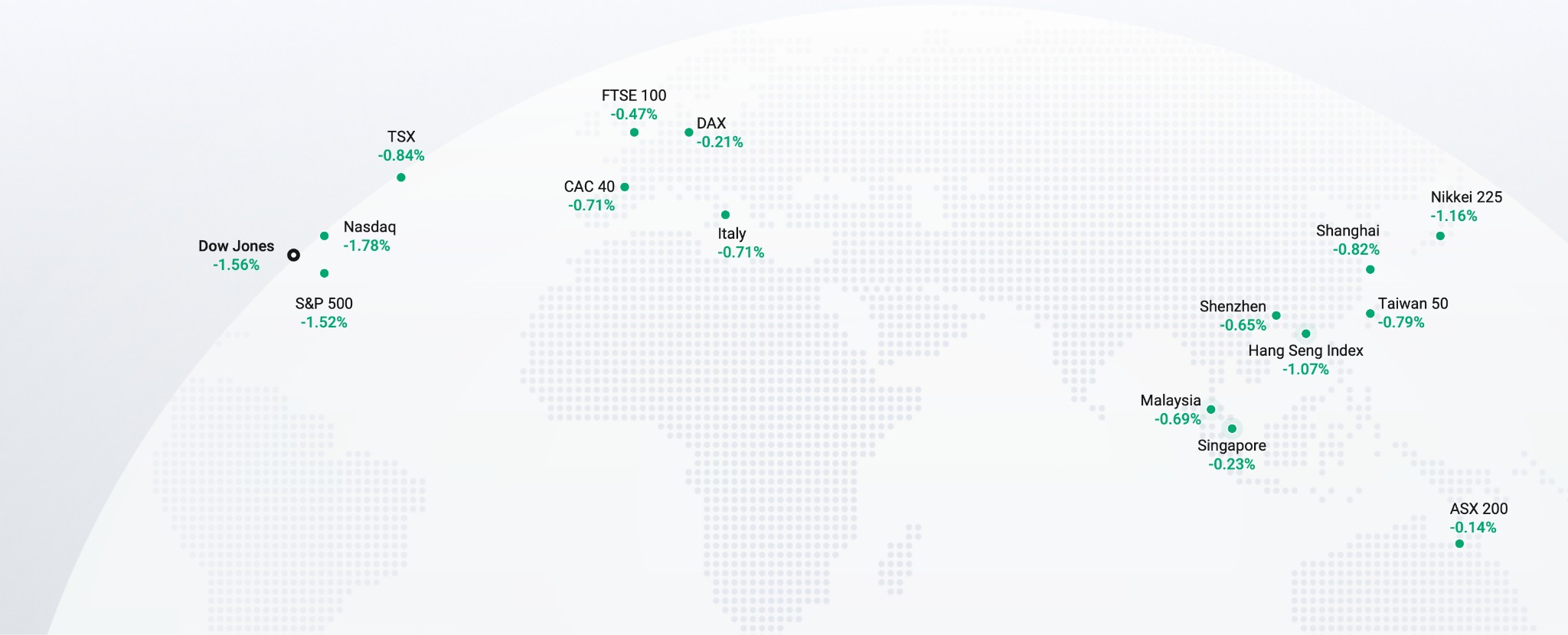
Previously, global stock markets trended lower across the board, as capital flowed out of emerging markets and certain risk assets and returned to U.S. financial markets, thereby supporting the dollar. This "flight-to-safety" capital flow often bolsters the upward momentum of the U.S. Dollar Index in the short term.
Interest rate expectations continue to provide support
The outlook for U.S. interest rates remains a core variable influencing the dollar's trajectory. Although market expectations for a rate-cut cycle persist,
but the rise in energy prices such as oil resulting from the U.S.-Iran conflict will transmit to the data in the coming months; February's core CPI indicated that inflationary pressures remain evident, while the labor market also faces a fairly grim situation. Given the pressures on both employment and inflation, the Federal Reserve may maintain a cautious interest rate policy, which has undermined market expectations for a rate cut.
If U.S. inflation cools more slowly than market expectations or if economic data continues to show resilience, investors may recalibrate their judgment of the monetary policy path, thereby extending the duration of the high-interest-rate environment. In this scenario, the relative yield advantage of U.S. assets persists, which will continue to attract international capital to allocate to dollar assets.
For the foreign exchange market, as long as U.S. interest rates remain elevated, the dollar will retain a yield advantage over other major currencies, which is one of the key reasons the dollar has remained strong over the past two years.
Potential impact of a stronger dollar
A sustained strengthening of the dollar often triggers a ripple effect across global financial markets. First, dollar appreciation typically exerts downward pressure on dollar-denominated commodity prices, as a rising dollar increases the cost of purchasing commodities in other currencies.
Second, a strong dollar may also impact capital flows in emerging markets. When yields on U.S. assets are high, some international capital may flow out of emerging markets, putting pressure on local financial markets and exchange rates.
Against a backdrop of continued high global economic uncertainty, the U.S. Dollar Index is likely to remain highly volatile for some time. For investors, monitoring changes in interest rate expectations, geopolitical risks, and global capital flow trends remains key to determining the dollar's direction.
This content was translated using AI and reviewed for clarity. It is for informational purposes only.
Recommended Articles










Comments (0)
Click the $ button, enter the symbol, and select to link a stock, ETF, or other ticker.