


Crude Oil Crisis Becomes Long-Term. “Shovel Sellers” Oil Services Industry Enters Strongest Cycle in 20 Years. How to Position in U.S. Oil Services Sector?



AI Podcast


The U.S.-Iran conflict is causing a significant crude oil supply shock, potentially reshaping the global energy market akin to historical crises. Barclays posits that a deficit exceeding 15 million barrels per day, driven by Middle East disruptions and limited U.S. shale elasticity, will necessitate accelerated upstream capital expenditures. This will trigger the best oilfield services (OFS) supercycle in two decades. Global upstream spending growth forecasts for 2027 have been revised upwards, with double-digit growth expected for 2028. This surge will be fueled by North American shale, early deepwater FIDs, and Middle East reconstruction, benefiting OFS providers like Schlumberger, Halliburton, and Baker Hughes.
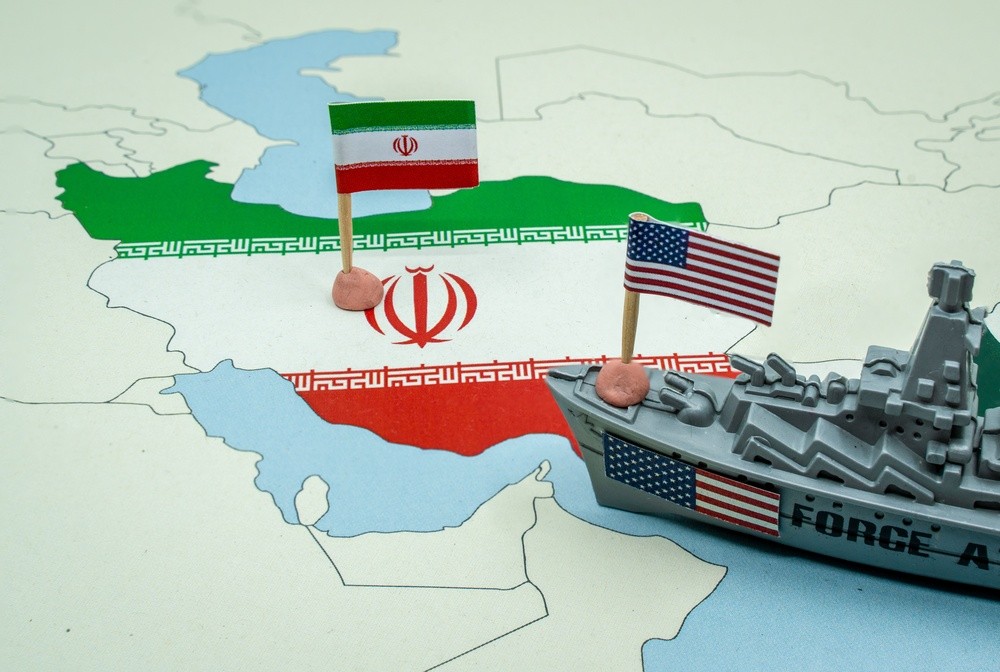
TradingKey - As the U.S. and Iran were reportedly nearing an agreement, the two sides exchanged fire again, potentially driving a further escalation of tensions.
Amid market expectations of a prolonged conflict between the U.S. and Iran, Barclays (BCS) stated in its latest report that the crude oil supply shock triggered by the current Middle East conflict carries historical significance comparable to the 1973 Arab oil embargo or the 1978–1979 Iranian Revolution, and could fundamentally reshape the global energy market landscape rather than merely causing short-term price volatility.
Middle East Supply Disruptions, Strait Blockades: Crude Oil Oversupply Is Now History
Over the past three years, oil prices have remained persistently depressed, falling 20% throughout 2025 as WTI crude once stayed below $60. This situation was driven by multiple factors.
The U.S. shale industry has broken production records for consecutive years. According to data from the U.S. Energy Information Administration (EIA), for the week ending May 1, 2026, U.S. crude output reached approximately 13.57 million barrels per day (bpd), making it the world's largest producer. Meanwhile, Saudi Arabia led OPEC and OPEC+ in extending production cuts to support prices. On the demand side, manufacturing in major global economies has been stagnant for years, weighing on energy demand. China, the world's largest crude importer, has seen oil demand contract due to the rapid adoption of electric vehicles (EVs).
However, the factors currently suppressing oil prices have been rewritten by the U.S.-Iran war.
Amid the ongoing disruption in the Strait of Hormuz, approximately 9 million bpd of Middle Eastern production is offline. Even if the strait reopens, midstream infrastructure—including export terminals, storage facilities, and key transit channels—will require a recovery period of at least several months, and potentially years. This has led to a decline in both current and future expected crude oil production capacity.
While some analysts suggest that abundant U.S. shale capacity could fill the Middle Eastern supply gap, data indicates this is merely a drop in the bucket. Currently, U.S. crude exports have reached a record of approximately 5.2 million bpd. Bloomberg reported that the U.S. has exported over 250 million barrels of oil cumulatively over the past nine weeks, making it a larger exporter than Saudi Arabia. However, data shows that with Middle Eastern production halted, the global daily crude supply deficit has now exceeded 15 million barrels.
Previously, Trump called on the U.S. shale industry to ramp up production, but the industry response was lukewarm, as producers are unwilling to risk a large-scale increase in output that could face a return to low oil prices after the war. Barclays stated bluntly that U.S. shale will not come to the rescue, forecasting that the U.S. onshore rig count will only rise from 530 to 600 by the end of 2027, far below levels seen in any previous cycle.
Largest Oilfield Services Supercycle in 20 Years Begins; Focus on Middle East Expansion and Deepwater FIDs
Barclays analysis points out that the U.S. shale oil industry has vanished as the last source of elasticity capable of responding quickly to crude oil price signals. With supply gaps difficult to bridge in the short to medium term, upstream capital expenditures will be forced to accelerate to rebuild asset-heavy major oil fields, driving the best oilfield services supercycle in nearly two decades.
The oilfield services (OFS) industry, formally known as the oilfield technical services and equipment industry, is typically divided into five major sectors: geophysical exploration, drilling and completion, logging and testing, oilfield production services, and oilfield engineering construction. Compared to oil and gas majors like ExxonMobil and Saudi Aramco, the OFS industry plays the role of the "shovel seller." As oil and gas companies are forced to increase spending on field development, the OFS sector will be the primary beneficiary.
At the start of this year, Barclays' forecast for global upstream spending growth in 2027 was only 3-5%; it has now revised the 2027 growth rate upward to 9-10% and anticipates double-digit growth for 2028.
Barclays believes that responses from the North American shale industry, the early release of deepwater Final Investment Decisions (FIDs), and post-war expansion in the Middle East will all drive spending increases. Deepwater projects are among the most difficult oil and gas developments, typically taking several years from FID approval to actual production and involving high costs. However, given the long-term supply gap, oil and gas companies may pull the trigger early on project approvals.
Specifically, Barclays expects the number of deepwater rigs to increase from 122 to 131 by the end of 2027; the Middle East region will enter a cycle of large-scale reconstruction and capacity expansion after conflicts end. For instance, Saudi Arabia's previously shelved Safaniyah oil field project is expected to restart, driving a significant surge in regional capital expenditures.
Barclays points out that because there is currently almost no idle capacity for various equipment and services in the OFS industry, and rising oil prices are rapidly improving customer cash flows, the OFS sector will regain pricing power, and profit margins are poised for significant expansion.
US Oilfield Services Investment Guide: Schlumberger, Halliburton, Baker Hughes
First, consider the "Big Three" oilfield service giants that hold a near-monopoly in the Middle East and deepwater sectors: Schlumberger (SLB) , Halliburton (HAL) and Baker Hughes (BKR) .
Schlumberger is a global leader in deepwater technology and digital oilfields, as well as the international oilfield service company with the largest market share in the Middle East. With the release of deepwater FIDs and ongoing production expansion in the Middle East, Schlumberger is poised to be the primary beneficiary. Halliburton is one of the world's largest providers of fracturing equipment and hydraulic fracturing services; while it dominates the North American market, it has significantly pivoted toward international markets and deepwater operations in recent years, and will benefit directly from increased North American shale production and Middle Eastern reconstruction. Baker Hughes possesses competitive advantages in liquefied natural gas (LNG) and turbomachinery, and its equipment orders will benefit from the restart of large-scale oilfield projects.
In addition to these three integrated oilfield service providers, deepwater drilling contractors such as Transocean (RIG) , Valaris (VAL) , Noble Corp (NE) and others will also benefit from this.
This content was translated using AI and reviewed for clarity. It is for informational purposes only.
Recommended Articles








Comments (0)
Click the $ button, enter the symbol, and select to link a stock, ETF, or other ticker.