


Sanae Takaichi’s Fiscal Policy and Kazuo Ueda’s Monetary Policy Tug-of-War, Will the Yen Continue to Fall in 2026?



AI Podcast


Sanae Takaichi's LDP secured a supermajority, initiating the "Takaichi Era" with a highly expansionary 21.3 trillion yen fiscal plan, including tax cuts. This "growth first, debt later" approach, targeting AI and semiconductors, has pushed 10-year JGB yields to a 30-year high. Despite core inflation at 2.1%, the Bank of Japan faces difficult rate hike decisions amid persistent wage growth and consumption. The contrasting fiscal stimulus and monetary tightening is expected to exacerbate yen volatility, with predictions of USD/JPY breaking 160 and potentially reaching 180. The market interprets Takaichi's stance as passive on intervention, increasing yen depreciation risks.
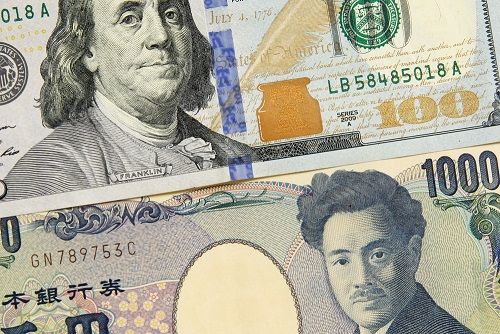
TradingKey - In early February 2026, as Japan's House of Representatives election results were finalized, the Liberal Democratic Party (LDP), under Sanae Takaichi's leadership, not only maintained its ruling status but also set a record by securing a two-thirds supermajority on its own for the first time since the party's founding. This outcome is not only the pinnacle of Takaichi's personal political career but also marks Japan's formal entry into the "Takaichi Era."
For global investors, especially young investors focused on the yen exchange rate and Japanese assets, the outcome of this general election is by no means a simple political event; rather, it is a key turning point reshaping the direction of Japan's fiscal and monetary policies in 2026.
At this turbulent crossroads of 2026, how will Japan's fiscal surge and the Bank of Japan's (BoJ) difficult interest rate hikes sway the fate of the yen?
"Gambler" Takaichi: A 21-Trillion-Yen Gamble
Sanae Takaichi's confidence in her victory stems from her highly expansionary fiscal promises and her soaring public approval ratings. According to a joint poll by the Nikkei early in 2026, the Takaichi Cabinet's approval rating surged to a high of 70%-74% before the election. Against the backdrop of frequent "short-lived cabinets" in Japanese politics in recent years, this is almost a miracle.
During the election, Takaichi proposed a jaw-dropping plan, introducing a supplementary budget totaling 21.3 trillion yen, while proposing a two-year "zero consumption tax" on food; she also plans to spend trillions of yen betting on AI, semiconductors, and quantum technology in an attempt to seize the high ground in the "post-globalization" era.
This "proactive fiscal policy" is highly provocative among young voters, but in the eyes of the bond market, it is equivalent to adding fuel to a debt ratio (accounting for about GDP of approximately 230%) that is already running a fever. Takaichi's logic is simple: "Growth first, debt later." She hopes to completely end the remnants of Japan's decades-long deflation through fiscal expansion and use the AI wave to achieve a "drastic transformation" of the economic structure.
However, the side effects of this "gambler" mentality were almost immediate. After the election results were announced, 10-year Japanese Government Bond (JGB) yields rapidly surged to over 2.3%, hitting a nearly thirty-year high. The market is repricing for a Japan that "cannot stop borrowing."
From "Deflation" to "Inflation": The Economic Environment Facing Sanae Takaichi Has Changed Drastically
For a long time, Japan's impression on investors was one of "price stability" or even "deflation" . However, in 2026, this impression is being completely shattered. According to a January 2026 report from the Bank of Japan, core inflation CPI once fell back to around 2.1%, but the Bank of Japan raised its inflation forecast for fiscal year 2026 for the first time.
The 2026 "Shunto" negotiations showed that under the pressure of labor shortages, Japanese companies maintained wage increases of over 4% for the third consecutive year. This marks Japan finally forming a positive cycle of "rising wages, booming consumption, and rising prices."
Although Takaichi's large-scale fiscal spending and tax cuts lowered electricity and water bills through subsidies in the short term, they essentially released more liquidity, which, in the medium to long term, will only make inflation expectations firmer.
Saving money in Japanese banks still yields only meager interest, while prices are genuinely devouring purchasing power. This also explains why the Japanese stock market can maintain high levels in 2026 even in the face of high interest rates, as citizens are frantically moving yen deposits into the stock market and overseas assets.
Will the Bank of Japan continue to raise interest rates to suppress yen depreciation ?
While Sanae Takaichi celebrates her victory, Governor Kazuo Ueda is facing the most difficult choice of his career. At the end of 2025, the Bank of Japan had already pushed the policy rate to 0.75%, the highest level in 30 years. However, in the face of Takaichi's expansionary policies, this small rate hike seems insignificant.
With expansionary fiscal policy and tight monetary policy, how will the yen exchange rate move? The government is engaging in massive fiscal expansion (loosening), while the central bank is trying to tighten (constricting). This operation of "stepping on both the gas and the brake" will greatly exacerbate the volatility of the yen exchange rate.
The market now generally expects the Bank of Japan to raise interest rates again to 1.0% or even higher by mid-2026. If the yen falls below 160 or even heads toward 180, the central bank may have to resort to "aggressive rate hikes" for self-preservation.
In addition, following Trump's return to the White House, the Federal Reserve's policy path is full of uncertainty. If the U.S. maintains high interest rates and Japan raises rates too slowly, the "reservoir" of the yen exchange rate will face the risk of collapse.
Where will the yen go in 2026?
After Takaichi's victory in the early general election, the yen exchange rate once lost the 157.0 level. An extreme theory is circulating in the market that if Takaichi's fiscal plan is implemented without constraints, the yen could experience a "spiral decline" and even retest the 180 level around the time of the 1986 Plaza Accord.
Goldman Sachs pointed out in its latest research report that Takaichi's victory means her 21.3 trillion yen supplementary budget will pass "without resistance." Such strong fiscal stimulus will offset the effects of small rate hikes by the Bank of Japan (BoJ). It is expected that over the next three months, the yen will remain under pressure, and USD/JPY is highly likely to break through the 160 mark.
J.P. Morgan's FX strategists believe that Sanae Takaichi's previous statements regarding "a weak yen is beneficial for exports" and "economic resilience to exchange rate fluctuations should be strengthened" have been interpreted by the market as a "passive" stance on official direct intervention. If the Ministry of Finance delays intervention, speculative capital, especially hedge funds, will restart large-scale bets on shorting the yen. In the first half of 2026, the yen could drop to 165, unless the Federal Reserve (Fed) delivers a larger-than-expected rate cut.
This content was translated using AI and reviewed for clarity. It is for informational purposes only.
Recommended Articles







Comments (0)
Click the $ button, enter the symbol, and select to link a stock, ETF, or other ticker.